EKIP– Expert Club for Economics and Politics A Different Opinion
Kalin Manolov
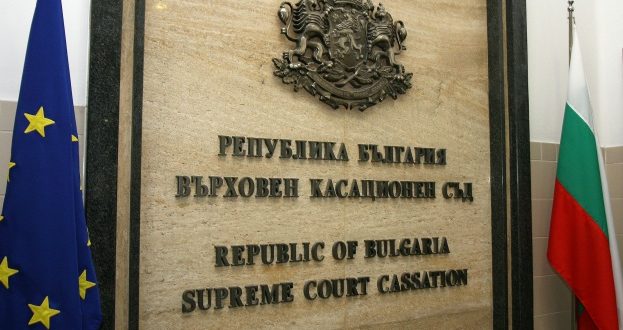
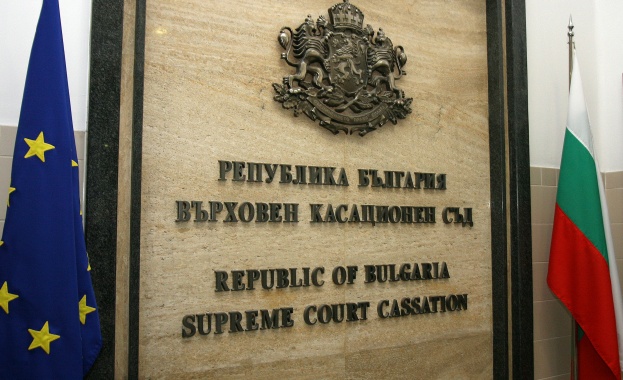
On January 22, 2015, the Supreme Court of Cassation (SCC) – the General Assembly of the Chamber of Commerce referred the matter to the Constitutional Court of the Republic of Bulgaria with a request for interpretation of Art. 12, para. 2 of the Constitution. The article states: “Citizens’ associations, including trade unions, may not set political goals and carry out political activities that are inherent only to political parties.” The Supreme Court judges want to specify the type of political activity that is inherent only to political parties and prohibited for civil associations. They do not believe that political activity is limited to participation in elections.
On January 26, 2015, the Constitutional Court admitted the question. A case has not yet been scheduled and I hope it never will be. At least because then the constitutional judges will be forced to interpret a political case. Something that: first, is inadmissible; second, when 25 years ago they were weaving the anti-constitutional nature of the MRF, the judges did a very bad service to Bulgarian politics. We still feel the consequences of it, in the form of the vaunted and convertible "Bulgarian ethnic model" on our backs and in our pockets.
I will not recall in detail the complicated case of the MRF, which registered to participate in the elections in 1990 as a non-governmental organization (NGO) – this is not what the Supreme Court of Cassation, with a new chairman since yesterday, has in mind when it asked whether non-governmental organizations can engage in politics. Although in 1990 the court did not rule on the merits of whether the MRF was an unconstitutional party or not, because one of the judges conveniently did not come to the vote and none of the positions gathered the necessary 7 votes, and despite the six dissenting opinions (of constitutional judges Mladen Danailov, Neno Nenovski, Milena Zhabinska, Lyuben Kornezov, Pencho Penev and Alexander Arabadzhiev), the movement has long been an unavoidable factor in Bulgarian political life. No one has any illusions that it will yet be declared unconstitutional, and the results of all elections over the past 25 years – annulled. Still, it is good to remember part of the address of the first democratic president Zhelyu Zhelev, who died on January 29: "Unfortunately, we note that there are certain actions by some leaders and activists of the MRF, which contradict their assurances that they serve only national interests... Such actions are unacceptable and I categorically condemn them. ... The restoration of the rights of Bulgarian Turks should not lead to the restriction of the rights of Bulgarians. The Constitution and laws are equally binding for all Bulgarian citizens and all state institutions must guarantee their observance..." Eternal memory to the president.
But we, the living, are not so naive as to believe that the interpretation of the term “political activity” is necessary for the Commercial Chamber of the Supreme Court of Cassation as a clear guideline for the registration of civil associations. Non-governmental organizations that “engage in political activity” (and not only party launderers!) should be very seriously concerned by the “doubt” of a Supreme (!), and criminal court at that, whether citizens can engage in politics. It is quite enough that Art. 1 of the communist constitution on party monopoly of political life in Bulgaria was confirmed by Art. 11 and Art. 12, para. 2 in the current constitution. Bulgarian citizens were forced to live without political freedom and for this reason very few of us can boast of economic freedom. Now politicians who came under the rule of communism and their judges are taking another step back to their well-known past.
History abounds with examples of how, by depriving people of their political rights, not only their property - their material expression of their life - was taken away, but also their life itself. In this sense, if the economic liberation of the individual is a goal, then his political rights are the means, without which, even if the goal is achieved, it cannot be defended, nor sustained, nor preserved. If the so-called right-wing parties do not react to such obscurantist initiatives, they will legitimize themselves as clear supporters of the hierarchical party dictatorship. The "Bulgarian right" will once again become an alibi for criminal decisions and governments.
Parties are “specialized associations with a special political purpose,” NGOs are not, the Supreme Court says. But what is politics? One of the most charming and candid descriptions of it comes from a letter from Lord Bolingbroke, the English leader of the Tory party in the 18th century: “I fear that we came to the Palace with the same attitude that all other parties have had up to now; that the main motive of our actions was to master the government of the country; that our principled views were the retention of that power, great services to ourselves, and great opportunities for rewarding those who helped us to power, and for harming those who opposed us.”
In other words, politics regulates plunder through law. As long as this is possible, politics will obsess over public life, the hustle and bustle at the entrance to parliament will increase, the quality of laws will decrease. Therefore, we all have to deal with politics - more than before. Otherwise, it will deal with us - as before.
Joint publication with the Institute for Free Capitalism "Atlas" and the website "Evening News"