EKIP November 14, 2023 Analyses and opinions, Economic and fiscal policy
|Full text of the analysis| At the beginning of October, it was three years since Bulgaria joined the Banking Union. The event was once advertised with great official enthusiasm. It was even explained that this marks the practical beginning of the country's membership in the eurozone. The argument – the Banking Union is a mechanism created in and …
More » Georgi Vuldzhev October 06, 2021 Economy, Economic and fiscal policy
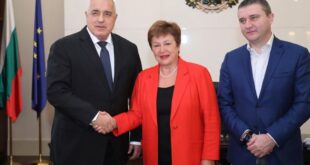
October 1 marked exactly one year since Bulgaria officially joined the EU Banking Union. The accession was accompanied by great fanfare from public experts, politicians, and of course the government of Boyko Borissov himself, who in April 2020 announced Bulgaria’s accession to the ERM-II exchange rate mechanism and the Banking Union …
More » Georgi Vuldzhev September 29, 2021 Analyses and opinions, Economic and fiscal policy
The Banking Union creates incentives for decapitalization and destabilization of our banking system. The Banking Union would most likely not help restructure local banks. Bulgaria no longer has its own bank resolution fund. In such a situation, the cost of bank bankruptcies falls through the budget onto Bulgarian taxpayers. On October 1, 2020…
More » Stefcho Stanev August 10, 2021 Economy, Economic and fiscal policy
My position against the adoption of the euro and the corresponding national plan is based on the following main arguments. 1. Keeping the national currency does not mean a worse economy. Sweden is a good example of this. - Sweden's economic growth since 2003 has been between 1.5% and 3%, i.e. higher than that of the eurozone. …
More » Guest Author July 06, 2021 Economy, Economic and fiscal policy
Author: Stefan Antonov On July 10 (the day before the elections) it will be one year since Bulgaria and Croatia were admitted to the waiting room of the eurozone and the banking union. GERB's decision to push in this direction became a fact despite legitimate and well-founded concerns that the state was taking unacceptable risks. The period since its …
More » EKIP July 02, 2021 Economic and fiscal policy
The ECB is silent about the BDB. We have sent a request for all documents on the case. As we have already written, Bulgaria has been a member of the Banking Union for 9 months now. A key element of the BS is the so-called Single Supervisory Mechanism. Supporters of the eurozone promised that banking supervision in the hands of the ECB would correct the problems in …
More » Stoyan Panchev June 08, 2021 Politics
The short answer is because, despite all the banditry that is spreading throughout the country, for the past 12 years the government has been unwaveringly implementing the agenda of the Berlin-Brussels-Paris axis. This so-called agenda generally consists of centralization and transfer of sovereignty (so-called European integration), granting artificial competitive advantages to industries/countries with strong lobbies in Brussels …
More » Stoyan Panchev May 20, 2021 Economy, Economic and fiscal policy
Bulgaria has been a member of the Banking Union for 9 months now. A key element of the BS is the so-called Single Supervisory Mechanism, which was promised by the supporters of the eurozone to correct the problems in local banking supervision. With the letter below, the EKIP asked the ECB – what they have done, what they are doing and …
More » Stoyan Panchev March 24, 2021 Economy, Economic and fiscal policy
This text was originally published in the collection "2020: Inside and Beyond" Every intricate story has to start somewhere. In this one about the super-massive printing of money, that moment is in 2008, and the starting point is the United States. To get to the answer to the question of why central banks are printing more today …
More » Georgi Vuldjev February 17, 2021 Politics, Translation
Author: Yaroslav Romanchuk Group and class interests are tearing apart the foundations of the institutions of freedom and the market. Women, sexual minorities, racial, religious, environmental, ethnic and all sorts of different groups are demanding their rightful place not only in the system of governance, but also in the management of business and international public organizations. The tyranny of …
More »
 EKIP– Expert Club for Economics and Politics A Different Opinion