EKIP– Expert Club for Economics and Politics A Different Opinion
At the last minute, the parliament extended the program for compensation of the industry with the price of electricity. Although clumsily played by the Petkov government and with contradictory ideological and economic justification, the program was somewhat inevitable, due to the massive compensations distributed in Western Europe (Spain and France have ceilings below 50 euros), and approved by over 200 deputies.
Far more pragmatic, urgent, and ideologically consistent, however, remains any solution to the gas supply crisis.
Without informing the public and especially the business community, Kiril Petkov and Assen Vassilev stopped gas supplies from Gazprom for geopolitical reasons. But unlike other countries such as Poland, Estonia, Finland, Romania or Greece, Bulgaria has neither the market nor the political instruments to rapidly diversify its gas supplies. Especially after the government had been obstructing all such efforts for years.
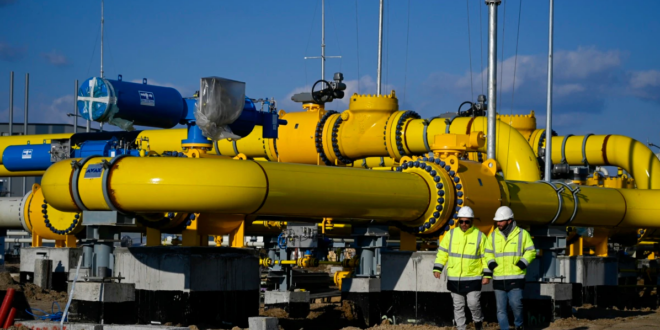
Poland has a gas pipeline [1] through which Poles and the Baltics will receive fuel directly from Norway. Romania has begun economic oil and gas production from the Black Sea [2] and expects to cover its entire needs from its own production in the foreseeable future. Having had a difficult experience with bilateral relations with Russia, Finland has only 5% of its total energy consumption dependent on natural gas and has invested in electrification of the industry [3]. Greece is among the leading players in the liquefied gas market and is trying to connect the Israeli Leviathan gas field to Europe via an offshore gas pipeline [4].
Bulgaria has steadfastly refused to diversify its gas supplies over the years, and despite significant local nuclear, coal, and renewable energy sources, the state has not encouraged risky industries to focus more on using electricity. Have we been deliberately “hanging” on Putin’s neck, or have we simply not looked further than our noses?
In many ways correct from a geopolitical perspective, Petkov and Vassilev’s decision to cut off natural gas imports from Russia in the midst of an economic, energy and military crisis places Bulgarian industry in an impossible market situation. Alternative supplies on a comparable scale do not yet exist. When Azeri gas flows, it will certainly be directed primarily to district heating. The possibilities for local oil and gas extraction are de facto taboo, let us recall the moratorium on shale gas extraction and exploration and the expulsion of Chevron. As an addition to the last government, Vassilev tried to ban local extraction by offering one (and probably the) highest concession fee for oil and gas extraction in the world [5].
Thus, employers are faced with the impossible choice of either “demanding” [6] Russian supplies and Gazprom as the only safe short-term solution or continuing to purchase energy (gas and electricity) from state-owned companies at a “pig in a poke” price list – i.e. it is not known whether there will be supplies next month, nor what volumes, nor at what price, nor even when the EWRC will set this price. [7]
Employers' organizations in our country, of course, have started with the big basket and can be criticized for asking for far more than is reasonable - they focused first on full state compensation for the "high" price of electricity, which is a short-term crisis solution, but not something that can or should be maintained for years. In addition, there is the important question of whether, if at all, support will be provided through the so-called "excess profits" of state-owned companies, it should not be differentiated, according to the state of the company's balance sheets, and not for everyone in one go.
For example, Bulgarian businesses buy energy on a massive scale on the short-term day-ahead market, as for political reasons or due to a lack of foresight, medium- and long-term electricity supply contracts are not offered on the market. Here it is reasonable to at least proceed to public-private partnerships in the management of NEK's generating and storage assets, and until this happens, KEWR and NEK should offer market-making services with 3, 6 and 12-month products on the exchange and the centralized market for other-party contracts.
The unavoidable role of BEH and NEK as “almost” monopolists in the production and trading of electricity has been criticized for ten years by the European Commission and most economic think tanks in our country. In Bulgaria and most southern countries, this problem is even stronger, since state-owned enterprises (so-called government-owned enterprises) operate in the most harmful non-market hypothesis as state agencies. That is, in bad times they are subsidized, drained and decapitalized as zombie corporations that feed special and/or political interests, and in good times they are taxed with additional taxes and decapitalized again as the excess profits feed highly politicized and market-distorting state spending.
And while in the case of electricity, ideology, vested interests, party egoism and industrial lobbying (in the good sense) are intertwined in contradictions, business is perhaps right in its argument for the need for compensation for high prices or directly the lack of natural gas supplies. Regarding high prices for purely political reasons, the employers' demand for partial reimbursement by state-owned companies, which are already overwhelmed with billions in profits, is logical.
We will face a bigger problem in the fall and winter, when the market will probably completely collapse due to supply shortages and the prioritization of Azerbaijani gas to district heating and household consumers. For certain entrepreneurs in the livestock, metallurgy and chemical industries, a gas supply interruption for just a week will lead to catastrophic consequences - from the loss of animals to the interruption of difficult, expensive or almost impossible to renew production cycles. Here, price reimbursements may turn out to be meaningless, since supplies may not exist.
The lack of gas diversification in the past and the current chaos in the sector also create an “invisible” problem, which, as we know from Bastia, is often completely inevitable and a product of human vices or benefactors. Bending under the weight of its depreciated energy infrastructure and the Green Deal, Bulgaria must build highly maneuverable and flexible capacities over the next 20 years to balance out its renewable generation. And while high-tech breakthroughs in hydrogen and batteries stand as theoretical options, a corrupt and not particularly technological country like Bulgaria is better suited to more tried and tested and familiar solutions – such as gas-fired power plants and high-efficiency cogeneration. But without alternative pipeline supplies, without local extraction and without a private or public-private network of equity participations in liquefied gas terminals and gas fields [8] [9], our country may find itself without access to the only energy resource that can realistically supplement our renewable capacities.
The tools to counter the consequences of the geopolitical decisions of Petkov and Vassilev will be very limited, probably reduced in the short term to subsidizing capital investments for the electrification of production, which must be granted literally from tomorrow, and a price ceiling for gas supplies, the minuses of which will be transferred to Bulgargaz and BEH. The short-term measures, although inevitable, have seemingly remained for a long time and have mixed up the same mess of "correcting" political decisions with new state programs. And the long-term solutions in the form of own production and equity investments in foreign deposits and terminals are currently taboo in the parliament and the Council of Ministers.
[1]Energinet: Gas can now flow to Denmark from the Norwegian gas pipeline. Достъпно от https://www.baltic-pipe.eu/gas-can-now-flow-to-denmark-from-the-norwegian-gas-pipeline/
[2] BSOG to begin offshore gas production in Romania's Black Sea on June 28. Available from https://www.romania-insider.com/bsog-start-offshore-black-sea-may-2022
[3] Russia has cut off its natural gas exports to Finland in a symbolic move. Достъпно от https://www.npr.org/2022/05/21/1100547908/russia-ends-natural-gas-exports-to-finland?t=1656400145268
[4] O'Byrne, D. (2022) Could Turkey-Israel rapprochement lead to gas agreement? Available from https://www.al-monitor.com/originals/2022/06/could-turkey-israel-rapprochement-lead-gas-agreement
[5] Staff of the global oil research center (2015) Crude oil Royalty rates in selected countries. Достъпно от https://s3.amazonaws.com/rgi-documents/4e0c1376cf92813658759cc937debc5a4868e4c8.pdf
[6] AOBR (2022) Opinion of AOBR on the expiration of the contract with Gazprom for the supply of natural gas. Available from https://www.bcci.bg/news/18648
[7] Businesses refuse to pay for more expensive gas. Available from https://www.pariteni.bg/novini/pari/biznesyt-otkazva-da-plashta-po-skyp-gaz-242389
[8] Eni and Sonatrach agree to increase gas supplies from Algeria through Transmed. Достъпно от https://www.eni.com/en-IT/media/press-release/2022/04/eni-and-sonatrach-agree-to-increase-gas-supplies-from-algeria-through-transmed.html
[9] Eni enters the world's largest LNG project in Qatar. Available from https://www.eni.com/en-IT/media/press-release/2022/06/eni-entra-grande-progetto-gnl-qatar.html