Georgi Vuldzhev September 19, 2019 Economics, Economic and Fiscal Policy, Translation
By Jeff Deist, Mises.org Bloomberg Terminal, the financial software used by countless analysts and traders around the world, has a problem: its system can’t price bonds that use negative interest rates. The programmers never even considered such a situation possible, so they didn’t …
More » Daniel Angelov April 25, 2019 Economics, Economic theory
This article will be devoted to the market structures created by the neoclassical mainstream school. A retrospective of the concept of competition from the classical economists onwards will be made, and thus it will be possible to answer the question of why and how the models of perfect and imperfect competition were created. First, what is a market? Every …
More » Guest Author April 23, 2019 Economics, Economic theory
Author: Kristiyan Korelov It has been more than a decade since one of the largest stock market panics in the United States occurred. Credit markets had completely stopped functioning (Gorton, 2008), and the situation was very similar to that of the panic of 1907, when banks were in massive need of liquidity and a huge part of …
More » Georgi Vuldjev March 10, 2019 Investments, The Intelligent Investor
Dear listeners, in the new episode of "The Intelligent Investor" our guest is Dimo Stefanov, Chief Dealer at Tavex Gold & Exchange, which are the largest (and in our opinion the best) gold and silver dealers in Bulgaria. Dimo is the best gold and silver investing expert we know, so his advice …
More » Boryana Yosifova January 26, 2019 Economics, Economic and fiscal policy, Economic theory, Translation
Original article: Ryan McMaken, mises.org The condemnation of consumerism is ubiquitous in modern media and popular culture. Anyone who has seen “A Charlie Brown Christmas” from 1965 knows about this struggle. Every time we see Charlie Brown opt for the “authentic” Christmas – buying himself a small Christmas tree, which is natural, …
More » Slavcho Marinov September 14, 2018 Economy, Economic and fiscal policy
The world put out the fire with debt that will sooner or later have to be paid. On September 15, 2008, the United States woke up to the bankruptcy of its fourth largest investment bank, Lehman Brothers. With assets of $639 billion (at least on the balance sheet) and $619 billion in debt, it was the largest bankruptcy …
More » Georgi Vuldzhev August 19, 2018 Economy, Economic and fiscal policy
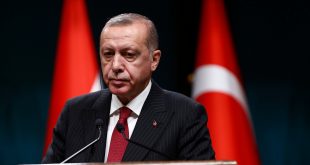
The factors that lead to the current crisis in Turkey are at a fundamental level two. The huge balance of payments deficit and high levels of price inflation, especially since 2012. In turn, these two factors are a direct result of the fiscal and monetary policies that Turkey has chosen to follow over the last …
More » Natalia Chomakova June 06, 2018 Economic theory, Translation
It is often observed that incompetent economists are better at spreading their errors among the public than competent economists are at spreading the truth. The reason for this is that bad economists actually introduce people to half-truths. They only talk about the short-term effects that a given policy would have on a specific group of people. To solve this problem …
More » Georgi Vuldzhev February 25, 2018 Economics, Economic and fiscal policy, Economic theory
Evgeni Dainov, one of the most famous public intellectuals in Bulgaria, published an article a few days ago about the "economists". A text in which he criticizes at length what he describes as the "economic" way of thinking. As someone who considers himself an economist, I was of course intrigued, but unfortunately I was left extremely disappointed...
More » Boryana Yosifova December 19, 2017 Economic theory
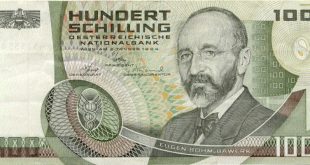
Some time ago we decided to translate the wiki page of Eugen von Böhm-Bawerk, one of the founders of the Austrian School of Economics. We were unpleasantly surprised that the Bulgarian translation was not approved, but then again, libertarians are people who do not pride themselves on recognizing foreign authorities (even Wikipedia), so …
More »
 EKIP– Expert Club for Economics and Politics A Different Opinion