EKIP– Expert Club for Economics and Politics A Different Opinion

Author: Boyan Nikolaev
A few weeks after Mike Pompeo's visit to Bulgaria, we talked about his figure and messages with colleagues from the American university where I work. Most of them are lecturers and professors of arts and logically with more left-wing and more liberal views, naturally sympathetic to the Democrats. Accordingly, the mood towards the former Secretary of State in the Trump administration was not enthusiastic. But the mood towards Pompeo's messages was, to my surprise, at the opposite pole.
A young conductor shared that his uncle has a dairy farm in Pennsylvania. The milk produced there is processed into food products, which are exported to Europe. My colleague, however, enthusiastically began to explain how an oil company had installed a shale gas extraction facility in a corner of the dairy farm, and for nearly ten years his uncle had been collecting a concession fee of about $500,000 a year. I asked him, wide-eyed, if he had reduced milk production, fearing the effect of extraction on the animals, and he told me, surprised, that the opposite had happened – with the income from the concession fee, the owner made new investments in the farm and expanded his activities to agriculture.
The result of the political realignment among Democratic and Republican voters in the US is that the former are becoming anti-Russian, and the latter are becoming more isolationist. On the other hand, the “Trump” effect on this isolationism is aimed at resource and economic independence from China, Russia, etc. The realigned voters on the left consider it absurd for Europe to be energy dependent on Russia and the Middle East, and that the US should help with its own production, while voters on the right do not care so much about the dependence itself as about having a strong local energy sector to support American industry in its battle with China.
Ultimately, both left-wing liberals and right-wing conservatives, with all their currently shifting ideologies and beliefs, see the production of American shale gas as a tool for implementing their own pro-American positions.
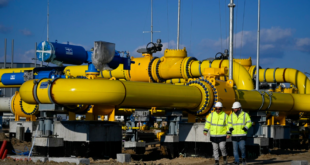
One such pro-American position, supported by both the geopolitical Biden and the mercantilist Trump, is to supply the EU with American energy as a counterbalance to its dependence on Russia. And the US shale industry is even exceeding political expectations – by June 2022, the US had exported 57 bcm of liquefied natural gas, of which 39 bcm to Europe. This compares with 34 bcm exported to Europe in all of 2021, according to Reuters. Although more resilient than expected, the US shale industry is still chasing profits – prices in 2022 in Europe are around $34 per mmBtu, compared to $30 in Asia and just $6 in the US, double the same prices in 2021.
Shale gas from the US still cannot save European business, which even with access to it at such prices is uncompetitive and heading towards deindustrialization. Leading European economist Daniel Lacalle was repeatedly asked in an interview with an American media outlet what European politicians are doing on the energy issue – his answer was “nothing.”
The American journalist, visibly stunned, could not believe that European politicians were ready to sacrifice industry and small businesses just to avoid admitting obvious mistakes in their energy policy. Lacalle cited absurd situations in some Euro countries for every American and Chinese, where over half of the price of expensive electricity is formed by taxes, fees and levies; the insane strategy of fighting an energy crisis during an inflationary spiral with pro-inflationary subsidies; the closure of operating nuclear power plants without providing compensatory electricity generation, making the survival of entire governments dependent on mild weather in the coming months.
All this solely in the name of maintaining the clearly refuted political thesis that shale mining is harmful to nature and people, and nuclear energy is more dangerous than the alternative (which does not even exist).
Here, many people in Europe will cite an endless list of articles talking about the effect of hydraulic fracturing on wheat, soybeans, milk, water, etc. But if these articles are completely true, then why is the US going from the fifth to the fourth most important supplier of agricultural and food products to Europe? Why does Europe continue to import all kinds of food, mainly from shale gas producing states, if this food is poisoned?
And why should it import American (and Canadian) shale gas and oil if they are harmful to nature and people? As with carbon emissions, Europe could impose a complete embargo on the American food and energy industry until it stops extracting resources hydraulically. But it doesn’t do it, but quite the opposite – European prime ministers are on the “carpet” with Biden and Trudeau, begging them for energy and food?
Here, some of Pompeo's theses about convincing Europeans of the benefits of local extraction are perhaps weaker than necessary. Yes, there is an increasingly clear consensus in science that the dangers of shale gas are more related to technical incidents in the infrastructure and poorly planned use of water in the driest regions (such as those in China), and in general the risks and methods for controlling them are completely comparable to those of conventional extraction.
But still, the Secretary of State emphasized the scientific and rational arguments that have worked in the US under the umbrella of a bipartisan political consensus that America should extract new energy resources using innovative methods. There, shale gas extraction will soon celebrate its 100th birthday – it began experimentally under the Republican administrations of Monroe and Adams, the first large field was developed under Democrat Wilson, the hydraulic method was introduced under Democrat Johnson, the real shale revolution began under Barack Obama, and unprecedented exports outside the EU were unleashed under Trump. That is, in the US, the extraction of natural gas and oil using innovative methods (not only from shale, but also from tar sands, for example) is a well-reasoned national all-party policy, supported by science – and not the other way around.
No matter what scientific arguments we shower the European with, his political opinion has already been formed under pressure from his own European institutions, with the convenient support of Russian energy giants and, at least, without resistance from Chinese industry. Such a political opinion can only be changed through political debate and arguments.
And one of them may be the simple question, are Bai Ganya, Herr Dietrich, and Madame Sofia stupid enough to import dairy products and shale gas from the same cow farm from Pennsylvania Joe at an ungodly price?
Sources
Renshaw, J. and Disavino, S. (2022) Analysis: U.S. LNG exports to Europe on track to surpass Biden promise. Достъпно от https://www.reuters.com/business/energy/us-lng-exports-europe-track-surpass-biden-promise-2022-07-26/
Acalle, D. (2022) Collapse. Europe energy crisis gets worse. Available from https://www.youtube.com/watch?v=jSWEijYoweA
US Department of Agriculture (2022) European Union 2021 Export highlights. Available from https://www.fas.usda.gov/european-union-2021-export-highlights
US International Trade Administration (2022) Agricultural sector. Available from https://www.trade.gov/country-commercial-guides/eu-agricultural-sector
Gao, S., Guan, Q., Dong, D. et al. Environmental risks of shale gas exploitation and solutions for clean shale gas production in China. Front. Earth Sci. 15, 406–422 (2021). https://doi.org/10.1007/s11707-020-0850-0
Zhang, H., Liu, P., Zhang, D., et al. Watershed-scale assessment of surface water-related risks from shale gas development in mountainous areas, China. Journal of Environmental Management Volume 279, 1 February 2021, 111589
Ma, L., Hurtado, A., Eguilior, S. and Borrajo, J. Exposure risk assessment to organic compounds based on their concentrations in return water from shale gas developments. Science of The Total Environment Volume 822, 20 May 2022, 153586