EKIP– Expert Club for Economics and Politics A Different Opinion
There are hardly many people who would not accept free consumption of goods or services. However, free should be in quotes, because someone always pays the price in some form. It does not have to be paid in money, it is possible that those who consume do not realize that they are paying, it is also possible that the price is paid by someone other than the one who consumes.
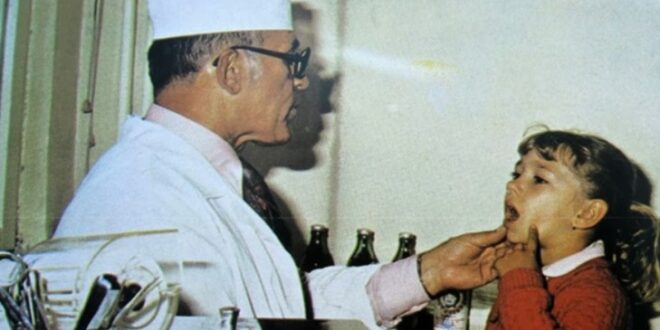
An important lesson about the cost of free healthcare is provided by healthcare in Bulgaria before 1989 during the socialist period. At that time, the state budget financed all healthcare costs without medicines free of charge. Whether and how consumers and providers of healthcare services participate in paying for free healthcare can be established with the help of preserved archival documents on the activities of hospitals and polyclinics from different parts of the country. They provide an opportunity for a clear answer to the question of what the cost of free healthcare is.
"Free" healthcare in a poor country
Under the socialist regime, compared to most other countries of the so-called Eastern Bloc, Bulgaria remained rather poor and underdeveloped. This created chronic difficulties in building a comprehensive system of state-funded "free" healthcare.
In 1955, the Ministry of Public Health reported that the supply of food products, instruments and auxiliary materials to the District Hospital in Lukovit was untimely due to the “irregular granting of credits”. The equipment of the laboratory in the District Hospital – Pleven was so poor that doctors had lost confidence in the results of the tests. The material base at the Institute for Emergency Medical Care “Pirogov” was no better. In November 1963, a special commission appointed by the Deputy Minister of Health established that “the conditions of the material base are currently characterized by overcrowding in the wards, inconveniences and an almost frontline atmosphere in the reception rooms”. In materials from a sanitary-epidemiological survey of the City United Hospital in Elena in 1964. It is stated that "In almost all manipulation rooms of the hospital, the syringes are insufficient for the number of people served. Their mechanical cleaning before sterilization is carried out in a primitive manner...". In the preserved Analysis of the Organization of Labor and Health Care in the Region of Botevgrad and Pravets for the Period from 1971 to 1979. It is noted that “The issue of spare parts remains open and is [one] of the leading reasons for the underutilization of available equipment and technology. An inspection of the Veliko Tarnovo District Hospital from the early 1980s identified it as one of the best hospitals outside the capital. Even there, the supply of medicines is unsatisfactory. There is often a lack of imported antibiotics, there is a deficit of saline solution and distilled water, which are produced in Bulgaria. In 1988, the Sofia People's Council received a Report on the condition and problems of the Infectious Diseases Hospital. It noted that the hospital's material base is “too outdated ... and with worn-out sewage, water, heating and electrical installations, and accidents are a daily occurrence.” The hospital is overcrowded, there are no facilities for decontamination of wastewater, for the incineration of waste from patient care, etc.
How do medical professionals pay for the "free"?
Poverty forces the cost of healthcare to be spread across different segments of Bulgarian society. One of the ways to cover the costs of “free” medical care is the low pay for doctors and other staff in hospitals and clinics – nurses, orderlies, etc. This has remained a fact throughout the socialist period. In 1954, the Minister of Public Health prepared Information on the State of Rural Healthcare in the country. He noted a shortage of doctors, dentists, and other specialists in the villages. The main reason for this situation, according to him, is “the unfavorable living conditions in the villages and the low wages.”
In the early 1950s, shortly after the permanent establishment of the socialist regime in Bulgaria, an attempt was made to provide budget funds for decent pay for medical workers. However, at the initiative of the then Minister of Health, Dr. Petar Kolarov, the funds were cut, with the argument that doctors had private practice. After its abolition in the late 1960s, the pay of medical staff was not significantly improved. With their low salaries, they subsidized “free” healthcare. Even in the last decade of socialism, calls for the restoration of private practice and for improving low doctors’ salaries led to repressions of journalists, dismissals from work, etc.
An indicator of the chronic problems with payment is the constant lack of medical staff in the country's hospitals and polyclinics. The specifics of the medical profession attract some of the most worthy Bulgarians to it, but this is not enough to build a well-functioning system of "free" healthcare. The staff is insufficient and does not always have sufficient incentives for qualification. A 1950 audit report for the Internal Medicine Department of the Razlog hospital found that the only doctor there was overworked. In 1955, the city hospital in Kazanlak "had a great shortage of middle medical staff", the same situation was in the hospital in Tolbukhin (today's Dobrich). Two years later, the Sofia City People's Council found that the Pirogov Institute for Emergency Medical Care had unsuitable and insufficiently qualified staff, which led to incorrect diagnoses and inefficient treatment of patients. In 1964, in the city hospital in Pavlikeni, the most responsible work in the sanitary block was entrusted to a nurse with insufficient knowledge, rather than a nurse. Lack of staff was also noted in the 1975 Annual Report of the Dr. V. Genchev Regional Hospital in Dryanovo. The positions of doctors in the Dryanovo villages for the same year were “almost vacant”. In the early 1980s, the Emergency Department there was “not fully staffed”. The condition of leading hospitals in Sofia in the 1980s was also alarming. In 1982, a report by the chief physician of the Infectious Diseases Hospital, Dr. V. Kaleva, stated that there were 12 nurses missing and the sanitary staff was extremely reduced.
How do patients pay for the “free”?
Another part of the cost of free care is “secretly” transferred to patients. The secret is expressed in the non-monetary form through which patients pay. Low salaries and insufficient provision of specialists lower the quality of healthcare. Official findings at the beginning and end of socialism prove a similar thesis. In 1955, the Minister of Public Health wrote that “The quality of medical care in a village cannot meet modern requirements”, and in 1988, a report on the state of the Infectious Diseases Hospital in Sofia noted the lack of modern equipment, which is why “the hospital lags behind the world level at this stage”. The findings made are actually part of the indirect non-monetary price paid by users of “free” healthcare.
At least several other forms of indirect payment by patients can be found. Economic theory states that when the price of a given good or service is low, its demand and consumption increases. With increased consumption and the lack of an adequate market assessment, the supplier's capacity does not allow the demand to be satisfied. The practical manifestation of this scenario is that patients in hospitals and polyclinics are forced to waste a lot of time waiting for medical care. This forces them to look for "connections" and their own people, to make small gifts and favors, to resort to bribes. The waiting time in front of dentists' offices was unbearably long in the 1980s. The existence of this problem was well known to the management bodies in the Ministry of Public Health. On November 17, 1981, Deputy Minister Dr. Ch. Iv. Merdzhanov sent a district letter to the chief doctors of the polyclinics in the District, regional and city hospitals. It notes the presence of permanent shortcomings such as: "scattering of patients between clinics and between individual offices, queues in front of some of the offices, formal and heartless attitude towards patients, etc." The quote accurately captures some of the forms of payment for "free" healthcare.
It is difficult to assess the extent to which the callousness is caused by the “free” nature of the service. It is striking, however, that such facts and findings are not isolated; they occur throughout the entire period of socialism in hospitals in Sandanski, Razlog, Vratsa, Nikopol, etc. The callousness is expressed, for example, in the zero attendance of doctors for pregnant women in Polski Trambesh, in the abuses in the supply of food products to patients from the so-called Psychoneurological Colony in the village of Tserova Koriya (Tarnovo region), etc.
The conclusions
The price can be hidden, passed on to those who do not use the supposedly free good or service, or paid in non-monetary form… but apparently it always remains. In the case of “free” healthcare, the price seems to be paid by the weakest and most vulnerable and/or by those who provide it, without their consent being asked. An inappropriate form of payment does not provide a decent service or good. And when the free is given by the government in a poor society, the quality is further degraded.
Free is unfair to both the direct provider and the consumer, but it has an irresistible appeal and is not typical only of totalitarian regimes. It is the reason for democratic political competitions in offering something for free. Regardless of the characteristics of the political regime, free remains deceptive. The payment is transferred to another, the other cannot react, and the rulers who distribute the portions seem good and humane...