EKIP– Expert Club for Economics and Politics A Different Opinion
The frantic rush to the eurozone to "sit at the table of the rich" leaves a particularly bad taste in the mouth, reminiscent of the botched negotiations with allies (and later enemies) from the Balkan wars, which played a decisive role in the onset of the First National Catastrophe.
My colleagues from the TEAM have well described the tragedy of the eurozone and have saved me the time of writing here and here. But in short, I can summarize the problem as follows:
The eurozone has been a “sneaky” since its inception – it has failed to meet key economic and political criteria. Since its inception, this project has looked more like a political declaration than an economic maturity. Countries with fundamentally different fiscal cultures, production structures and political traditions are united under a common currency without sufficient instruments for coordination and adjustment. Without a common budget, without a common fiscal policy, the eurozone functions more like a group of countries locked in a fixed exchange rate than as a true economic union.
Despite the rhetoric of "convergence," the reality shows the exact opposite - the economies in the eurozone are not converging, but on the contrary - moving apart. We have divergence. There is no mechanism to balance the imbalances, except for internal devaluation.
The eurozone fits well as a classic “tragedy of the commons.” The currency union creates common benefits, but responsibilities remain national. Each country has an incentive to make the most of the common currency through low interest rates on debt – but no one can bear the burden of a more serious failure, because in practice the entire union is heading towards increasing indebtedness. This is especially true after the historic end of the German fiscal brake, put in place earlier this year. Thus, with the invoiced use of 1 billion euros of additional debt, the last large core of fiscal conservatism within the eurozone is evaporating. This will increase moral hazard and the temptation of a “free lunch” – especially in countries with traditions of clientelism and weak fiscal control. Bulgaria fits well into the last two descriptions.
The currency board is one of the best policies established in the last 35 years. Contrary to the popular thesis of the supporters of the Eurozone that if we do not enter it, someone will destroy the board and we will switch to a BRICS currency, this is exactly what would happen at the moment of entering the eurozone - the board falls and this brake is removed. We get a preview of what this will look like with Budget 2025, "the last budget in leva" in the words of Minister Petkova. It is already so flawed and convoluted that it is as if we are looking at our future budgets in the eurozone.
Some will become a direct “grease” for the local politburo. Without a board, without an external brake, access to liquidity will become easier. This automatically whets the appetites of the rulers – increasing current spending without reforms, bloating the administration, aimless subsidies, and the already begun increase in taxes. Does this sound familiar?
Within the eurozone, an artificial homogeneity is being created between countries with diametrically different fiscal profiles. Cheap lending due to the converging valuation of the Bulgarian debt on the markets, similar to other eurozone countries, will look like an advantage in the short term – we will be able to borrow large amounts of debt cheaply. But this creates false security and an illusion of sustainability. The low risk premium will not be the result of real economic reforms, but of belonging to the club. The incentive for reforms is decreasing, populist policies in the style of “handing out hats” are gaining the upper hand. Real reforms are difficult and unpopular. If they can be circumvented with lending and “calm” on the part of the markets, why undertake them at all? Thus, difficult decisions will be swept forward into the future, and the debt will remain for future generations.
The fat will now be able to flow from the debt markets. The Eurozone, through cheap financing and the lack of external pressure, could become a debt-blowing machine. For politicians – this is a temptation they cannot ignore. For the economy – a potential catastrophe. The history of Greece is a warning sign, but as it says on car mirrors in the US - Objects in the mirror are closer than they appear.
113 years ago - The Balkan Union
It is important to learn from the misreading of the situation from the first national catastrophe in order to avoid further deterioration of our current situation, given the unfolding rearrangement around the world, in the region, and in our country.
What happened? It is impossible to summarize the Balkan Wars comprehensively within the framework of one article, but I will try to provide an overview of the situation and the missed opportunities in each of the participating countries.
Romania - Cera Romanian
Due to the situation in the region and its allies, Romania early on found itself unable to expand in other directions, except to the south-southwest. Given that we share a large border, since 1878 Romania began to hint at territorial claims towards us. Subsequently, around the negotiations for the Balkan Union, they repeatedly expressed their readiness to negotiate for a lasting economic and defensive union, in exchange for a concession of territories in Dobrudja. Although unpleasant, the territories they wanted at the beginning - Silistra and a number of villages in the border Dobrudja regions, in view of the situation that developed around the Balkan Wars, it makes sense so that this influence and security can be traded in favor of Macedonia, Pomoravinia and Aegean Thrace. Alas, this did not happen. The Bulgarian government took these demands lightly and left them unresolved. Thus, over time, they grew, with the incitement of Russia on the one hand and Serbia on the other.
On June 22, 1913, about a week after the start of hostilities, the Minister of Defense, Stoyan Danev, was given to understand that Romanian troops would not cross the border for 10 days. This was the last chance for peace negotiations with them.
To be stopped at this stage, they want an immediate halt to hostilities with Serbs and Greeks, acceptance of Russian arbitration, and concessions on the Tutrakan-Balchik line.
Even at this late hour, it was logical to negotiate with Romania, before the iron epic of weapons rattles from the north. If we refuse, the Romanians threaten us that they will demand the territories all the way to Ruse - Shumen - Varna, including these cities, as well as Vidin. Ambassador Stefan Bobchev reports from Petersburg that Russia will not keep Romania (contrary to what Danev has long explained publicly) .
How does Danev respond to this threat? He dismisses it as “Romanian marauding.” He chooses to play “va bank” – to work out the multi-pronged “blitzkrieg” in the direction of Niš, Thessaloniki and Macedonia in 10 days, and then direct more troops towards the Danube. Of course, it is a crazy idea that was doomed from the start and throws the precious lives of Bulgarian soldiers to the wind.
Danev negotiates with Romania on June 26, and on June 28, Romania invades as far as Tutrakan – Balchik . Sergei Sazonov, the Russian Foreign Minister, asks them to stop, but they refuse to listen to him, given their strong position. Romania appeals to the Serbs and Greeks to stop hostilities, since Bulgaria no longer exists as a negotiating element for them. They believe that we have abdicated any policy towards Russia. They also insist on having a major negotiating role in the subsequent peace.
The result was tragic – the attacks in the direction of Niš, Thessaloniki and Macedonia stalled quickly. The border with Romania was practically undefended – there was an extremely small garrison, which did not offer much resistance. The Romanians reached the village of Vrazhdebna, directly near Sofia, in negative time [1].
Montenegro – Kingdom of Montenegro
In Cetinje, the capital of what was then Montenegro, the head of the Bulgarian delegation there, Minister Plenipotentiary Hadzhikanev (editor's note: ambassador), met with Prince Mirko, the heir to the throne of the then and only King Nikola in history. Princes Peter and Mirko of Montenegro turned out to be well-intentioned towards Bulgaria at that time. Mirko told him about the agreement with Serbia to take over the occupation of the Serbian possessions in Macedonia and Kosovo, while the Serbian army focused entirely on Bulgaria. He expressed King Nikola's dislike of this deal.
Although difficult to achieve, some negotiations in this direction were worth the effort. Given Serbia's denial of access to the Adriatic because of the creation of Albania, the natural direction for expansion was precisely towards Cetinje. The Montenegrins were then a young and small nation, which could hardly have offered serious resistance to Serbia. Something that gradually happened with the creation of the Kingdom of Serbs, Croats and Slovenes, only five years later [2]. The opportunity to enter into direct negotiations for a strike in the rear of Serbia was missed.
Turkey - Ottoman Gate
Hussein Hilmi Pasha, former Grand Vizier, Minister Plenipotentiary in Vienna, in talks with Ivan Salabashev, the Bulgarian Minister Plenipotentiary there, proposes a treaty in exchange for Bulgarian compensations, according to which the Turks can incite 50,000 Albanians in Macedonian and newly created Albania to revolt, opening a new front for Serbia, as well as potentially severing the warm relationship with Greece. He suggests that we hold off on military action, due to the many losses we have suffered on the front with them. In the event that military action cannot wait, Turkish neutrality was on the table, in exchange for the appropriate concessions. Although it is not specifically mentioned what these would be (obviously their neutrality was more valuable to us), we can guess that a correction in the Bulgarian direction from the Midia-Enos line could have satisfied them, given the inconvenient proximity to the heart of their empire. There were arrangements for a subsequent alliance, which would later become one with the Central Powers [3] .
Since fighting in all directions is insane for any normal military leader, we would expect such a proposal from a high-ranking enemy diplomat to be taken seriously. Alas, as we know from history, this does not happen. Ivan Geshov "is asking his ears". Danev later, at the beginning of the inter-allied war, spreads the lie that England will hold Turkey. This does not happen. A missed opportunity, wasted lives of our heroic ancestors from Lyuleburgas and Edirne [4]. Gen. Savov obstructs the bilateral negotiations that Danev wants to hold, given the difficultly ongoing conference for the London Peace. According to him, this would be ignoring the Great Powers. The same ones who were already known not to seriously advocate for Bulgarian interests. At that time, Savov uttered some fateful words that later bit our heads off – “ .... that we are determined to go to the end if these rights of ours are not satisfied.” This self-confidence that our army can fight in all directions like Prussia in the Balkans, especially after it had already been weakened by the First Balkan War, turns out to be a dream that moves us one step closer to a national catastrophe.
Greece - Vasilïѡ Грцко
Although the Greek secret negotiations with Serbia began early, by February 1913 we had a chance to come to an understanding with the Greek Prime Minister, Eleftherios Venizelos. At that time in London he met with Danev to discuss the changed status quo in Macedonia and Thrace as a result of the fighting. Venizelos proposed a deal that would secure a large part of the Bulgarian conquests and territories inhabited by our people in these parts of the Balkans.
All of Southeastern Macedonia, including the cities of Drama, Kavala, and Syar, already in our possession. In return, he wants us to give up Thessaloniki. An agreement is reached on this, but Danev also insists on Kostur, Voden, and Lerin. Although according to Danev, they had previously been ready for this concession, this exceeded the limits of Venizelos' patience and the deal fell apart [5] .
Serbia - Kingdom of Serbia (Raška)
"So what are you? - Bulgarian!" - Alexander Karadjordjevic to a child in Skopje,
14th October 1912
Serbian chauvinism is expectedly the most difficult to negotiate. Given our almost thousand-year-old joint history, this should not have come as a surprise to our ancestors at the negotiating table when creating the foundations of the Balkan Union. Since 1885, the Serbian claim to annex the territories east of the Iskar River, including our capital, from whose rostrum it was planned to read the terms of peace at that moment, has been firmly stated. The negotiations for the Balkan Union, led by Geshev, ended with quite unsettled issues in Macedonia with the so-called Disputed and Undisputed Zones. Even then, doubts arose as to whether the Serbs would adhere to what was agreed. Given this, our national ideal of unification and the thirst to correct the injustice of the Berlin Congress as soon as possible, one would assume that a significant part of the army would be focused in the direction of territories like Macedonia. The initial agreement between the Bulgarian and Serbian generals was for the entire Bulgarian army. Alas, we only sent 7 Rila divisions, while the Serbs concentrated 10 divisions.
In addition, evidence is mounting even after the negotiations by the future Prime Minister Nikola Pašić, which points to non-compliance with what had already been agreed - Pašić sent a letter to all Serbian embassies in Europe imposing the term "Old Serbia", which is why they entered the war. This also included the cities of Prilep, Kičevo and Ohrid, which had been agreed upon for the Undisputed Zone of Bulgaria [6]. According to Pavel Milyukov, a Russian politician who directly witnessed one such Serbian letter in Thessaloniki, this was the germ of the inter-Allied war [7].
After the London Peace Treaty, the situation continued to escalate. The IMRO, through Nikola Genadiev, threatened the Tsar that if Danev went to Petersburg, “the revolver would play”. Meanwhile, the opposition, represented by Vasil Radoslavov (who would conclude the disastrous negotiations in Bucharest only a month later as Prime Minister), gave a furious speech in the New America Hall calling for military action. Despite everything, Danev remained satisfied that he had “shocked the northern polar bears” [8].
On June 15, the Tikvesh Uprising broke out, but due to the inability to be supported by the Bulgarian army, it was brutally crushed by the Serbian occupation forces. A thousand people died, which added fuel to the fire on the way to the inter-Allied war. [9]
On June 16, Bulgaria received its casus belli – a telegram from Gen. Savov to Stoyan Danev, presenting a report by Gen. Kovalev on the border violence of that day. [10] No action was taken, not even a report circulated to the Great Powers or journalists to support our future position.
Instead, without declaring war, on the same day, by order of Gen. Savov, the 2nd and 4th armies advanced along the entire front in a west-southwest direction and we began the military operations of the inter-Allied war [11] .
Even in this disastrous situation, victories won by the army are being lost due to the failure of the generals. Radko Dimitriev stops a possible pincer attack from our positions near Pirot, for no apparent reason. The 1st and 3rd armies advance along the Nišava River valley towards Pirot and Niš, without much resistance. The possibility arises that the Serbian forces in Macedonia will be cut off from the connection with Belgrade [12].
Just two weeks later, on July 2, Stoyan Danev uttered the infamous phrase “ Gentlemen, my politics are failing. Save Bulgaria!” and resigned. This phrase perfectly describes the approach of our political elite throughout part of our modern history.
Leaving aside possible conspiracy theories, historical evidence points to a naive, foolish and presumptuous reading of the unfolding events surrounding the rulers and commanders-in-chief, including Stoyan Danev, Ivan Geshov, Radko Dimitriev, and Gen. Mihail Savov. In sum, they, and not just the "German Ferdinand" as some superficial conclusions suggest, are to blame for the first national catastrophe.
Bulgaria missed a golden chance to end hostilities on October 26, 1912, when it reached the Sea of Marmara, leaving only the fortified position of Chataldzha before Constantinople and Edirne under siege. By this point in the war, the Bulgarian military machine was like a roller and in the strongest negotiating position.
Kamil Pasha, Grand Vizier of the Ottoman Empire, offered a peace in which Bulgaria would receive Lozengrad, the western part of Edirne, along the Maritsa River to Dedeagach, including himself. In addition, a complete withdrawal from European possessions and the surrender of Bitola, Durres and Ioannina. Moreover, the Bulgarians were offered the opportunity to occupy the Chataldzha Line, the last major fortification before Constantinople. Kamil Pasha correctly anticipated the simmering inter-Allied conflict and offered possible Turkish assistance [13]. This was rejected by Ferdinand and Radko Dimitriev. The latter insisted on leading the fighting at Chataldzha himself.
Did we have a real chance to conquer Constantinople? Even if that happened, was it worth abandoning Macedonia, given that almost the entire army was concentrated in Adrianople? No one in history has managed to conquer the city without a strong navy, something that Bulgaria lacked at that moment. Even in an extreme scenario, assuming that we would conquer the Ottoman capital, no Great Power would leave this city within our territory. An unnecessary grandiose idea that wasted the life of the Bulgarian soldier.
IV National Catastrophe?
As for the Balkan Wars, the heroic success of our army units is becoming an emergency. Blaming only the stabbing in the back by our former allies for the catastrophe is the easiest thing we can do and is often the prevailing opinion among our society. But the realpolitik of the then existence, as well as the objectively weak position in which we both find ourselves and dig ourselves deeper, requires a more sober insight into the events unfolding at that time. The chance has been lost, through patiently playing out local and global trends, to obtain the much-desired national unification. Something that the Romanians obtained (partly due to luck) with the national unification of December 1, 1919 under Ferdinand I, Hohenzollern, while the other side of the coin, our Ferdinand I, Saxe-Coburg-Gotha, ended with the Second National Catastrophe. So, in practice , we never come this close to having the chance to sustainably regain our lost lands.
Both then and today, the voices in favor of waiting, of making the most of the current situation, have been trampled. Our path is predetermined by an international treaty that we have signed and cannot change, claim the voices of the elite, who rejected the possibility of a referendum on the topic. Thus, Bulgaria ranks as the only other country besides Cyprus that has not conducted a public consultation on the topic.
As then, the impatient ruling elite is eager to take irreversible action to achieve the goal - the desired (by some) "European" integration (today) versus the attempt at national unification (then).
Perhaps, although it is easier to judge in retrospect, Bulgaria should have replaced the blind course to the east with a more balanced approach. The mirror modern “crossing” in the western direction puts us in a blind pursuit of an ideal that has long ceased to exist there. Once again, we are waiting to see what the “Great Powers”, our Euro-Atlantic partners, will say. And as it became clear 100 years ago, it is important, in addition to balancing the world hegemon ruling in our region, to also get the most out of the peculiarities of our regional policy.
In view of the ongoing rearrangement in the US, the EU, as well as in the region, it is good to take a sober look around us. Our monetary policy, so stable for nearly 30 years, is about to be shaken. Our energy sector is showing symptoms of green cannibalism, with even in the spring there already being so much RES production that it has to be disconnected from the grid either because of zero prices or by order of the operator ESO. We need huge balancing batteries, which can realistically only be PAWPPs. "Chaira" is slowly recovering, but the Yadenitsa dam project is catching on, and if implemented, it will increase the possible operation in generating mode many times over. What remains for the construction of completely new large PAWPPs.
On the subject of defense, Turkey recently announced that it has reached a truce with the Kurds. Soon, Erdogan may look around for another border problem. What if tomorrow he asks for Kardzhali? Can we be sure that the US and the EU will stand up for us not only in spirit, but also in body? Isn't it safer to work preventively against such a scenario?
In a world order with increased reshoring, as well as the US threats to withdraw from Europe, it should make us think about a reduced need for external sources of basic public needs such as energy, the army and raw materials. In order to be able to reduce our dependence on Russia (and its satellites such as Kazakhstan) in the foreseeable future, it is time to develop our own oil and gas projects. These, by the way, were stopped by Borisov's moratorium back in 2012. A ready-made gas project in General Toshevo is lying on the sidelines, and exploration is only just being resumed in our Black Sea block "Khan Asparuh". The neighboring Romanian block - "Neptune Deep", will begin to produce gas quantities in a few years, which could make it the largest European producer.
Taking a sober assessment of our situation is urgent, because the time when we were driving on autopilot has flown by. We have difficult decisions ahead of us, and the sooner we look at them soberly, the better and more secure our future can be.
Sources:
- Bozhinov, 1914: Bozhinov, Ivan. The aspirations of Russian diplomacy, its struggle against the unification of the Bulgarian people; 1883-1913 (open letter to Mrs. St. Danev and Iv. Evstratiev Geshov), 1914.
- Voynikov, Zhivko, 2023: Bulgaria and the Balkan Union through the eyes of Gavril Zanetov
- Hristov, 1984: Bulgarian Military History in Three Volumes. Selected Sources and Documents, Volume Two
- Gotsev, 1981: Gotsev, Dimitar. The National Liberation Wars in North Macedonia 1912-1915. Sofia, 1981
- Danev, 1992: Danev, Stoyan. Memoirs, 1992: 21
- Kermekchiev, 1915: Kermekchiev, Assen. How they deceive our people or the criminal follies of Ivan Ivstatiev Geshov and Co., proven with historical documents and data, Sofia, 1915. 30, 165-166
- Clark, 2015: Clark, Kr. Lunatics. How Europe Crossed the Threshold of the First World War. Sofia, 1915. 230-240
- Markov, 1991: Markov, Georgi. The Bulgarian Defeat of 1913, Sofia, 1991: 23, 27, 65
- Toshev, 1931: Toshev, Andrey. The Balkan Wars. Volume 2. Sofia, 1931. 320,321, 347-348
- Djemal pasha, 1922: Djemal pasha, Ahmed. Memories of a Turkish Statesman, 1913-1919, 1922. 45-56
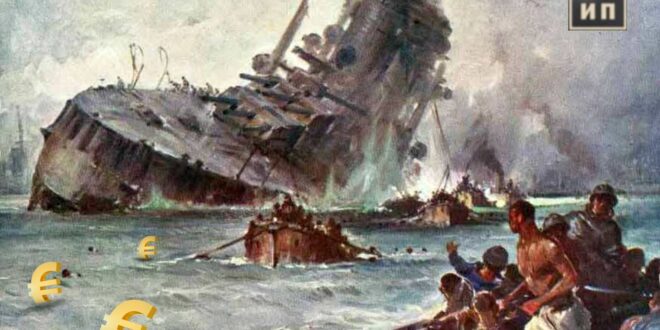
Publications - Sinking of Austrian dreadnought battleship Viribus Unitis in Pola war harbor in last days of WW1
[1] Kermekchiev, 1915
[2] Toshev -2, 1931, 320,321, 347-348
[3] Djemal Pasha, 1922, 45-56
[4] Markov, 1991: 23,27
[5] Danev, 1992, 212
[6] Clark 2015, 230-240
[7] Kermekchiev, 1915, 165-166
[8] Markov, 1991
[9] Gotsev, 1981
[10] Hristov, 1984
[11] Markov, 1991, 65 p.
[12] Kermekchiev, 1915, p. 30
[13] Bozhinov, 1914