EKIP– Expert Club for Economics and Politics A Different Opinion
Author: Walter Kirn
About five years ago, I bought an old juicer for seven dollars at a thrift store. It was one of those small, old-fashioned kitchen gadgets that looked like they were built to withstand a blast or a hammer blow. As soon as I turned the motor on with the metal knob, the drive shaft spun a heavy ceramic head designed to scoop out the insides of halved lemons and oranges. The machine worked beautifully, almost like new, so I looked up its serial number online to see when it was made, figuring it might be nearly forty years old. Wrong. It was made in the 1940s. The stubborn monster is seventy years old and still delivers satisfaction with every use.
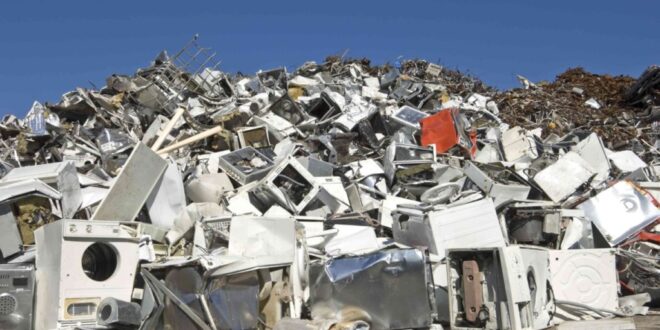
I can't say the same about my coffee grinders. I use the plural because I've had many coffee grinders, all of them bought in their original packaging and broken within a year. They're supposed to be good quality, with burrs, not blades, but they've long since stopped functioning, completing a long journey from distant factories to the nameless graves of my local landfill. I have an entire alternative kitchen in the same landfill, and I'll soon need extra space for more. For the cool mini-fridge that stopped cooling after three years and no one can fix it. For the cool bagless vacuum cleaner that clogs up as soon as I run it over carpet. For the set of measuring cups that no longer have numbers or measurement markings. For the remains of the Pyrex saucepan that broke as I was taking it out of the oven, scattering tiny, sharp pieces of metal so small I won't find them until they get stuck in someone's bare foot.
Do I need to continue? I will. It’s important to get to the deep, speculative part, where I discuss what it means for the objects in our lives to demoralize us through a storm of breakdowns, but it’s also important—for me, emotionally—to bury the reader in detail about my endless material disappointments. The cute yellow gloves my wife bought at Target that unraveled on the second wear. The new suitcase that wouldn’t stand upright when full. The laptops that turned into bricks a month after the warranty expired. The 50,000-mile hybrid that also turned into a brick while driving 120 on the highway, with the brakes and steering failing. I miraculously survived, threatened to sue, and the manufacturer fixed the car for free. Two weeks later, it broke again.
The same goes for the little things. A stapler that can't hold five sheets of paper together. A match that smokes but doesn't burn. Paper bags split at the corners from poorly packaged and leaking milk. The strangely short cords of electrical appliances. Two new pens every week because they don't release ink (at least not continuously in lines), and they're not actually pens, but just conceptual models for pens. Potemkin pens, props. And on and on.
Confused about how to measure the decline in the quality of simple everyday objects, I took the topic to my Twitter audience, where I quickly gathered two thousand responses, my longest social media discussion. The complaints were specific and formed recurring patterns. One of them was hatred for the new washers and dryers because they don't wash and dry well, and then break. The clothes that go in them are also not to my liking. A former top executive at Levi's chimed in to confirm that jeans aren't what they used to be. My favorite Twitter responses, though, are the petty ones. For example, someone noted that the juice content of juice is declining. Another observed that foaming liquid soap is normal liquid soap, but diluted.
Many blame the government for these problems. They believe it has ruined a lot of products through environmental regulations, leading them to quickly deteriorate and become landfill filler. Some blame our trade relations with China and even the “evils of capitalism.” Fragile chips in things that don’t require them also come under fire in the comments. One type of philosophical response mentions a sinister general trend toward the decay of all things human. “There is a war on true value, consisting of three parts: a war on quality, a war on money, a war on life in general.” High-flown rhetoric, but understandable. When my de-electrified hybrid has become a huge whirring rock in which my wife and I are helplessly tethered—for the crime of trying to save fuel and damage the planet—it’s somehow hard not to feel cheated, misled.
Several of my online interlocutors challenged my main thesis – that the situation is getting worse, and worse. They presented economic arguments. They argued that things are worse because we want them cheaper, but when you factor in inflation, the quality is what it always was. I disagree. Our new washing machine, with its symbol-smeared knobs and knobs, its enamel worn in the corners, is the most expensive model I’ve ever bought. As for the cheaper things – like my wife’s yellow gloves – they’re not cheap, they’re worthless. In fact, they have a negative value, because of the wasted material and the wasted energy going out to buy them, and returning them – a second trip that simply wasn’t worth making. Instead, we took the loss. And the world took the loss. Small, but the negatives add up.
Writing in 19th-century England, John Ruskin and William Morris believed that the quality of material objects reflected and influenced the quality of a society, even its spirit. “Have nothing in your house,” said Morris, the father of the Arts and Crafts movement, “that you do not know to be useful or believe to be beautiful.” That would be especially difficult today. My wife recently needed a carrot peeler. She needed it urgently. The one she bought, the only one in the store, looked good enough, and we recognized the brand. Unfortunately, the peeler failed to be useful—it was not sharp enough to peel a carrot. Like my pens, which are not pens, because real pens put ink on paper, her peeler, which did not peel, is an unreality, a simulacrum, a representation of something but not the thing itself.
We're told the world is going digital, and someday there will be digital real estate, populated by people in digital clothes, drinking digital orange juice squeezed by digital juicers. People will play out the lives they once took seriously, lives that once had meaning and weight. The juice content of the juice will become zero, and my old physical juicer will still work, while the rest of my kitchen equipment won't. Not most of it.
I might not last either. I'm afraid I won't. The psychological toll of goods that don't last is that one loses faith that the future will ever come. Then one loses interest in the future coming, because it seems to one that little of what one uses or values will be with us to meet it.
You start to wonder - whose obsolescence is planned, our products or ourselves?
The article is a translation from Walter Kirn's substack. Stoyan Panchev decided to share it with the readers of EKIP because he was starting to feel like the author.