EKIP– Expert Club for Economics and Politics A Different Opinion
Free speech and its attacks are always relevant. Especially in recent days.
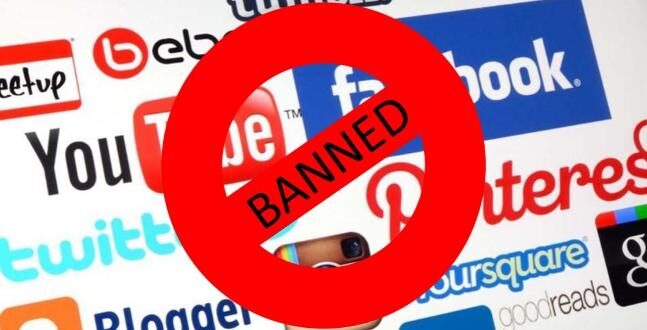
Trump's banishment from Twitter and the removal of the Parler platform from Apple and Google stores are yet another reason to remember that freedom of expression is perhaps the most important of the entire set of fundamental rights, the achievement of which has cost many lives over time, and today some contemporaries are too quick in their willingness to give it up or, worse, to insist on its selective application.
In this regard, I present to you some of my spontaneous thoughts in the form of questions I ask myself and answers I give myself. I make no claims for the comprehensiveness and correctness of the arguments presented. Rather, I am starting a discussion, as I am interested in who has what to say on the matter.
1. Was Twitter right to suspend Trump's account?
2. Should social media profiles be closed due to an alleged crime committed by their owners?
3. Is it OK for operators of the main operating systems for smart devices (phones, tablets, TVs) to limit or block access to applications to their "stores" (app stores)?
This is extremely problematic given that (1) the average user can only install an application through the store of the operating system provider they use, (2) the providers operate in an oligopoly, as there are only 2 of them: Apple and Google, and (3) they completely control the access of application developers to their stores.
Yes, in some cases there is a reason to exercise control, for example in view of the security of end devices and to prevent or remove applications with malicious code or in view of other considerations of user protection or protection of minors or underage users.
They also owe cooperation to law enforcement agencies in investigating and solving crimes. But cutting off their users' access to a social network (Parler)** just because they did not approve of the information shared there or because the latter was not subject to moderation, is too close to what Orwell described.
It may be covered by Apple and Google's general terms and conditions for both their users and application developers, but for the reasons developed here, I find it not only deeply wrong, but also possibly legally invalid.
4. What could be the solutions?
For me, the only option is through the courts. The relationship between tech giants and consumers on the one hand and app developers on the other is contractual. According to Art. 26, para. 1, proposition 1 of our Obligations and Contracts Act (ZZD), contracts that contradict the law are void, and both the entire contract and only its individual parts can be void (see Art. 26, para. 4 of the ZZD). Such norms are also known in many other jurisdictions. For the party claiming the nullity of a contract or part of it, a legal interest arises to request the establishment of this nullity with the force of res judicata.
Can a contract be void due to a contradiction with (a provision of) the Constitution of the Republic of Bulgaria (CBR)? In my opinion, yes. Could this provision be Art. 39, para. 1 of the CBR: “Everyone has the right to express an opinion and to disseminate it through speech - written or oral, through sound, image or in any other way.”? In my opinion, it is controversial on two counts.
First, the settled case law on Art. 26, para. 1, sentence 1 assumes that only a violation of a prohibitive legal norm can lead to the nullity of the contract on the basis of the cited norm. In this sense, Art. 39, para. 1 of the Code of Civil Procedure is not formulated as a prohibitive norm, as is the case, for example, with Art. 32, para. 2 of the Code of Civil Procedure, according to which “No one may be followed, photographed, filmed, recorded or subjected to other similar actions without his knowledge or despite his explicit consent, except in the cases provided for by law.” On the basis of the latter, there are a number of decisions awarding damages for damages resulting from illegal filming.
Secondly, and also problematic, is that according to the widespread (constitutional) legal understanding in our country, the addressee of fundamental rights is the state. According to Drumeva***, modern legal doctrine has accepted that, exceptionally, fundamental rights can have an addressee in private law. According to the same author, this is a deviation from the general rule that fundamental rights operate vertically (defense of the citizen against the state) and a recognition that, exceptionally, fundamental rights can have a horizontal effect (in private law, towards other citizens). The justification is the importance of fundamental rights as objective values. However, this deviation from the general rule is permissible only when it is assessed that, according to the circumstances, private autonomy must give way to the guarantee in favor of a third party, arising from specific fundamental rights; only then can fundamental rights also acquire effect in private law relations. For this situation, which presupposes judgment, legal science has introduced a specific term, established in constitutional science and practice, such as “Drittwirkung” from German, meaning the indirect effect of fundamental rights on third parties. Also, according to Drumeva, Bulgarian doctrine and constitutional practice have a cautious and restrained position regarding the so-called Drittwirkung of fundamental rights.
Viewed through the prism of Bulgarian law and in view of the above, the question arises (1) does the constitutional protection of free expression also apply in private law relations and, if so, (2) can a contract or general terms and conditions be declared null and void due to their contradiction with the constitutionally provided right of citizens to free expression? Here I can answer with a very categorical “it depends”.
This is indeed a question that the courts, in particular ours, will have to decide. However, there is a well-known case law from Germany regarding the deletion of statuses and comments and the blocking of Facebook profiles****, according to which a provision in the general terms and conditions of a social media operator, according to which the operator can remove all content that a user publishes if the operator is of the opinion that this violates the platform's guidelines, is null and void if the content falls within the scope of freedom of expression, since it places the user of the platform at an excessive disadvantage vis-à-vis the operator and this is contrary to the requirements of good faith.
The cited German practice is not isolated, there are other similar rulings. From it, it can be concluded, by argument for the stronger, that if the removal of content may be null and void because it conflicts with the right to free expression, then this will be even more true for blocking access to a platform or store of an operating system provider. I am not aware of any such or comparable case in our country. In view of the enormous stakes of free speech, it seems to me that the efforts should be to create it where it does not exist and to expand it where it already exists.