EKIP– Expert Club for Economics and Politics A Different Opinion
After a series of investigative reports on Nova TV, this morning all print and online media started the day with unambiguous headlines like "The Ministry of Education admitted to mass cheating in the matriculation exams." In a very similar scenario, after complaints from the owner of "Aladdin Foods" and the National Association of Dairy Processors, another public secret was revealed, that the Bulgarian Food Safety Agency (BFSA) is imposing a "quiet tax" on more than one or two businesses in the food industry.
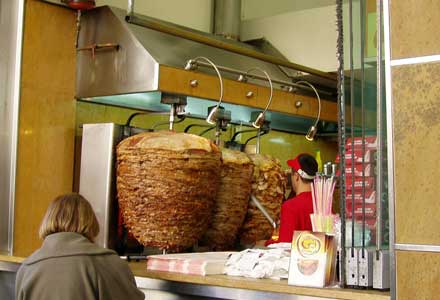
What unsafe foods and realistic educational achievements have in common is that their regulation, at least at the legal level, is in the hands and even monopolized by the state. Institutions run by the government put their stamp on the quality of the product – whether we are talking about a chain of doner restaurants or the entire secondary education. The problems with the matriculation exams and Aladdin's chicken originate from this monopoly.
Since neither the "Organization, Control and Inspection" Directorate at the Ministry of Education, Science and Technology nor the Bulgarian Agency for the Protection of the Public Security (BAFSA) have any legal competition, we see the emergence of a classic example of what economists call moral hazard. No matter how badly they cope with their tasks, no matter how much corruption they create or allow to be created, both organizations will continue to exist and work. Some heads may fall (like the insolent Plamen Mollov, former director of the agency), but the fees are collected, the Directorate at the Ministry of Education and the Bulgarian Agency for the Protection of the Public Security (BAFSA) remain, with them and all the same problems, but with a new generation of Mollovites.
The inadequacy of the two regulators has not gone unnoticed by those who consume their certificates and external assessments even before the reports and studio clashes. There is hardly anyone who waits for the document from the Bulgarian Food Safety Authority to buy sandwiches or pizza - we rely on what we see as appearance, on a recommendation from a friend, and recently on ratings from specialized sites such as zavedenia.com and TripAdvisor*. The situation is similar in education - no employer is interested in the achievements of the matriculation exams, and universities use them as an excuse to fill inflated student numbers. And, if you want to apply to a university with a strainer at the entrance, you will need some other important test results, such as SAT, TOEFL, GRE, etc. All (coincidentally) administered privately on a competitive basis.
In this competitive principle we can also find the key to the problem – regulators, who are in competition with each other, cannot rely on a monopoly imposed by government decree. Even more than with other organizations and businesses, what they rely on is reputation. If a regulator loses its good name while competing with others, it is unlikely to retain a large part of its customers. Can we imagine a scenario in which CNN makes a series of reports about mass cheating on the SAT, which does not lead to huge changes in the application system? Or if it turns out that TripAdvisor asks for “fees” for a higher rating?
*Even more so, knowing that the people who import rotten Irish meat are then made chiefs of chiefs in the BFSA - or check out the story about Miro the Skunk