EKIP– Expert Club for Economics and Politics A Different Opinion
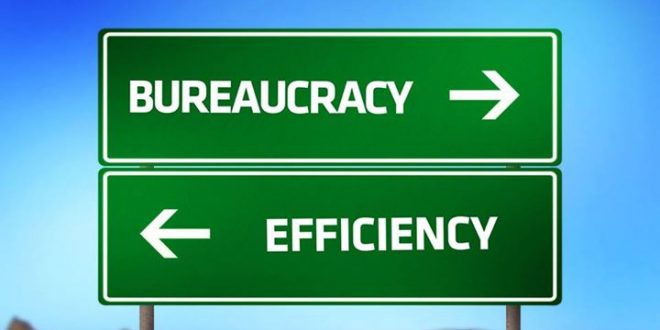
Will we draw ideas for our legislation from the countries with the most severe fiscal crises?
In folk literature, there is an aphorism "when he says good evening to me, I look around to see where the sun is". The same applies when the government promises to lighten the burden on every ordinary citizen - the administrative burden. Waiting in lines at institutions and banks, collecting documentation, filling out unnecessary declarations, going around counters and offices, all with the aim of following bureaucratic regulations.
All these activities, besides being an anecdotal experience of every native taxpayer, have been calculated and systematized by the World Bank, which places our country in last place in the EU in terms of tax administration. In our country, according to the Doing Business study from 2017, paying taxes for a small or medium-sized company takes 453 hours per year, for comparison in Germany the same is achieved in 218 hours, and in our northern neighbors for 161. Only tax audits on corporate taxation in Bulgaria take as much time as all activities with the tax administration in Estonia – about 80 hours. We are far behind.
The lives of bureaucrats are made easier at the expense of citizens
Against this background, in mid-September, the Ministry of Finance presented a number of new regulations through amendments to the Value Added Tax Act. Their main goal is to make life easier for bureaucrats, at the expense of the time and efforts of citizens and businesses. No matter how much they contradict the stated goals of the government, namely "reducing the administrative burden", the new regulations follow a central policy of the treasury in recent years. If money fails to be collected in the budget under one line or another, restrictions, penalties and even newly imposed obligations on taxpayers are introduced.
In other words – the failure of Minister Goranov’s wards is transferred to ordinary citizens. A classic example from the recent past is the regulation that requires legal entities renting premises from individuals to pay a tax that their landlords owe, and then get it back by reducing the value of the rent. The reason – it is easier for the NRA to collect receivables from companies than from citizens. Of course, paying foreign taxes requires additional writing, paperwork, and work by accountants. This does not matter, because officials manage to transfer their work to small and medium-sized businesses.
In a similar vein are the new proposals of the Ministry of Finance regarding courier companies and excise goods. Couriers will have to require senders to provide declarations that they have paid the excise duty or the excise stamp on the goods they are sending. If it turns out that someone has sent such an item without paying, the transport company will be punished, unless it agrees to “betray” its customers and help customs officers. In addition to creating a network of informants made up of businesses against their customers, customs officers will also be given police functions – to require ID cards from citizens.
The level of statesmanship and policy-making in the Ministry of Finance extends to measures that have long been left over from the 20th century. Taxes will be collected with police force, in effect with a new force structure for tobacco and alcohol. In the same spirit, it is proposed to create a “black list” of commercial establishments that are subject to sealing and will be announced publicly and in the media, something like “enemies of the treasury”. One of the good practices, the 5 percent discount on taxes for individuals who filed their declarations online, is also being eliminated. The move is towards the complete elimination of positive working incentives at the expense of negative non-working ones.
Another senseless restriction on financial freedom
The icing on the cake in the proposed amendments is yet another attempt to lower the ceiling on cash payments. After it became clear just over a month ago that the idea of lowering the ceiling from 10,000 leva to 1,000 or 5,000 leva was not accepted by the public and experts, after both proposals failed to pass votes in parliament, the attempts have been renewed, once again with false arguments.
The first is that this is the practice in the European Union. A quick look shows that in many places in Europe there are no ceilings at all– Germany, Austria, the UK, Sweden, Lithuania, Estonia, Slovenia are just a few examples. In other places where there are limits, such as the Czech Republic and Slovakia, the ceiling is around 15,000 euros, i.e. higher than ours at the moment. What unites the countries with low cash ceilings, such as Spain, Portugal and Greece, is the poor state of public finances. Will we draw ideas for our financial legislation from the countries with the most severe fiscal crises?
The second false argument is that “no increase in the administrative burden is expected” for citizens and economic operators. It seems that importers are not aware that storing funds in a bank and performing banking operations is not free. Unfortunately, working with financial institutions itself often resembles a meeting with a heavy bureaucratic machine. The Ministry of Finance does not care about the bank fees paid or the time lost, what is important is the 1.2 million leva additional revenue expected by them (which is unlikely to materialize) and the ability to keep an eye on every transaction of Bulgarian citizens.
We are left to wonder: after the police and customs services, the blacklists, the declarations and the cash ceilings, where is the relief for citizens? Or are we referring to specific citizens – the officials and the politicians?
Original publication: Trud newspaper