EKIP– Expert Club for Economics and Politics A Different Opinion

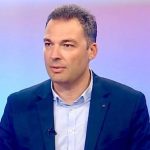
The pretty lady in the photo is Vera Jourova, the European Commissioner responsible for Justice. Under her supervision, so to speak, is the Cooperation and Verification Mechanism, which Bulgaria and Romania agreed to participate in in order to join the European Union in 2007.
Within the framework of this same mechanism, the now infamous reports on our progress in the field of justice are prepared.
Why the infamous reputation?
Very simply - because against the backdrop of 10 years of presence (not equal to participation!) in the EU and 15 (fifteen) monitoring reports in numbers and words, our country can boast of barely anemic progress in the most important of all authorities - the judiciary.
Two days ago, the second report for this year and the 16th in a row was published.
About a month ago, there was a rumor that it would be particularly positive. This was said by both the President of the European Commission Jean-Claude Juncker and his Czech counterpart, the aforementioned Vera Jourová.
Is the report really that positive?
Let's see:
Of the 17 recommendations presented in the last report from January this year, the parliament, government and the Supreme Judicial Council have dealt with only 3 of them, specifically
– election of the members of the Supreme Judicial Council from the parliamentary quota (recommendation 1),
– establishing a mechanism for public reporting on progress in high-level corruption cases (recommendation 16) and
– adoption of amendments to the Law on the Confiscation of Illegally Acquired Property in Favor of the State (recommendation 17).
It should be borne in mind that this assessment is not unconditional, since in view of recommendation 1, the European Commission expects the new SJC (yet) to show will and convincing results, and with regard to recommendations 16 and 17, the "progressive trend" should be maintained.
That is, Brussels is once again reporting "positive developments", but in exactly the same sequence they point out that there are simply no visible results.
Yes, that's the situation. Despite its highly sugary style, the report barely manages to hide the quinine bitterness that the reluctance of domestic politics and the prosecutor's office to finally move in the right direction causes in our European partners.
Unfortunately, the report, besides following the general diplomatic etiquette, also suffers from an additional softness in the language due to the upcoming Bulgarian presidency of the Council of the EU. This is precisely why, when reading it, we should not concentrate on the literal meaning of its text, but rather delve into what is unsaid or downright silent.
What remains unfinished?
Apparently very important for the European Commission is the indicator "independence of the judiciary", which covers the first 3 recommendations:
- 1. to guarantee a transparent selection of the members of the future SJC, and before the selection of the members from the parliamentary quota, a public hearing should be held in the National Assembly and representatives of civil society should be given the opportunity to comment on the candidates.
- 2. to establish a practice for the appointment of senior judicial positions to be transparent and based on the qualities of the candidates, and this should also apply to the upcoming appointment of a new President of the Supreme Administrative Court.
- 3. to improve the practical functioning of the ISJC and the follow-up of the Supreme Judicial Council in response to the Inspectorate's findings, especially with regard to issues related to the integrity of magistrates; to consider the possibility of requesting external assistance, for example from the SPSR and/or the Council of Europe.
Two things are striking here:
First, this is the positive attitude towards the election of the new composition of the SJC, especially as it concerns the members of the professional colleges, especially the judicial college.
Second, the absence of any comment on the election of Georgi Cholakov as the new chairman of the Supreme Administrative Court. This, of course, cannot be surprising, because we all still remember very well the grotesqueness that accompanied his nomination, his unconvincing performance in two consecutive hearings and the many remaining unresolved doubts about the lack of necessary moral and professional qualities.
The commentary on indicator 2 "regulation", which contains recommendation 4:
- 4. to adopt amendments to the Criminal Procedure Code and the Criminal Code to improve the regulatory framework for the criminal prosecution of high-level corruption and serious organized crime.
It also cannot have caused any particular joy among the government and the prosecutor's office.
And this is because the amendments to the Criminal Procedure Code were adopted too quickly and opaquely, without debate and discussion, and led to serious distortions, both in the rules of judicial procedure and in the special right given to the prosecutor's office to remove inconvenient magistrates.
Highlighting the steps taken as something positive only reinforces what we all already know – no meaningful goals can be achieved this way.
Indicator 3 refers to “continuing judicial reform” and consists of 4 recommendations:
- 5. Publish for public consultation a report detailing the progress made in implementing the national judicial reform strategy and identifying the remaining steps that need to be taken. Establish a mechanism for continuous public reporting on progress throughout the remainder of the strategy’s implementation period.
- 6. to find a solution to the workload situation in the busiest courts based on the new workload standards and to reach agreement on a roadmap for reform of the judicial map in parallel with the development of e-justice.
- 7. to prepare a roadmap for the implementation of the recommendations of the SPSR in relation to the reform of the prosecution service and its interaction with other institutions, including a mechanism for reporting on the progress achieved to the general public.
- 8. to prepare a roadmap for the implementation of the recommendations contained in the study, including a mechanism for reporting on the progress achieved to the general public.
There is a lot written here, but against this background, what has actually been said is almost insignificant. This is because there is not much to say. Except, perhaps, that in the person of Ekaterina Zaharieva we have a whole deputy prime minister for judicial reform, but that the latter (for now) ended with the resignation of Hristo Ivanov from the post of Minister of Justice at the end of 2015.
It is quite normal in this regard to be the embarrassed silence regarding the "prosecutor's office reform". According to the report, it has important enough things to do, such as drawing various roadmaps or studying analyses by the European Court of Human Rights (ECHR). The effect is zero, but the European Commission is optimistic that at some point it may yield results.
Corruption at the highest levels of power– this political-judicial evergreen of the domestic reality and indicator 4 in the report also shelters 4 recommendations:
- 9. Adopt new legislation on the fight against corruption in line with the objectives set out in the anti-corruption strategy and ensure its implementation. Establish an effective anti-corruption body.
- 10. to adopt and implement a reform of the Administration Act with the aim of strengthening the internal inspectorates in the state administration.
- 11. Based on the analysis of completed cases, a roadmap should be prepared for interaction between all relevant institutions to eliminate weaknesses in the investigation and prosecution of cases of corruption at the highest levels of power, and this roadmap should also include a mechanism for reporting on the progress achieved to the general public.
- 12. Establish a mechanism for public reporting on progress in high-level corruption cases that are already publicly available. While respecting the presumption of innocence, the Prosecutor General should report on investigations and indictments. The Supreme Court of Cassation and the Ministry of Justice should report on convictions and the execution of sentences.
Amidst the many supposedly encouraging twists and turns, the message that stands out here is that whatever reforms our country implements in this sector, it must first and foremost achieve lasting results in the field of effective investigation, detection and prosecution of corruption . And that such currently does not exist is known not only to the little children from the Prince's Kindergarten, but also to the employees of the European Commission.
Corruption more generally, especially in the area of public procurement, is embedded in indicator 5 and the following 3 recommendations:
- 13. to carry out external control over the preliminary checks of public procurement procedures and the related follow-up actions, including the follow-up checks, as well as in relation to the revealed cases of conflict of interest or corruption and the corrective measures to eliminate the identified shortcomings.
- 14. Introduce risk-based measures to counter corruption at the lower levels of government in high-risk sectors within the state administration, drawing inspiration from the achievements in the Ministry of Interior. Efforts should be continued in the Ministry of Interior.
- 15. to establish a mechanism for public reporting on progress in the implementation of the national anti-corruption strategy for the remaining part of the strategy's implementation period.
In this part of the report, the balance seems to be better – both what is written is little, and what is said is clear. The latter is seen quite well in the statement that some kind of feverish review and evaluation of sector plans is brewing, and as for public procurement, for example, it is planned to assign an external contractor to carry out such an evaluation in 2018. For better or worse, but there is no other progress to report here.
The last indicator 6 "organized crime" also contains the last 2 recommendations:
- 16. Establish a mechanism for public reporting on progress in high-level corruption cases that are already publicly available. While respecting the presumption of innocence, the Prosecutor General should report on investigations and indictments. The Supreme Court of Cassation and the Ministry of Justice should report on convictions and the execution of sentences.
- 17. to adopt the necessary amendments to the Law on the Confiscation of Illegally Acquired Property in Favor of the State and to ensure that the Commission for the Confiscation of Illegally Acquired Property will continue to work independently and effectively.
Whether because they are last, or for some other reason, the alleged implementation of these recommendations also receives the most praise from the report's compilers. Well, there are some doubts, such as whether the Specialized Criminal Court will really deal with corruption cases, but let's not be so pessimistic and give the magistrates there a chance to work, right?
Instead of a conclusion
We cannot fail to take into account the extremely difficult balancing act that the European Commission is making with its second monitoring report this year. It is strongly motivated by the dilemma of whether to support the "Borisov 3" cabinet and Prosecutor General Tsatsarov, or to still stand on the side of the law and approach Bulgaria as it is currently acting towards Poland. The second option is extremely risky in view of our country's upcoming rotating presidency, the problematic international situation that the Prime Minister is using to present Bulgaria as a guarantor of security in the southeastern corner of the European Union, and of course, the need to explain how a country with catastrophic justice indicators like Bulgaria has been part of the European Union for 10 years?
Therefore, the preference goes to the first option, in which politics manifests itself from its ugliest and most hypocritical side.
I have no doubt that Brussels is aware of this. However, I doubt their assessment that the decision to sacrifice the most European-minded citizens in our country in order to guarantee a peaceful presidency will be justified in the long term. As I have already said, there remains the possibility of reading between the lines. And then the impression is imposed that the report is even so positive that it is even with the opposite sign.