EKIP– Expert Club for Economics and Politics A Different Opinion
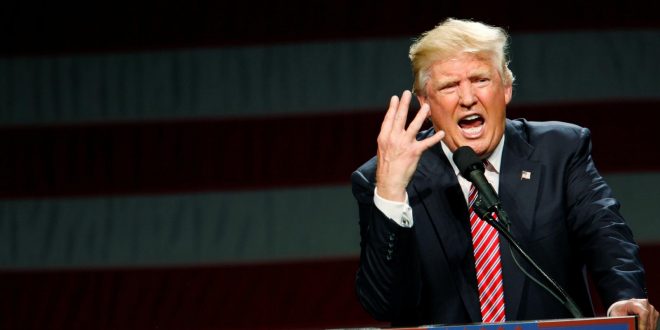
At this stage of Donald Trump's presidency, it is extremely difficult to answer unequivocally the question of whether his term has been successful in economic terms. On the one hand, we have undoubtedly successfully implemented economic reforms, such as the reduction of corporate and personal tax rates, as well as the deregulation of a number of over-regulated sectors of the American economy. These economic reforms have untied the hands of American business and have immediately had a positive impact on economic growth, the investment climate, the labor market and the capital markets of the United States. As a result, the largest economy in the world has begun to register growth rates comparable to those of the Bulgarian economy. These are successes that any rationally thinking person cannot deny.
The main problem in economic policy during Trump's presidency remains the exponentially rising public spending and national debt of the United States. In his election campaign, Trump promised that, regardless of the heavy political negatives he would take on, he would do everything necessary to reduce and optimize public spending. He even made loud statements that he would clear the entire national debt during his presidency. Almost three years after he took office, the United States continues to register record public spending, and the national debt has exceeded the record 22 trillion dollars. Without a doubt, public finances under Donald Trump are a total failure for a right-wing party, such as the Republican Party, which is trying to market itself as such.
Trump's biggest economic failure, however, remains his ideologically flawed approach to U.S. foreign trade, with all the tariffs and economic sanctions he has imposed on key trading partners. At the beginning of his term, the fundamental thesis behind the tariffs he imposed was to eliminate the trade deficit that the U.S. runs with some countries. It is important to note that a trade deficit is not necessarily a negative thing from an economic perspective, but that is another topic entirely.
In the last year, however, we have witnessed a profound conceptual shift in the argument behind tariffs. What Trump is actually implementing is no longer even classical Mercantilism, which is an economic doctrine that aims to protect a country's private business by imposing tariffs on imports to make foreign goods more expensive in a non-market way and through government subsidies to stimulate domestic production.
What Trump is doing is something completely different and very dangerous. By imposing tariffs on certain countries, he is actually seeking to achieve goals that are not necessarily economic. Here, the most recent examples with China and Mexico are extremely relevant and important, because they are the first and third largest trading partners of the United States. In the case of China, he banned American telecoms from using Chinese technology and on the other hand imposed a new package of tariffs on China, which are estimated at 300 billion dollars. The reasons that are highlighted here are two.
The first is that there are serious concerns about whether the Chinese state will misuse its 5G technology. Another factor behind this decision by the Trump administration is the technological superiority that China has in this sector. The situation with Mexico is largely very similar. At the end of last week, Donald Trump imposed tariffs of 5% on all Mexican imports with the US, and this rate can reach 25% at his discretion. As in the case of China, there is no clear economic goal here. Trump said that these tariffs will remain in force until Mexico takes significant steps to control illegal migration from Mexico to the US.
At the beginning, I mentioned the extremely positive tax cuts and the positive effect they had on economic growth and the investment climate in the United States. From an economic perspective, tariffs are a tax on American businesses and consumers. Every new tariff that the United States imposes on one of its trading partners directly reduces the disposable income of end consumers because they directly increase the cost of the goods in question.
On the other hand, tariffs increase the production costs of American manufacturers, which in turn makes the entire economy less competitive. The Tax Foundation estimates that the latest round of tariffs on China will raise an additional $72 billion a year for the United States, the largest increase in the country's tax burden since 1993. Unfortunately, Trump's trade wars have largely offset the positive economic impact of tax cuts since the beginning of his term.
The ease, speed, and lack of sound economic logic with which Trump is imposing these tariffs will ultimately inevitably lead to a deterioration in the investment climate in the United States and limit economic growth. Businesses are extremely sensitive to such significant economic shocks. In the first quarter of 2019, business investment in the United States grew by 2.3%, with an average growth of 3.4% over the past three quarters. This 1.1% decline is a clear signal that US businesses do not approve of Trump’s strategy of restricting the free market.
US equity markets also have a negative view of trade wars. May 2019 was the worst month for equity markets since 2010, further reinforcing the argument that investors are negative about tariffs. When Donald Trump announced his candidacy for US president in 2015, he said in his speech that he was a “Free Trader,” meaning he supported free trade. However, his actions as president have shown that he has absolutely nothing to do with free trade, and this could hurt his chances of being re-elected in 2020.