EKIP– Expert Club for Economics and Politics A Different Opinion
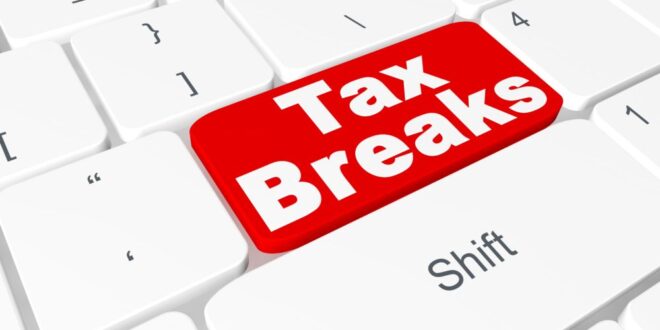
Last week, the Association of Language Centers in Bulgaria joined the growing number of professional associations that asked the government to provide tax breaks due to difficulties related to the Covid-19 pandemic and the resulting economic crisis. As expected, given the existing problems with face-to-face education in classrooms. Schools are losing customers on the one hand, and on the other hand they are having to invest in software products, changing materials, training teachers and the like.
It is a pleasant surprise that, unlike the established tradition of the last decade, with private teachers, as well as earlier with restaurateurs, publishers, and retailers of children's goods, the demands are not related to direct subsidies from the budget or regulatory measures to limit competition. The 2020 crisis led us to the first successful discounts on the amount of value added tax outside of tourism.
Debates about reducing VAT for various goods appear cyclically in the Bulgarian public space, what is new is that for the first time we see a reversal on the part of the political authorities. Unfortunately, this reversal is not due to a changed understanding of the importance of the maximum freedom of operation of small and medium-sized businesses, without tax, social security and regulatory burdens. It is rather due to a change in the basic budgetary philosophy of the government - it no longer intends to take its expenses into account.
This change happened in a summer of protest. When in the spring a reduction in VAT for establishments affected by the lockdown was being discussed, the then leadership of the Ministry of Finance was worried about the negative effect of this measure on the fiscal budget in the amount of 180 million leva. Speakers, debates, serious political and expert resistance were organized against the relief. Just a few months later, the Prime Minister announced an increase in salaries in the Ministry of Interior worth 231 million leva, an additional 143 million leva for child allowances for those not falling within the income criterion, 360 million leva for an increase in teachers' salaries and much more. There was no resistance to the billions in new election expenses, it remained only for tax relief.
In any case, such moves are difficult to reverse. Politically, there is no question of reducing salaries in the public sector, child and pension supplements will be difficult to stop, even tax breaks are expected to be extended beyond their current short-term horizon. It is no coincidence that the projected deficit on an accrual basis in 2020 is expected to be 5.2%, and in 2021 5.0%, even considering that the forecasts for economic growth and budget revenues are based on optimistic expectations, to say the least. It is entirely possible that at the end of 2021 we will see a government debt of over 30%.
In this situation, it is easy to fall into the trap of rhetoric that morally, economically and politically equates tax breaks with pre-election populist spending. Sooner or later, the argument will be made that taxes for some (for example, the middle class, declared to be the “rich”) will have to be raised because bad entrepreneurs demanded relief after their businesses were forcibly closed or curtailed. In fact, the Minister of Social Affairs is even testing an increase in the maximum social security income, along with giving out 50 leva to pensioners – the increase in the MOD is in practice raising taxes for the middle class.
Such an equation should not be allowed. While tax breaks provide space for businesses squeezed by the pandemic and recession, social redistribution buys votes with money borrowed from the future. With the breaks, businesses can have a little more than what they have worked out themselves, while the “40 leva, there and 50 leva here” scheme shows a political apparatus that, unlike the rest of society, is not only not tightening its belts, but is also more loose than ever. Lower taxes lead to growth and development, while deficits and debt lead to stagnation and hardship.
Since the many VAT debates in the past, the question has been which forms of tax relief are most suitable for maintaining fiscal stability and balance. The balance lies in the fact that direct taxes should not be increased due to the reduction of indirect taxes. The fact is that most economists in our country are fans of equal rates, which may be the right approach only if it comes to reducing them. Regardless of whether we are talking about direct or indirect taxes.
A certain challenge is also the European rule, which sets a lower limit for the basic VAT rate at 15%. Reaching this lower limit is a good starting point for discussions. The already outdated threshold for VAT registration, which is currently BGN 50,000, can be addressed even more quickly. At the beginning of the crisis, my colleagues from the EQUIP and I proposed increasing it by at least two times, so that many businesses can realize fresh savings.
Despite the fact that after the change in the philosophy of the country's budget policy in 2020, there is a heavy reliance on new debts (nearly 8 billion for 2020) and the expected funds from the European Recovery Fund, even the BNB warns of a medium-term danger of tax increases. Our politicians have followed the path of our southern neighbors, who had the imprudence to rely on loans and EU programs and were then placed under the rule of the hated Troika.
Speaking of the Troika, the latest report issued by the International Monetary Fund mission at the beginning of this week also cannot serve as any positive corrective to the new government policy. It revolves around the strange idea that by stimulating public sector wages and through additional social spending, the country can cause the preservation of the structure of the economy as a result of demand stimulated by the new spending. This was possible thanks to the fiscal space that the country has as a result of twenty-four years of sensible budget policy. Reason, which is clearly already running out. In any case, the IMF is slightly shy in commenting that after the end of 2021, the treasury will need more money, which will come from “increasing tax collection” and “corresponding measures on the revenue side” – i.e. even higher taxes.
It is important that both professional business organizations and the most threatened middle-class citizens are ready to oppose such a move. To demand that the government stop reveling during the plague and return to within the fiscal constraints of 40% of GDP. Someone will have to pay for the waste that has begun, the important thing is that it be the politicians and the administration, not the productive part of society, responsible for their maintenance.
The article was originally published in the newspaper "Trud"