EKIP– Expert Club for Economics and Politics A Different Opinion
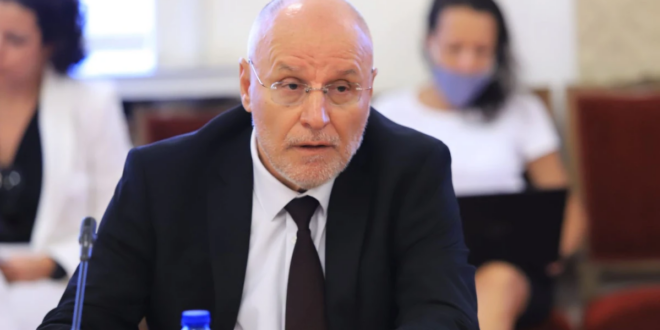
At a parliamentary hearing last week, we witnessed yet another shameful circus regarding the future of Bulgaria’s currency regime. Bulgarian National Bank Governor Dimitar Radev attempted to evade responsibility for providing an analysis of the consequences of Bulgaria’s potential accession to the eurozone.
In a hearing on the possible introduction of the euro in 2024, Radev surprisingly stated that the decision to enter the eurozone is political, not expert, and accordingly there is no need for a central bank analysis on the topic. He even said that there is already enough analysis and another one has nothing to contribute.
Is the BNB governor evading responsibility?
This behavior of the BNB Governor is both surprising and extremely worrying for a number of reasons. First of all, because the Budget and Finance Committee of the previous (47th) National Assembly decided that the BNB should prepare and publicly present a report on the economic consequences of joining the eurozone. This was included in the plan for adopting the euro. The BNB had no objections at the time, but now suddenly the central bank governor himself seems to be trying to reject this responsibility, which was assigned to him by the parliament itself.
Furthermore, it is not true that there is “enough analysis” on the topic. In reality, the BNB does not have a current and in-depth analysis of the macroeconomic consequences for Bulgaria of a possible accession to the eurozone, specifically on the current target date of January 1, 2024. Has anyone ever heard of a focused analysis by the BNB on the topic? Even if one has ever been done, it is certainly not up-to-date as of this date. Since I have been following the topic of the eurozone (since 2017), I have not seen a single publicly presented analysis by the BNB on the possible consequences of adopting the euro.
The question of the currency regime is certainly an expert one.
It is also not true that the currency issue is political, not expert. It is certainly political, at least because it ultimately depends on making a political decision, but it is undoubtedly also expert. Even for laymen it is obvious that the currency regime of a country is of paramount importance for its economic development. I think Radev himself would agree that with regard to decisions that may have very significant long-term economic consequences for Bulgaria, it is highly advisable for politicians to first consult with economic experts.
Moreover, the expert logically precedes the political. In order for politicians (and/or the citizens they represent) to make the most informed and adequate decision on the topic, the experts must first speak out and their expertise must be duly taken into account. Alas, so far the institution that should represent the highest level of expertise in the field of economics and monetary policy in particular – the Bulgarian National Bank – has not yet provided its own objective expert analysis of the consequences of the proposed change in the currency regime.
For some reason, Dimitar Radev is trying to escape the natural expert responsibility he bears as the governor of the Bulgarian National Bank. But why? Maybe Radev is worried that an objective analysis will show that the negatives of the euro far outweigh the positives? This is very likely. Radev is not ignorant, he is aware of the structural economic problems and internal contradictions of the eurozone. He knows that since it has existed, instead of supporting economic convergence, the difference in economic development between countries like Italy and Greece on the one hand and Germany and the Netherlands on the other, is greater than before the adoption of the common currency. He also knows that all the economic problems of the eurozone are about to be further deepened by the energy crisis, which generates an existential threat to the business model of the main economic engine of the eurozone - Germany.
What do the experts actually say?
Much has been written about the economic problems and structural shortcomings of the eurozone in expert economic literature, and the failure of the project is considered an obvious fact by Nobel laureates such as Paul Krugman and Joseph Stiglitz. Milton Friedman, perhaps the most influential economist of the 20th century, said as early as 1997 that the countries that adopted the euro a few years later did not form an optimal currency area.
We should not forget the critical contribution of Ashoka Modi, a professor at Princeton and former assistant director at the International Monetary Fund, in his book entitled “ EuroTragedy: A Drama in Nine Acts”. Beyond these names, as a representative of a more unorthodox critique of the eurozone, from the perspective of the Austrian School of Economics, stands out Philip Bagus, a professor at the King Juan Carlos University in Madrid, who is famous precisely for his book “ The Tragedy of the Euro”. As another prominent unorthodox critic, but from a quite different perspective, we cannot fail to mention Yanis Varoufakis, former Finance Minister of Greece, who during his academic career taught at Cambridge and Glasgow.
Is there any need to mention the Bulgarian experts who are harsh critics of the eurozone? The position of our organization, EKIP, on the subject has been clear for years, but alongside our criticism of the euro and opposition to the adoption of this currency are experts with otherwise very different economic views. A striking example is Assoc. Prof. Grigor Sariyski from the Institute for Economic Research at the Bulgarian Academy of Sciences, who has also been a harsh critic of the euro for years. Or Lyubomir Hristov, former chief economist of the Bulgarian National Bank, executive director of the Central Depository and advisor to the executive director of the World Bank, who called the eurozone a "trap" in his latest interview with the Bulgarian National Radio.
Maybe the expert debate is really over now
It is remarkable how many respected economists, from different schools of thought and convictions – from Keynesians like Krugman, to monetarists like Friedman, to representatives of the Austrian school like Bagus – are of the opinion that the eurozone suffers from deep structural contradictions and problems that make the common currency a failed project. Dimitar Radev should be well acquainted with this literature and is most likely aware that the critics of the euro project are some of the most respected names in the field of economic science in recent decades. And he is also aware that the arguments of such critics are more convincing than those of the defenders of the eurozone.
Most likely, this is why the BNB governor wants to pull the trigger and not provide an analysis of the pros and cons for Bulgaria of adopting the euro. Because he knows that such an analysis, if objective, will not be in favor of his explicit pro-euro position. If the analysis is not objective, it will very quickly be exposed as such in the public space and the prestigious reputation of the BNB and its governor will be tarnished. Maybe Dimitar Radev is really right when he claims that there are enough analyses on the topic of the euro. Maybe the expert debate on the currency issue is really over. And it has been won by the eurosceptics.