EKIP– Expert Club for Economics and Politics A Different Opinion
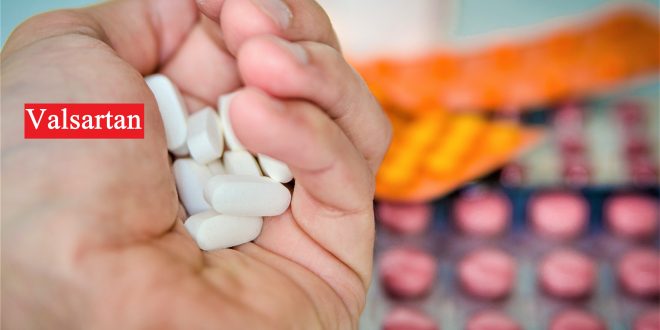
On July 5, 2018, EMA - the European Medicines Agency, issued a statement on the so-called "precautionary recall" of valsartan-containing products due to a signal received for a detected adulteration in the raw substance, namely NDMA - N-nitrosodimethylamine.
The alert was filed by the manufacturing company, namely China-based Zhejiang Huahai Pharmaceuticals, which discovered the adulteration as a result of standard batch control according to GMP requirements.
Due to the lack of accurate information in the media space, the following text aims to clarify all points related to the event.
What is valsartan and what is its relationship to NDMA?
Valsartan is the name of an active substance belonging to a group of medications known as Sartans or also ARBs (Angiotensin II Receptor Blockers), and its indications include the treatment of hypertension, diabetic nephropathy and heart failure. Valsartan is NOT found natively in food, beverages, household chemicals, perfumery or other household products, but is a product of rational drug design and the only way to enter the body is by taking medicinal products that contain it. The medication is NOT carcinogenic and does not lead to the development of cancer, and when therapeutic doses are observed, it does NOT lead to permanent and irreversible adverse drug reactions. Valsartan is one of the most widely used drug molecules, with a proven safety profile and the potential contamination of a production batch does not mean that therapy with it should be discontinued.
NDMA– dimethylnitrosamine is a waste product that is obtained as a by-product of a number of chemical syntheses – including that of valsartan. Its presence in the production batch is an incident and does not mean that every medicinal product containing valsartan also contains this chemical agent, since each batch is subject to extremely strict control. The agent is highly toxic to the liver and other organs, and a documented human carcinogen. NDMA is not a preservative and is not used in the food and beverage industry and the perfume industry, but is an impurity that is removed in standard manufacturing processes.
Why is this adulteration being discovered now, after the medicinal products on the Prohibited List have been on the market for a long time?
In this case, it concerns a change in the production process or analytical method of valsartan synthesis. In practice, this means that the impurity dimethylnitrosamine has been detected with a much more sensitive method that has not been used before, which serves as a kind of guarantee for its minimal amount.
What is the danger to patients?
At present, there is no final data on the amount of the impurity found in the substance, but based on a logical analysis of the technological process of the Chinese manufacturer, it is believed that the amount found in the batch is insufficient to cause a negative effect on the patient's health. The withdrawal of the medicinal products has mainly a PREVENTIVE purpose, and is in correlation with the strict safety rules of the EMA, and is not based on proven damage from any medicinal product on the prohibited list. Patients should not be concerned about having taken medicinal products containing valsartan, as well as current or future adverse drug reactions.
Why is the seizure of medicinal products on the Prohibited List required?
Due to the potential for harm to patients' health, the medicinal products containing the substance from the contaminated batch are being held in abeyance until they are released following the necessary laboratory analyses. Again, this is a precautionary measure and not a result of a proven health incident.
What steps should patients take and is there a possibility that they will be left without adequate drug therapy?
No, there is no danger that patients will be left without adequate therapy – currently, 6 products containing the active ingredient valsartan are available on the market and have been proven to be uncontaminated. There are also additional therapeutic alternatives, in the form of other representatives of the pharmacological group. Patients should consult their personal physician or cardiologist, who are fully prepared to provide them with the necessary therapy.
Are the remaining medicinal products on the market really much more expensive than those on the Prohibited List and can they really not be dispensed with the NHIF service?
No, it is not true, due to the pricing of medicinal products in Bulgaria, they have a similar price, and in some cases even a lower one, both on free sale and when dispensed through the services of the NHIF. About 90% of the remaining products are reimbursed by the NHIF, so there is no reason for patients to worry about higher costs for therapy.
Is it true that original pharmaceutical products are made with higher quality substances than generic ones, which are not as good and even dangerous?
No, it is not true. The creation of each new drug product is associated with a huge resource – both financial and intellectual. Usually only 1 in 10 potentially considered molecules reaches the market, and even that does not guarantee whether it will stay there. To guarantee the investment, each molecule receives approximately 10 years of patent protection, which guarantees that it can be released only under one name, in a given region and produced by only one manufacturer, at a relatively high price. The catch in this case is that after the patent cycle ends, the drug in question will be made using the same technology from 10 years ago, which will be morally outdated, although quite adequate.
In this sense, generics offer a more modern technology - such as the synthesis of an active substance, the composition of excipients, as well as often more advanced pharmacokinetic indicators - faster onset of action, fewer adverse drug reactions from the dosage form, etc.
The use of generics does not pose any health risks to patients, which is guaranteed by the fact that they are subject to the same strict control as the original drugs. An additional benefit is the lower price, although in the long run, after the patent cycle expires, the price of originals and generics usually equalizes.
This particular case is further proof of this - not only are proven uncontaminated generics available on the market, but the generic product of the original manufacturer also falls on the Prohibited List, since it is assumed that they use a single substance.
Author:
M.A. Pharm. Dimitar Galabov
UIN: 2210003486