EKIP– Expert Club for Economics and Politics A Different Opinion
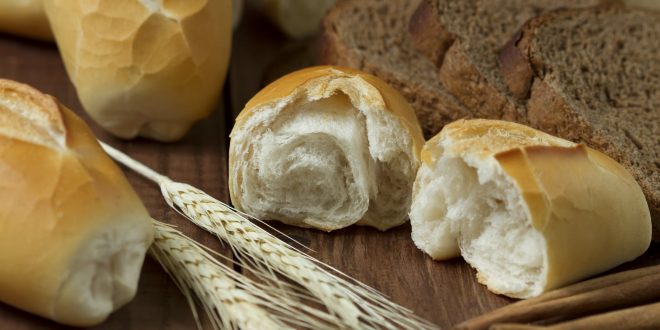
Over the past week or two, the main topic that has been worrying the Bulgarian public is the expected increase in bread prices during the winter season, due to the poor harvest this year and the increase in gas prices. Although this increase is due to completely objective economic realities that cannot be changed at the moment, and will most likely only be temporary, it has created fertile ground for all kinds of exercises in populism by domestic politicians.
First, the Minister of Agriculture Rumen Porozhanov said that he was negotiating with large retail chains to sell bread without a markup (respectively, gross profit). Then, the Minister of Defense and Chairman of VMRO Krasimir Karakachanov, as if in an attempt to piss him off, directly proposed the imposition of price control on bread by the state. According to him, the state should regulate limits on the maximum and minimum markup that traders and bread producers can collect. The folly of such proposals stuns common economic sense. Here are four reasons why this is so.
1. Price controls never work
Price controls, regardless of whether they are relatively "lighter" restrictions such as the minimum wage to total central planning and determination of the prices of goods, always, instead of solving the problems they are aimed at, either worsen them or create new, even more serious ones. The economic theory on the subject is clear - imposing a "ceiling" on the prices of any good or service will lead to deficits in it. Because artificially lowering prices below their market levels stimulates the consumption of the good in question and damages the supply (because it is cheaper for consumers, but there is less revenue from sales for producers). This creates a chronic imbalance in demand and supply, in which the quantity of demand for the good in question constantly outstrips the quantity of supply.
But even beyond theory, history has shown us, time and again, what the results of implementing the idea that the state should intervene through price controls to make goods and services "more affordable" are. Socialist central planning in countries like those of the former Eastern Bloc in Europe and in current North Korea and Venezuela is the ultimate form of the idea that the state should have a role in determining the prices of goods and services.
Whenever the state has artificially lowered prices below natural market levels, this has led to mass shortages of goods and services of various types. And the population has accordingly become poorer because it cannot afford the goods it wants. We can expect a similar effect from the proposal to control the price of bread by limiting the "markup" of retailers. So, paradoxically, a measure that aims to make a given good more accessible to the population actually makes it scarcer.
2. Profit caps will hurt small traders the most
Imagine a huge hypermarket of one of the largest retail chains in the country. Now imagine a small neighborhood store, the owners and workers of which are a local family. What is the difference between them? Scale is the difference. In every respect. Large stores have much more and different goods than small ones, which, being significantly more limited in their financial capabilities, focus on a smaller set of goods.
Bread is one of the most important items for any small neighborhood store. Because it is one of the food items with the most constant and inelastic demand (compared to other types of goods). Almost everyone buys bread. Therefore, for a small and starting retail business, bread is a logical staple that it offers. And bread sales in small stores form a very significant part of their total sales. Probably more significant than in large retail chains.
This means that limiting the markup (i.e. gross profit) per unit of bread would harm the income of small traders comparatively more than the income of large chains. And in fact, perhaps it is for this reason that some of the large chains (allegedly) initially agreed to limit their markups, at least according to the Minister of Agriculture and Food Rumen Porozhanov. Because they are familiar with such specifics of their sector in detail and perhaps they believe that their smaller competitors would lose much more from such a limitation of the markup on bread in retail sales. While they themselves, being much larger chains that have much more available resources with which to compensate for losses, and with much more opportunities for additional financing, will most likely survive such regulation. Their small competitors, however? Hardly.
3. The profit is actually not as big as it seems
It is very important to distinguish between the markup expressed in nominal monetary value per unit of product (for example, 5 stotinki markup on 1 loaf of bread) and the profit margin, which is expressed as a percentage of the total selling price of the product. For example, imagine that a bread manufacturer sells each unit of bread to a distributor for 20 stotinki, 5 of which is a markup for gross profit over the cost of the product. This means that the profit margin per unit of bread for this manufacturer is 25% (because 5 is exactly 25% or 1/4 of 20).
After being handed over to the distributor, the bread travels through several intermediate stages along the supply chain and reaches the final retailer. Imagine that this retailer sells this unit of bread for 80 cents, 20 of which are a markup. This is 4 times the monetary markup of the manufacturer. It seems like a lot, right? Yes, but what is this retailer's profit margin? Let's calculate. How much is 20 cents out of 80 in percentage terms? Exactly the same as 5 out of 20 - 25%. That is, although the monetary gross markup is 4 times higher, the margin itself is identical between the manufacturer and the retailer.
This is, of course, a hypothetical example. These are not the real markups and margins of Bulgarian bakers and retailers. But this illustration demonstrates why it is wrong to pay so much attention only to the monetary markup. The fact that it is higher for retailers compared to manufacturers does not necessarily mean that the profit margin itself is also higher.
And the problem is that the chairman of VMRO Krasimir Karakachanov, in his proposal to introduce a limit on the markup, speaks only about this - the monetary markup. Without even thinking about or being interested in the gross profit margin itself. This is a gross mistake that betrays startling financial ignorance. Karakachanov, of course, is not a financier and we cannot expect him to be aware of all this, but it is assumed that there are financial and economic experts in his party. Otherwise, it is highly advisable to refrain from proposals for reforms in the economic policy and regulatory framework imposed by the state.
4. Gross profit is not net profit
There is a huge difference between a business's gross profit (which is expressed in the so-called "markup") and its net, that is, pure profit - the one after all expenses. The "markup" is simply the difference between the so-called cost of the product and the price at which it is sold. This "cost" represents the direct costs that are necessary to produce the product in question. Costs for materials and labor that are directly involved in its production. However, these are far from all the costs of a business.
In addition, there are administrative costs (for activities such as accounting and business management), financial costs (for, for example, paying interest on loans), any costs related to the sale of the goods (such as for advertising or even for paying various household expenses such as rent, electricity, water bills, etc.). There are also costs for depreciation of the physical capital of the business (machines and the like) and, of course, there are also tax costs.
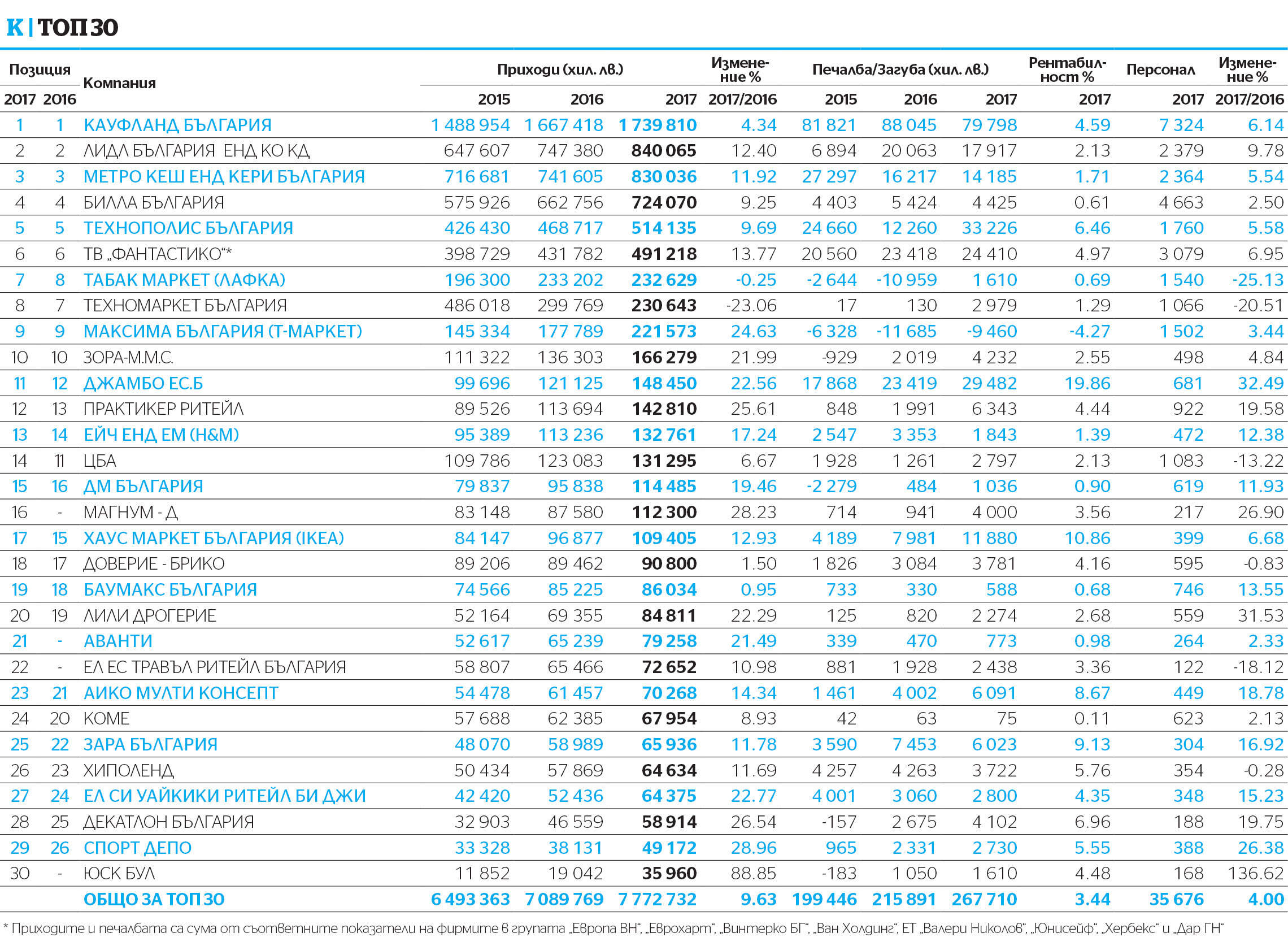
Only after all these other expenses do we get to the net (pure) profit. Not before them. Even if a business has a higher gross profit margin, this does not necessarily mean that it also has a higher net profit margin. In fact, the opposite is often the case - there are many such examples. In fact, retail businesses in Bulgaria are just such an example. While the public is fixated on their seemingly "huge" markups, their net profit margin is actually very thin. According to data from "Capital", in 2017 the net profit margin of most of the 30 largest retail chains did not even exceed 5%.
Conclusion
Although, as we have seen, the proposal to impose price controls on bread is an economic folly (born, we hope, of ignorance), its popularity should not be underestimated. Even less should we underestimate the willingness of politicians to seriously propose and implement such measures if they believe that they will earn them some cheap dividends with the electorate in the short term. Let us not forget that next year there are not only European but also local elections. And given the chronic instability of the government, parliamentary elections are also possible.
The last quarter of the year is budget season. That is why we must be especially careful now with the new economic policies that politicians are proposing and not allow the combination of their economic ignorance and thirst for power to cripple Bulgaria's economy.