EKIP– Expert Club for Economics and Politics A Different Opinion
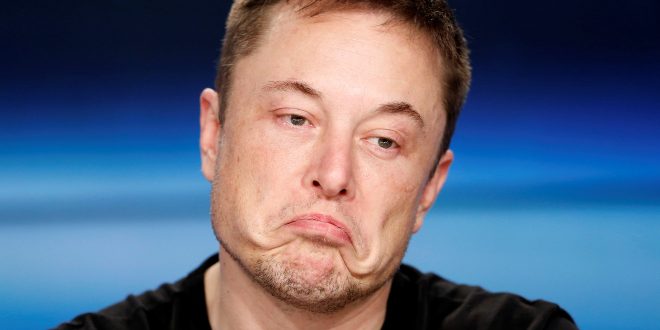
They save the capital invested in emotionally charged, unfunded projects like yours by liquidating it in time before it depreciates.
The tech messiah has struck again. Last Friday, Tesla CEO Elon Musk decided to play smart and take to Twitter to lash out at the U.S. Securities and Exchange Commission (SEC). In his tweet, he redefined the acronym for "Shortseller Enrichment Commission."
This comes just days after Musk avoided major financial and legal penalties by reaching an out-of-court settlement with the commission over his infamous tweet that he would take Tesla private again if financing was allegedly secured at $420 per share. The tweet immediately sent the company's stock price soaring by $40 to $380.
However, it later turned out that neither the financing was secured, nor had Tesla's board been informed of such plans. Because of this, the regulator charged Musk with market manipulation. Such statements should normally be made through official press releases with a predetermined date and time, and not in a tweet that randomly popped up in the feeds of millions of Twitter users. Still, if what was reported had turned out to be true, Musk would have been cleared of the charge. But oh well.
Musk's unusual activities
Musk lashed out at the regulator before the court had upheld their settlement, at a time when many argue the commission let him off the hook, fining him only $40 million, ultimately allowing him to remain at the helm of Tesla.
In addition, Elon Musk is facing a class action lawsuit for damages not only from all investors who bought Tesla shares around the time of the tweet about Tesla's delisting and the subsequent collapse in the price, but also from short sellers who suffered from its rise. All problems of a completely unrelated nature to the automotive industry. After a tweet mocking the US Securities and Exchange Commission, Musk responded to a user that: “Short sellers destroy value. They should definitely be banned.” And here he decided to imagine himself as a communist.
Elon Musk's anti-capitalist mentality
First of all, no speculator can destroy as much value as the stupid decisions of a company's own management. Short sellers are the canary in the mine, who wins if they can detect poisonous gas. That's their job - to study reports, news and events about companies and, if they guess about the occurrence of some real bad event for a given company, for example, a bad report, to profit from it. If they don't guess - they will lose. A company can kill them by simply performing well. But that will require a down-to-earth view of the world, not rose-colored glasses. If Tesla shares have become the most shorted in the entire American stock market, then there is something very rotten in this company.
The invisible effect of the work of the shorts is that the capital, which instead of ultimately going to an unsalable product (in this case, steel for cars and lithium for batteries) that would rust in landfills - ergo would represent wasted labor and capital - is liquidated financially, and physically - transferred to other more credible and profitable ventures. If the market remains blind to Tesla's problems for long enough, that would mean a lot of wasted labor and capital.
That is, the shorts are an important element of the social function of the market. At a fundamental level, Tesla is a modern, shiny version of the Pravets computers, only from the era of the socialists. This is especially evident in the fact that sales of electric cars collapse the moment subsidies for them are withdrawn, as happened in Denmark in 2017.
The market is much more disciplining than any barracks.
The logic of anti-market types like Musk is that financial markets overreact to news and do not accurately reflect the value of an asset. Because of the incomplete, imperfect information they have, market participants bid according to their intuition. But, if anything, this is actually more of a reason why financial markets should be free, not restricted.
Short sellers are the disciplining stick that keeps CEOs/owners from doing stupid things. Short sellers amplify good or bad news in the price of stocks. By withdrawing their trust in their securities, short sellers can trigger a massive sell-off that would collapse their stock prices. It's like the story of the lying shepherd. At some point, no one will believe you no matter how often you tell the truth. Smart people know this, and that's why they don't lie.
Musk's case is not a bit unfortunate, because instead of dealing with the fundamentals of his business, he spends his time on Twitter and calls people all sorts of insulting epithets if they raise the issue of Tesla's ever-evolving profits. Even if he personally tightens the bolts on a Tesla assembly line, as he likes to boast about sleeping on the floor of his factory.