EKIP– Expert Club for Economics and Politics A Different Opinion
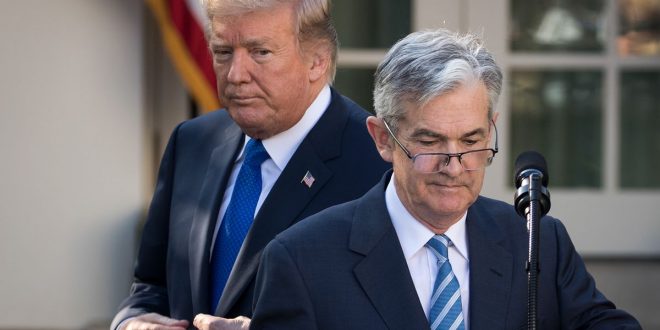
His comments about the vulnerability of the US Treasury to servicing its debts due to the Fed sent the yield on 10-year US Treasury bonds to a seven-year high.
On Wednesday, US indices had their worst session since February. Then, in one day, the blue-chip index, or the largest US corporations, the Dow Jones erased more than 1,000 points, which was the largest loss in absolute terms in its history. This week, it almost reached that level, removing more than 831, which is equivalent to a 3.15% loss. While this is not even in the top 20 biggest percentage declines in its history, it is in the top 3 in absolute terms. The technology index Nasdaq lost 4%, and oil - the same.
What distinguished this decline from others like it, however, was that there was no immediate flight to traditional safe-haven assets - government bonds and gold, although interest in the yellow metal increased the next day, when both Asia and Europe were dragged down.
US national debt is starting to bite
Moreover, although the US indices managed to set new records from their January peaks, they were mainly driven by the technology sector. It was this sector that was hit the hardest on Wednesday. Apple, Amazon and Nvidia lost almost double-digit percentages of their market capitalizations. In comparison, the traditional sectors of automotive, construction and finance recorded almost a one-year low with their stock prices. This points to major structural problems in the US economy.
The consumer is not strong at all, because the prices of used cars have been recording continuous declines in the last few months. There are many new cars on lease, produced by the auto giants, deceived by the low interest rates of the Fed. However, people pay them off over time and then sell them because they cannot afford them in an environment of rising interest rates. What's more, the yield on 10-year US government bonds has jumped to a level not seen since 2011. But then the US national debt was not 21.5 trillion dollars, but 14 trillion - a third smaller.
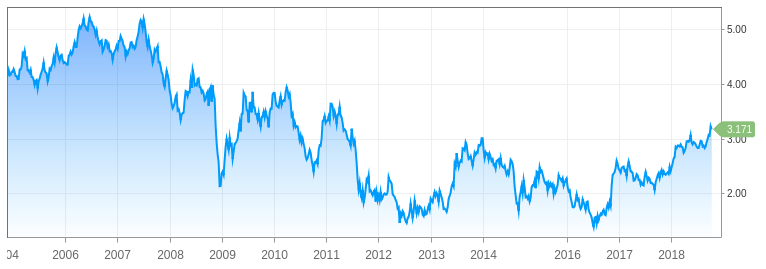
Investors are starting to wake up to the reality that money given to the federal government will either not be repaid or will be devalued in the future by the monetization of the debt. But what is triggering the bond sell-off?
Trump finally speaks on the economy
The official version of the financial media is “a deepening trade war between the US and China.” Translated: We have no idea because no specific event fits our Keynesian narrative. There has been a trade war for months. What changed yesterday compared to the other day?
President Donald Trump made a very interesting statement on Wednesday. In addition to the usual criticism of the Fed's recent rate hikes, he added something very specific: "I wish I had kept interest rates low a little longer to pay down the debt." This is the first admission by Trump that the Treasury is struggling to pay down debt and that the Fed's monetary conditions are making it difficult. The problem is that just as the Fed was pulling out the punch bowl of cheap money, Donald Trump decided to cut taxes and loosen the government's purse strings even further.
The next day, he continued with the eccentric comments: “I’m not going to fire him (FED Chairman Jerome Powell). He doesn’t need to be in such a hurry with low inflation.” As if the president has the right to remove and appoint the leadership of the Federal Reserve just because his monetary policy didn’t save him.
Then he returned to his years as a presidential candidate, making a reference to the Obama economy: “Our economy is much better and we pay interest, while theirs was based on joke money.” Trump is right that the Fed is politically biased and deliberately kept interest rates near zero for so long to keep consumption and cash flow going, so as not to discredit the presidency of the Democrat president. That is true, but the fact that the economy was a bubble under Obama does not make it any less of a bubble with Donald Trump as president. It did not miraculously recover from negative balance sheets and underinvestment overnight.
The “Crazy” Fed
“The Fed is completely crazy.” Yes, Donald. The Fed is crazy. It has been crazy for at least 30 years, not allowing a single recession to fully unfold in order to cleanse the economy of accumulated malinvestment and thus restore the property of prices to reflect the true availability and demand for things. The reason economic growth slows in an environment of low interest rates and people run out of money is that the entire economy is so distorted that people do not know what to invest in and what to spend on, because prices do not tell them anything. Right now, by raising interest rates, the Fed is doing one of the few non-crazy things in its history.