 EKIP– Expert Club for Economics and Politics A Different Opinion
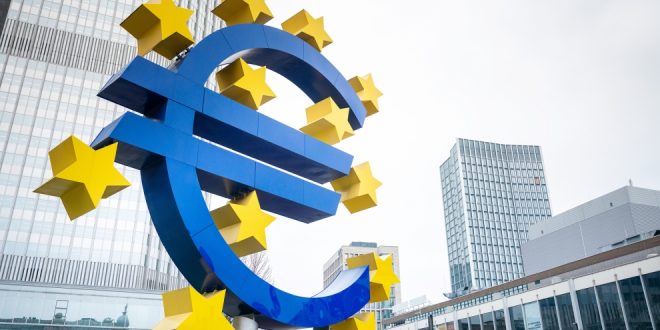
The common European currency is not very successful in its task of bringing the peoples of the Old Continent closer together – this is easily seen in the division of Europe into one or two speeds, the groups of countries that comply with and do not comply with the Maastricht criteria, and of course the severe tension between center and periphery, north and south, expressed most clearly in the relations between Greeks and Germans. Two peoples who should have nothing in common are placed in a situation of antagonism directly related to the monetary system of the continent.
On the other hand, the euro has managed to unite the views of a professional stratum notorious for the aphorism – “two economists, three opinions”. From the left-wing interventionist Nobel laureate Joseph Stiglitz to the right-wing laissez-faire Nobel laureate Milton Friedman, from the progressive socialist Yanis Varoufakis to the Austro-libertarian Philip Bagus and hundreds in the ideological space between them, who take the position that a common currency built in this way and bearing these structural deficits would be either too expensive or completely impossible to maintain. In his book “The Euro Tragedy: A Drama in Nine Parts” [1], the former IMF chief European economist, Ashoka Modi, describes in detail the long-standing academic resistance to the euro, which culminated in the last decades before the introduction of the project with two signatures in which over 200 German economics professors stated that the common currency came too soon and united countries that were too different for the intended purpose.
Ultimately, the creation of the eurozone is a political project, and as is often the case, politicians try to ignore or bypass the economy in pursuit of their goals. Despite the sentiment in professional circles, despite the negative public opinion in Germany, European leaders see their benefit in the euro. They see it as a path to greater European integration, but also as a way to realize national interests. French President François Mitterrand sees it as an opportunity to eliminate competition from the Deutsche Mark and to gain a share of German economic achievements. While Chancellor Helmut Kohl uses it as a tool to achieve the unification of East and West Germany, without the resistance of the remaining members of the European community hindering the process - a bargaining chip in the negotiations.
Ignoring key structural problems in a system that underpins all economic activity on the continent, however, cannot go on for too long without consequences. Despite differing perspectives, economists are united around the idea that a single currency linking so many different countries in an “incomplete monetary union” creates severe imbalances.
This was confirmed by the European debt crisis in 2009, when, after benefiting from the same interest rates as the German state, Greece accumulated too large public debts and was unable to pay its creditors. The situation was similar in several other eurozone member states – Portugal, Ireland, Spain and Cyprus. The eurozone was saved by the cent of huge financial transfers, 544 billion euros as of mid-2018, which managed to mainly quell, but not fix, the situation. Any form of apparent moderation in the ECB’s monetary policy was also sacrificed.
The problems with the single currency were recognized in the initial discussions on the creation of the eurozone and lie at the heart of the refusal of both Britain and especially Germany to support the idea of a monetary union. The resistance of the Germans cracked because of the unification of a fragmented Germany, but the agreement of the extremely opposing German central bank was won after the introduction of the so-called Stability and Growth Pact in 1997, which is one of the main elements of the Maastricht criteria. The idea of the pact/criteria is to oblige the countries in the eurozone to follow a conservative fiscal policy - with deficits below 3.0% and public debt below 60.0% of GDP. This would limit the problems associated with imbalances between the countries.
In practice, the Stability and Growth Pact failed from the start and continues to fail to function to this day. From its very introduction, exceptions and circumvention of the rules began. For example, Greece has never complied with the debt requirement - when it joined the eurozone in 2000-2001, it was 90% of GDP, today it is over 180%, three times the entry criterion. The same applies to Italy, the situation is similar in France, with even Germany in breach in 2003 and 2006. In 2010, with the exception of one, all countries in the eurozone did not meet the criteria. By the end of 2018, the average debt level of the countries in the eurozone was 86.1%. An objective impossibility of maintaining any discipline may be the only conclusion, respectively, the next crisis is a matter of time.
The initial scenarios of the created monetary situation in Europe are not rosy. One is the exit of countries from the European Monetary Union, which will be extremely difficult for the specific countries, because they will continue to hold debts in euros while using their new relatively cheaper currency. A good candidate for this at the moment is Italy.
European politicians will fight with all their might against such a development, in 2010 Angela Merkel declared: “If the euro fails...Europe fails and [with it] the idea of European integration.” [2] The second scenario is the accumulation of more deficits and the transfer of costs to the future, which will inevitably create hyperinflation and an unprecedented economic crisis sometime in the years to come.
In this general monetary and fiscal instability, Bulgaria stands in a financial health enviable for much of Europe. The letter from the Minister of Finance Vladislav Goranov and the Governor of the Bulgarian National Bank Dimitar Radev of June 29, 2018, with which Bulgaria officially signaled its desire for “close cooperation” with the ECB, provides a good illustration: “over the past 20 years, Bulgaria has had fiscal stability and sustainability with public deficits and debt levels significantly below the Maastricht criteria for almost 90% of the period. Budget surpluses have been recorded for almost half of the period and our public debt (below 25% of GDP) is the third lowest in the EU” [3].
The currency board not only blocks the channels through which the inflationary issue of money was created before 1997, but also imposes the strict budget constraints that produce the results described in the letter above. A reserve currency has been chosen for the functioning of the currency board, which in our case, according to the BNB Law, is the German mark. This represents an undervalued element of additional insurance - even though the mark has been replaced by the euro, if one of the expected catastrophic scenarios in the eurozone occurs and we continue to maintain the same monetary regulation as at present, our system will quickly orient itself towards one of the most stable economies on the continent. If such a crisis occurs, after we become members of the eurozone, we participate fully in the chaos and return to a situation resembling the time before 1997.
It is entirely possible to argue that with the design of the Bulgarian currency board we have achieved what the eurozone and the Stability and Growth Pact have failed to do, and at the same time. The board has transformed Bulgaria from a country with hyperinflation and a decades-long history of poorly managed public finances into an example of fiscal responsibility and stable money in Europe. Other researchers of the euro have also started to think in a similar direction, the Spanish economist Filipe Bagus writes: “If Europeans simply wanted monetary stability and a single currency in Europe, they could have introduced the Deutsche Mark in all the other countries” [4]. Something that in one form or another we have seen working successfully in Bulgaria for over twenty years now.
In the fog of overly enthusiastic, populist pro-European rhetoric, there is no opportunity to make a serious assessment or hold a meaningful debate on the fundamental dilemma facing our country. On the one hand, the euro, creating a clear moral hazard for politicians to spend recklessly, and on the other, the lev with a currency board and a reserve currency, the German mark, disciplining hyperinflation and a state elite with a long tradition of plundering the state budget.
It is time to follow Ireland's example, for the BNB to conduct its own study of the possible benefits or dangers of entering the Eurozone, thereby initiating a broad public debate on this key issue for the country's economy.
The article was originally published in the newspaper "168 hours"
[1] EuroTragedy: A Drama in Nine Acts, by Ashoka Mody . Oxford University Press (2018)
[2] Merkel warns of Europe's failure. 2010. Spiegel Online, May 13. Available at: http://www.spiegel.de/politik/deutschland/0,1518,694675,00.html.
[3] https://www.minfin.bg/upload/37885/letter-by-bulgaria-on-erm-ii-participation.pdf
[4] The Tragedy of the Euro, by Philipp Bagus. Auburn, AL: Ludwig von Mises Institute (2010)





3 коментара
Pingback: What did the ECB stress test show about the state of banks in our country?
Pingback: The Problem with the Euro – War and Peace
Pingback: The problem with the euro – Student Club "Spaichi"