EKIP– Expert Club for Economics and Politics A Different Opinion
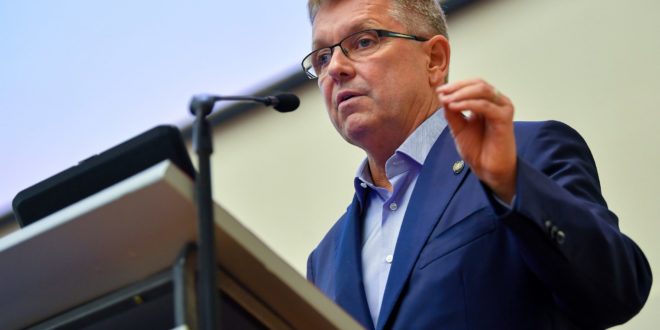
Author: György Matolcsy, Governor of the Central Bank of Hungary
It is time to find a way out of the euro trap. There is a harmful dogma that the euro is the "natural" next step towards the unification of Western Europe. But the common European currency was not natural at all, because almost none of the conditions for its establishment were met.
Two decades after the introduction of the euro, most of the necessary pillars of a successful global currency – a common state, a common budget covering at least 15-20% of the entire Eurozone gross domestic product, a common finance minister and a ministry for the Eurozone – are still missing.
We rarely acknowledge the true roots of the mistaken decision to create a common currency. It was a French mistake. After German reunification, French President François Mitterrand feared the rise of German power and believed that if he could convince the country to abandon the Deutsche Mark, it would be enough to avoid a German-dominated Europe. The German Chancellor at the time, Helmut Kohl, agreed, believing that the euro was the inevitable price of achieving a unified Germany.
Both were wrong. We now have a European Germany, not a German Europe, and the euro has failed to prevent the rise of another German superpower on the continent.
But the Germans themselves also fell into the trap of the “too good to be true” euro. The inclusion of southern European economies in the Eurozone resulted in an exchange rate of the euro that was weak enough to allow the Germans to become the strongest global exporter within the European Union. This made them too complacent. And so they failed to improve the quality of their infrastructure, as well as to invest sufficiently in the sectors of the future. They missed the digital revolution, did not take into account the rise of China, and failed to build pan-European global companies. At the same time, German companies such as Allianz, Deutsche Bank, and Bayer embarked on feeble and unsuccessful attempts to take over Wall Street in the United States.
Most countries in the Eurozone were better off without the euro. According to an analysis by the Center for European Policy, there are very few winners and many losers after two decades of the euro.
The common currency was not necessary for Europe's success before 1999, and most members of the Eurozone gained nothing by joining it. During the 2008 financial crisis and the Eurozone crisis of 2011-2012, most members of the currency union suffered greatly after accumulating huge public debts. There is no free lunch, and cheap loans often cost a lot later.
Alexandre Lamfalussy, an economist of Hungarian origin, was right when he said that a common currency was needed to strengthen ties between European powers and to protect the EU against the Soviet bloc. The problem is that the decision to create the euro was taken in Maastricht in 1992, just as the USSR and the Eastern Bloc were collapsing. The factor that gave the euro some meaning disappeared just as it was being created.
It is time to shake off this harmful and pointless dream. A good start would be to acknowledge that the common currency is a trap for practically all of its members – for different reasons – rather than a gold mine. EU member states, both inside and outside the Eurozone, should acknowledge that the Euro was a strategic mistake. The goal of building a global Western currency that competes with the dollar was a direct challenge to the US. The European vision of a “United States of Europe” has led to a covert and open US diplomatic war against the EU and the Eurozone over the past two decades.
We must decide how we can free ourselves from this trap. Europeans must abandon risky fantasies of creating a power that rivals the United States. Eurozone members must be allowed to leave the monetary union freely in the coming decades, and those who choose to stay must strive to build a more sustainable currency. Let us celebrate the 30th anniversary of the Maastricht Treaty by rewriting it.