EKIP– Expert Club for Economics and Politics A Different Opinion
Author: Andrew Moran, libertynation.com
When any of the many bubbles burst – choose your poison – and the next financial crisis hits Wall Street and Main Street, how will governments and central banks react? They have already fired off all their unconventional bullets, from negative interest rates to massive money printing. An additional idea would be to cut your savings, as happened in Cyprus after the recession. This dystopian possibility is neither hyperbole nor paranoia! That is exactly what is happening right now – our global rulers are either actively taking or planning measures to confiscate your savings – directly or indirectly.
Plugging holes in Swiss cheese
Switzerland is currently one of the few European countries with a fiscal surplus. The 2020 budget is projected to have a surplus of $615 million, despite pension and tax reforms that have reduced revenues and increased spending. The Swiss government is constrained by the so-called "debt brake," a constitutional rule that requires it to avoid deficits over the business cycle. This policy has reduced the ratio of public debt to gross domestic product to almost 25%.
Although national debt levels are still high, the fact that the government is taking this rule seriously is music to the ears of fiscal conservatives. For others, however, it is a headache.
The Organisation for Economic Co-operation and Development (OECD) has published a new report criticising Switzerland's reluctance to spend like some of its European partners. The report's authors argue that the Swiss save too much and spend too little, despite having the third highest GDP per capita of all OECD members. The report also argues that policymakers can "increase spending" within the framework of a "debt brake", which would support monetary policy and have positive economic and social effects.
There are several other European countries that are also balancing their budgets. Germany is expected to have a fiscal surplus over the next few years: 1.2% of GDP in 2019, 0.6% of GDP in 2020 and 0.2% of GDP in 2021. The Netherlands also has a surplus of 1.2%.
At a time when the majority of European Union member states are in a problematic financial situation, it would be logical to expect that these countries would set a positive example. Not quite.
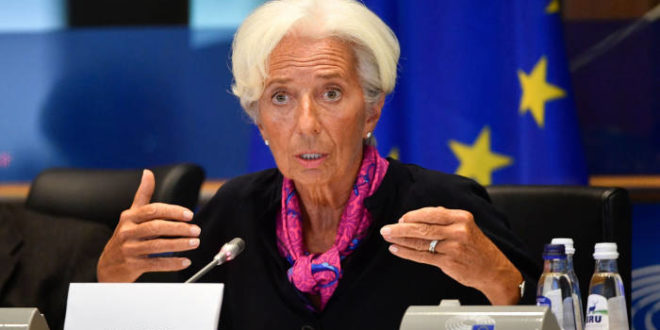
Recently, the new president of the European Central Bank (ECB), Christine Lagarde, criticized fiscal surpluses, arguing that these countries would be better off spending the money on infrastructure and education. Desperate to see any semblance of growth, Lagarde shares the philosophy that the only way an economy can grow is through government intervention.
Unfortunately, this is precisely the philosophy shared by the global monetary order. So you need to be careful. The globalists are coming for your savings and have already declared war on your savings, emergency funds, and retirement investments.
At war
In the immediate aftermath of the recent global financial crisis, central banks around the world slashed interest rates to historic lows. When that zero-interest policy failed, some jurisdictions took even more radical measures and turned interest rates negative. Today, a handful of countries have adopted negative interest rate policies, but many others are also on the verge.
The goal of this policy was to encourage consumers to spend more and financial institutions to lend more. Interestingly, these goals failed because citizens did the opposite: they started saving more. Negative interest rates caused a "bearish" (i.e. pessimistic) mood in the economy.
One country where this has happened is Switzerland, which has kept interest rates negative for five years. The Swiss National Bank calls the policy “essential,” saying it is needed to prevent the franc from further appreciating and to boost exports amid high international trade tensions and anaemic growth in Europe. The private sector, however, is not happy. A recent survey found that two-thirds of businesses in the country are concerned that the policy will hurt the local economy in the long term, and that overall the negative effects will outweigh the positives.
However, if you ask the new head of the ECB, she would tell you that you should thank the monetary leaders for implementing such policies:
"Wouldn't we be in a situation today with much higher unemployment and much lower growth, and isn't it true that we ultimately made the right decision to act in favor of job creation and growth, instead of protecting savers?"
"We should be more happy that we have a job than that our savings are protected. I think that was the spirit of the monetary policy of my predecessors, and I think they made a very fruitful choice."
Lagarde is a proponent of negative interest rates, advocating unconventional mechanisms for achieving growth. With the Eurozone barely managing 2% GDP growth, many expect Lagarde to delve even deeper into this policy as ECB president. Whenever she has spoken on the issue, she dismisses the concerns of savers, noting that consumers, debtors and workers must also be considered.
Unfortunately, this anti-save sentiment is so common because it is in keeping with the Keynesian philosophy of spending in economics. The disciples of John Maynard Keynes theoretically say that consumption should take precedence over saving only during downturns in the business cycle, but if you look at their practical proposals, you will see recommendations for more and more spending in every situation, whether boom or bust. They deny the fact that capital accumulation (through saving and investment), not consumption, creates wealth.
The myth is rooted in Keynes's "General Theory" and "Treatise on Money," in which he argued that a saver reduces the income of others in the economy because he does not consume the goods and services that are offered by others in the market. Simply put, Keynes believed that saving was a counterproductive action.
"Saving is a negative action in which the individual consumer forgoes spending all of his current income on consumption," he writes.
The crusade against savers is also very relevant in the US Democratic Party's internal elections for the presidential candidate. People like Senators Elizabeth Warren and Bernie Sanders are complaining about savers, especially those in the richest 0.1% (it's no longer about the richest 1%, probably because Warren and Sanders themselves are in it). The presidential candidates are concerned that these supposed "savers" are not injecting their wealth into the economy. This is complete nonsense with which they are trying to justify their policies of confiscating savings, because the reality is that the rich save and invest, not just hoard money under their mattresses.
Negative interest rates, higher taxes, and inflation – the statists are using every possible method to get their hands on the fruits of your labor.
Life sentence
If not by increasing the money supply, which through inflation devalues the value of your savings, the Leviathan is trying to confiscate your accumulated capital through negative interest rates. When you consider the elite's ambitions to eliminate cash by realizing the vision of a " cashless society ", you have to realize that their ambition is to put your finances under absolutely total control at all times. Your wealth, your income and your personal life would be completely under the control of the state. And if you don't like it - bad luck. There is nowhere to go - the project is global.