 EKIP– Expert Club for Economics and Politics A Different Opinion
It's Friday night. You're out with friends enjoying a nice meal and a bottle of wine. The moment comes when you have to pay the bill and you realize that not everyone has exactly cash. Until recently, you had to engage in a crazy conversation like "I'll give you 5 leva, and you pay me back later." No longer. You all have an app on your phone that allows you to pay your bills individually. Easy, fast and efficient. This is the most basic example of "Fintech".
In fact, “Fintech” stands for Financial Technology. The term is not new and has been used since the introduction of credit cards in the 1950s and internet banking in the 1990s. The definition that I find most complete and accurate is given by the Financial Stability Board: “A financial innovation that is enabled by a given technology, resulting in a new business model, application, process or product that has a material impact on the financial market and institutions and provides financial services.”
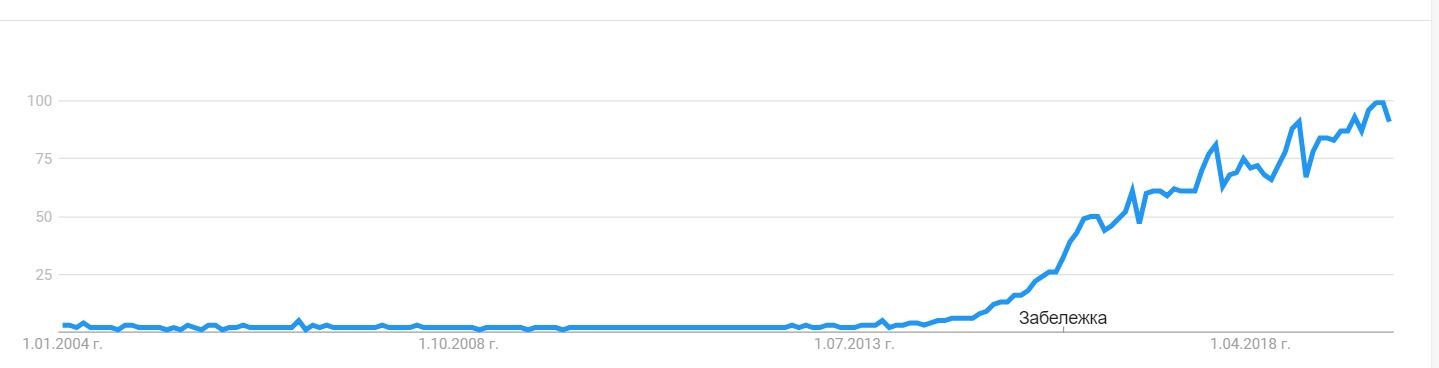
In 2019, the concept became much more well-known and gained new dimensions through the rapid digitalization of business, the globalization of the economy, and the increase in internet access by a large part of the world's population. In practice, any company that offers a form of payment, transfer of financial resources, or conclusion of some type of transaction digitally can currently be categorized as "Fintech".
We can track interest in the topic through Google Trends:
Fintech as an opportunity
The areas in which financial technologies are developing are countless, so I will try to outline some main sectors in which the changes are visible and global:
- Mobile Transactions: The global economy is rapidly evolving from cash payments to digital transactions. In 2019, about 65% of smartphone owners made a mobile transaction through Apple Pay, Google Wallet, PayPal, or a related service. This process is irreversible.
- Stock trading and investments: In 2019, clients have the opportunity to make their investments more efficiently and at lower costs through Robo Advisors (digital-based and automated financial advisors). Robo advisors provide the technological opportunity for personalized investment plans based on a series of filters, for example: personal income, risk, age, expected return, technological analysis of market signals and others.
- Credit, loans and crowdfunding campaigns: In 2019, companies, startups and individuals can borrow or lend at the appropriate interest rate with a few clicks. In reality, going through an intermediary is still necessary, but intermediaries are digital and can offer fully personalized solutions according to the needs of users.
- Insurance – Insurtech is a part of the financial technology sector that deals with insurance. This is one of the fastest growing segments in which the customer can obtain information and the relevant insurance online with a few clicks.
These are some of the sectors that can give you a very rough picture of some of the aspects of Fintech in 2019.
Traditional finance vs. technology
Of course, the radical change in the market structure that high-tech companies offer and implement poses a series of questions for traditional players in the financial market. Banks, for example, have been extremely actively trying to meet the challenges of new technologies over the past 2-3 years. Given the slower and more complex structure they have, the question arises of how to be competitive with companies that do not have physical branches, real assets and can quickly respond to the needs of their users. In recent years, the participation of traditional banks in financial services has been actively declining and we have several main types of behavior:
- Banks that create their own IT departments and develop R&D (Research and Development) in the field of digital technologies. They invest to be competitive and their goal is to maintain market shares and transform into fintech companies in their own right. Of course, given the scale of change and public attitudes, this is a difficult process that takes time and a large financial, human and managerial resource.
- Banks that rely on collaboration with Fintech startups. These financial institutions, after internal analyses, have determined that they do not have the capacity or the time has not yet come when they will be able to create an operating R&D process that can produce a finished product, with a view to which they partner with startups in the field of financial services. In this way, they have access to strategic solutions that are developed by external companies, and can then be implemented in the respective financial institution or directly acquire the given company if there is an opportunity for rapid scaling.
- Banks that are more conservative and adopt a defensive policy towards digitalization in the market. These types of players often have their own technology teams, which have a primarily supporting function for the technological solutions developed so far at the company level.
Of course, such a generalization does not claim to be exhaustive and is extremely variable depending on countries, local politics and a series of external and internal factors. With this clarification, however, we must be aware that very soon the third type of players in the financial market, which I mentioned above, will take a series of actions aimed at more serious regulation of the financial services market in the context of its digitalization. For them, this is a vital process and sending political indications to the legislative authority at the national and supranational level is a key factor.
Regulatory framework in fintech
Currently, the regulatory frameworks provide a field for new players to appear in the financial services market through technological solutions. The latest major change is called PSD2 (Payment Services Directive 2) and is at the European Union level. The huge change that PSD2 brings is the breaking of the monopoly that banks had until recently over their customers' data. After the adoption of the directive, customers can allow "third parties" (a website, platform, application, etc.) to receive their personal or corporate information from their bank. These changes have the potential to revolutionize and create major changes in the financial services market. The directive also includes the integration of a more serious security system and digital verifications before making payments.
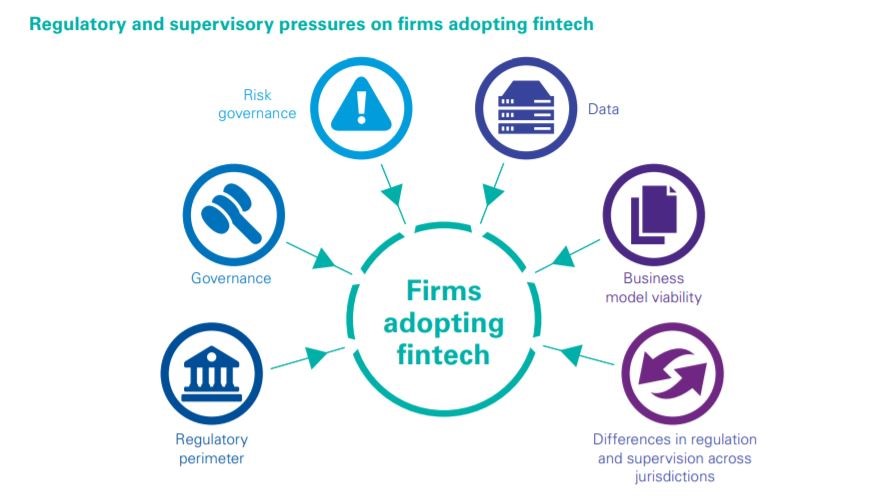
*KPMG “Regulations and supervision on Fintech”, March 2019
Of course, an interesting case study appears here. In practice, with the extremely broad definition of "fintech" at this point, we have the option of bringing together a number of companies operating in a variety of sectors. Therefore, it is expected that regulatory mechanisms will not consider "fintech" as one large framework to which certain legislation will be directed, but will be divided by sectors and, in practice, sectoral legislation will undergo changes to respond to the new challenges of the economy, markets and end users. For this reason, a large part of the legislative changes will be at the national level.
In Bulgaria, different opinions are already being heard and debates in the public space are starting to become more active. Traditional market players are realizing their position as catch-ups to new technology companies and are moving towards active communication with the aim of legislative changes to different sectors. It was recently ruled at the European level that AirBnB and Uber should not be treated as the same type of service. Short-term rental properties on AirBnb can also be found on other platforms, which turns the largest tourism startup in recent years into a simple marketplace. While the services and drivers offered by Uber cannot be used by the end user on other equivalent platforms. Of course, this is just another blow to Uber that we have witnessed in the last two years, but I believe that the trend will continue. In the context of this case, it is interesting to think about where public opinion and possibly legislative policy will go in terms of Crowdfunding platforms, payment companies (for example, Revolut) and other players on the technological side of financial services.
Personally, I believe that the development of this sector can be of key importance for the Bulgarian economy. We all hear constantly about how the IT sector in Bulgaria is growing, and this is a fact. By attracting and developing services in the field of finance from Bulgarian or foreign companies, we have a chance to establish ourselves as a hub that is focused on high added value, and not on large-scale outsourcing. Therefore, it is important to consider the debate on legislation that will define fintech services by sector as a key and extremely strategic solution for our economic development in the coming years.
Obviously, the sector will develop globally and the digitalization of the market is inevitable. Therefore, it is important to accept that we have two options: to be one of the leaders in the sector (for which we have a relatively realistic potential at the local level) or once again to adopt the position of the catch-up. It is important to work on a balance aimed at preserving the interests and security of the end user, the adaptation of the banking sector through collaboration with technology companies and their peaceful development on the principle of the free market and the legislative authority, for which the priority should be a guarantee of competitive conditions between the main players.






"Traditional market players are realizing their position as catch-ups to new technology companies and are moving towards active communication aimed at legislative changes in various sectors."
An interesting euphemism for "lobbying" - "active communication."