EKIP– Expert Club for Economics and Politics A Different Opinion
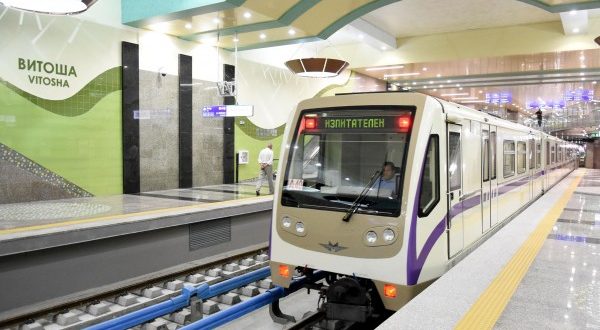
Vidin is a city with a long history. Vidin was a former capital during the decline of the Second Bulgarian Kingdom. But there is something else that the city and more precisely the city's residents share with their fellow citizens in the modern capital - their support for the Sofia metro. You are probably wondering how the citizens of Vidin support the Sofia metro? Due to the centralization of the tax system in Bulgaria, the money taken from the workers in Vidin ends up in the republican budget. And since Metropolitan EAD, the municipal company managing the Sofia metro, receives subsidies from the Sofia Municipality, part of which comes from tax revenues in the republican budget, it follows that the citizens of the poorest district city subsidize transportation in a foreign city, noticeably wealthier than theirs. Metropolitan EAD receives subsidies from the Sofia Municipality, part of which comes from tax revenues in the republican budget. Therefore, the citizens of one of the poorest county towns subsidize transportation in a foreign city, noticeably richer than theirs.
The pearl of Sofia's public transport*
*with the euro support of Hans from Baden-Baden
The Sofia metro is probably the best form of public transport in the city. The only traffic that can accommodate passengers in the city during rush hour is the metro. And although in the near future it will have 3 metro lines, its capacity will certainly continue to be stretched. With a future improvement of the overall public transport and the upcoming initiation of the EU's green policies, we can expect more residents of the capital to reorient towards it.
The Metropolitan operates on a financing model that relies primarily on foreign funds for investments in the network. In the context of an already certain Brexit and the resulting hole in the EU budget, as well as the current highly inflated budget expenditures, it is appropriate to consider whether the current inflow of European funds for our metro will continue to flow at the same speed. The above indicators point more to its drying up or at least a decrease. The metro will continue to expand, and with it the fixed costs of the Metropolitan.
With a farebox ratio (revenue from ticket sales to all costs) of 63.5%, Metropolitan is incurring losses before the state subsidy of BGN 30.3 million for 2018. (1) In the same year, support from taxpayers’ pockets amounted to BGN 26.9 million. Also, according to Kapital, co-financing with own funds for the extension of the third ray after Vladimir Vazov Blvd. will increase from 10% to 50%. This will further damage Metropolitan’s finances, increasing its own costs for the project by BGN 88 million. (2)
The future financial framework for the EU budget is a hotly debated topic, mainly between East and West. Brexit will leave a budget gap of €13 billion, while spending increases are still planned. (3) The future funding for the European Regional Development Fund is of uncertain size. It will be cut at the expense of the climate change fund, and it is possible that other transfers will occur until the final vote on the entire budget. This is precisely why we cannot afford to have a metro that runs at a loss.
Caveat Emptor
An expanding metro will have increasing fixed costs and human resource costs, the latter of which is thanks to the “right-wing” government policy of raising the minimum wage and social security contributions.
This infrastructure should be managed far more efficiently and, in the long term, generate enough funds to ensure its independence from macroeconomic shocks and queuing for a portion of the vat of sweet subsidies, the latter of which depends on the color of the ruling city, national and supranational political spectrum. Without subsidies, the Metropolitan’s visibility and the criticality of users are likely to increase, because cash flow will depend entirely on financial performance. In the absence of subsidies and preferential conditions, we are much more likely to see cost optimization, rather than simply asking for more and more money to temporarily patch up the situation. The burden of risk will be entirely in the hands of management. Shifting blame to third institutions will be far more difficult.
Metro for profit
One of the cities with the most striking examples of a successful subway system is Hong Kong. With a remarkable farebox ratio of 172.2% in 2018, MTR (the corporation that runs the subway) ranks first in the world in covering its operating costs from ticket sales. The profit for 2018 amounted to about 2.05 billion US dollars. Although majority state-owned (75.48%), MTR Corporation has a mandate to maximize competitiveness and profit.
Comparing Sofia to Hong Kong may seem absurd, but there is no reason why we cannot learn from some of the best. One of the key factors in the success of their metro is the parallel investment, construction and development of commercial properties with each expansion of the network. The construction of shopping malls in close proximity to the metro stations, and in some cases even directly above them, provides an additional source of profit for the corporation, allowing annual investments in overall maintenance and improvements amounting to 645 million US dollars. (4)(5)
The MTR Corporation model is one of many possible models for improving the Metropolitan. In order for the Sofia Metro to have a fair development, it is appropriate to eliminate subsidies received from the state budget. And for this to be possible, its future must be market-based. An option must be chosen that provides the best service at the lowest price, without hidden or overt subsidies. The path of public-private partnership can be taken, although I have certain reservations about the level of corruption that this model can lead to. Following the example of the Tokyo Metro, the entire Metropolitan can be privatized.
With this in mind, it should be clear that any step towards market liberalization would reduce the current level of corruption and inefficient use of financial resources.
You can read other articles by the EKIP on the topic of urban planning problems in Sofia here.
Sources:
- Financial report for the year ending 31.12.2018, Metropolitan
- " Metropolitan" announced a tender for the next three stations of the third metro diameter "; Capital; 31.09.2019
- "The battle of numbers that will shape EU's future"; Euractiv; 06.01.2020
- MTR Annual Report for 2018
- "Hong Kong's MTR: Taking a ride on the world's most envied metro system"; CNN; 31.03.2015