 EKIP– Expert Club for Economics and Politics A Different Opinion

The administration's inaction is stifling even what could work...
Everyone is discussing the taxpayers' money, which the government has recently said it will return to some of them after collecting it from everyone. Both the discussion and the government's actions are normal - within some framework of public decency. It cannot be expected that the measures for distributing money will be perfect and something better and fairer should always be desired from everyone.
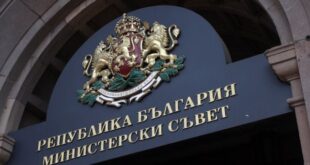
But there is no discussion about the inaction of the government at the central and local levels.
The State of Emergency Law does not provide for amendments to either the Administrative Procedure Code (APC) or the Law on Restricting Administrative Regulation and Administrative Control over Economic Activity.
In other words, the state and municipal administrations are supposed to work.
However, it seems that this is not the case.
Legal basis
In the summer of 2003, as head of the group on the law, I drafted Guidelines for the implementation of the Law on the Limitation of Administrative Regulation and Administrative Control over Economic Activity. They were edited by colleagues from IME and UNILOB – Warsaw, finally reviewed by Prof. Valeri Dimitrov (then Chairman of the Economic Policy Committee of the National Assembly) and approved by the Economic Policy Council of the Council of Ministers at a meeting on December 10, 2004.
Since then, the law has undergone 36 amendments and supplements, mainly with the aim of increasing the number and specifying the details of regulation and control regarding economic life.
The "Instructions" are not "application regulations", but are instructions and therefore are a normative act (within the meaning of the Law on Normative Acts). These instructions have not been repealed, the relevant law is also in force. Their purpose is to facilitate business life and reduce quasi-taxes - i.e. the costs of working with the government, by relying on its preliminary production.
In a state of emergency, these instructions should be followed more strictly, because the mission of pre-emptive proceedings is to facilitate the protection of citizens' health. And this is also one of the four reasons to regulate economic activity in general.
The other three grounds are: national security and public order, the exclusive and sovereign rights of the state within the meaning of Art. 18, para. 1 – 4 of the Constitution and the personal and property rights of citizens and legal entities. The last one is worth noting: the municipal and central administration is obliged to protect (and work for the implementation of) the person and property of all citizens and enterprises.
This is a constitutional principle.
It is reproduced in Art. 60 of the APC. According to it, preliminary administrative proceedings are “necessary in order to ensure the life or health of citizens, to protect particularly important state or public interests, in case of danger that the execution of the act may be thwarted or seriously hampered, or if the delay in execution may result in significant or difficult-to-repair damage, or at the request of one of the parties – in the protection of a particularly important interest of the party.”
Moreover: according to the law on the state of emergency, the statute of limitations under the Tax and Social Security Procedure Code (TSPC) stops running, and the absolute 10-year statute of limitations for the repayment of tax liabilities does not apply. The general rule is that no enforcement proceedings are initiated during the state of emergency. But as an exception to this rule, the text of Art. 60 of the APC is reproduced in this law. Literally, letter by letter.
The damage of inaction
While checking one of the provisions of the (still at that time) draft law on the state of emergency in order to comment on it, I had to interview entrepreneurs from the transport and construction sectors.
It turned out that in their area after March 16th (the situation was introduced on Friday, March 13th), municipal and state administrations are not working, this also applies to the registration agencies, cadastre, revenue, road transport, environment, municipal administrations, electricity distribution companies and water and sewerage (both state and private).
After the government announced the measures on March 24, I conducted the same consultations today. The result was exactly the same.
I won't say a word, my inspection is not comprehensive. But it is clear that there is a problem. And its boundaries must be marked.
The law also imposes restrictions on notaries when certifying the confession of transactions. In addition to the urgent and urgent ones. I assume that in the end it will turn out that individual notaries themselves will assess which transactions are such. They also lose income when work is stopped.
What can we know about the damages from administrative inaction?
To answer this question, I should consider the so-called "government services" of the state administration, its territorial divisions and those of the municipal administrations. In doing so, it should be noted the obvious fact that these are not services in the strict sense of the word. They are not offered on a competitive basis, citizens and companies cannot choose another provider and they are most often their obligations, imposed by law or by-law.
The total number of administrative services provided by all administrative structures in the country has not been precisely known since 2015. The services themselves are just under 2,100 in number. According to a study by IME in 2014, these services were provided 218 million times. Of these, over 80% are provided by the NRA. 10-11 million individual services are provided electronically, approximately 60% - to legal entities.
Given the growth of the economy and incomes, we can assume that their number in 2020 should have been approximately 240 million times if the year had gone normally.
In 2015, Bulgarian citizens and companies spent, under extremely optimistic assumptions of the colleagues from IME, nearly 60 million working hours to obtain these services. That is, they used about 10 thousand working (assuming 250 working days per year) years to acquire them. (With an average hourly wage of about 7 leva, the cost of this working time in a queue for services is over 450 million leva in 2014.) I assume that the hours for 2020 should be about 80 million (or a little over 600 million leva working time).
I assume that with 240 million hours potentially expendable in 2020 for services to citizens and businesses, due to postponed relations with the tax authorities, but complicated relations with the employment agency and social assistance services, the effects will be the following:
- For a period of three months (the expected duration of the state of emergency), about 100 million NRA services will be postponed. But they will have to be implemented after the pandemic or after the postponement ("vacation") ends.
- Since not all relations with the state administration end, the above-mentioned agencies remain outside the scope of the NRA. About 40 million for this year. For the most part, these are obligations and services that cannot be fulfilled electronically, because the procedures do not provide for it or the administration, citizens and companies are not ready to do so. One way or another, these are certifications, construction visas, one-time permits for local or international transport services, construction permits and coordination for the inclusion of sites in the electricity distribution or water supply networks. If the administrations continue to not work for the period of the state of emergency, 10 million services will be postponed.
- This is not about saved money and working hours. What is at stake here is an activity whose work has been suspended and income that cannot be collected into company and household budgets.
- Considering the number of permits mentioned in point 2 per year – approximately 32,000, for the period since the introduction of the state of emergency, about 1,200 documents have not been issued. This means that at least the legal activity of an unknown number of companies has been suspended. Some of them will probably go bankrupt.
- If we add to this the halted work of notaries and traffic police, the market for movable property seems to be in a bind. The number of ads for sale on the Internet alone today is over 220 thousand. It is obvious that none of them can currently be completed legally. With a car price of 1,000 leva, the absolute value at risk is over 200 million (approximately per year). The loss per month would be about 20 million just due to the inaction of the administrative "services".
- The number of buildings to be completed by the end of 2020 is over 1,500 – for all types of construction, and their total developed area is 1.2-1.3 million square meters. With the assumed average selling price per square meter for the country being 400 BGN, the absolute value at risk is 4.8 billion BGN.
- The average number of homes sold per month in 2019 is around 40. In other words, the suspension of finishing works (Acts 14, 15 and 16 of the Construction Regulations) blocks construction activity and postpones sales. Accordingly, construction companies and their workers have no prospect of receiving income even due to the impossibility of completing construction and providing for a sale. True, buildings and houses are not food products to spoil in ten days, but I see no excuse for such a forced suspension of an economic process that deprives citizens of transactions worth 1 million leva per month.
- Those employed in these industries (on permanent and temporary contracts, and self-employed) are probably around 500 thousand – their incomes will also shrink;
Finally: the state of emergency actually shows that many of the regulatory regimes are pointless. Even the administration does not understand why it is implementing them, since it does not comply with its obligations imposed by law not only on citizens, but also on companies.
Apparently it's time for a regulatory guillotine again. The guillotine, as an old French proverb says, is the most reliable cure for a headache.




2 коментара
Pingback: Кр. Станчев: Бездействието на администрацията души дори онова, което може да работи – Vestnik.eu – новини от България и света
Pingback: Кр. Станчев: Бездействието на администрацията души дори онова, което може да работи – 24BOX.bg – Новини