Guest Author May 25, 2021 Economy, Economic and fiscal policy
EKIP: Dear readers, we present to your attention an extremely valuable analysis of the "Theory of the Optimal Currency Area" and Italy's experience in introducing the euro. There are many useful things that can be learned from the experience of other countries in joining the eurozone, from which Bulgaria should learn a lesson. On …
More » Stoyan Panchev March 24, 2021 Economy, Economic and fiscal policy
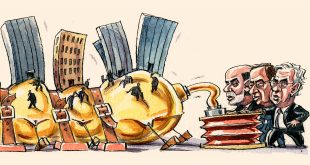
This text was originally published in the collection "2020: Inside and Beyond" Every intricate story has to start somewhere. In this one about the super-massive printing of money, that moment is in 2008, and the starting point is the United States. To get to the answer to the question of why central banks are printing more today …
More » Georgi Vuldjev February 15, 2021 Team TV, Investments, The Intelligent Investor
TEAM · 35. Meme stocks and cryptomania - how is 2021 starting? 02:30 – How are the predictions we made in the previous episode going? 04:50 – How is the bull market in cryptocurrencies developing? What is the significance of Tesla's investment in Bitcoin? 15:50 – Mistakes when looking for the best time to invest in …
More » Georgi Vuldjev November 22, 2020 Team TV, Investments, The Intelligent Investor
TEAM · 33. A new rise in the markets - is it justified? 0:24 – Start 0:45 – The US elections and their impact on the markets 09:15 – News about successful developments of vaccines for Covid-19 and the reaction of the markets 13:40 – Do the markets remain overvalued? 20:00 – When will we see inflation? …
More » Georgi Vuldzhev January 15, 2020 Economics, Economic theory
Author: Frank Shostak, Mises.org The idea that more money can boost the economy is based on the belief that money has a stimulatory effect by increasing aggregate spending. More money in people’s pockets means they can spend more, and the rest follows from that. Money, in this sense, is a means …
More » Guest Author January 04, 2020 Economy, Economic and fiscal policy
Author: Nikolay Nenovski Professor at Jules Verne University, France Former member of the BNB Governing Board The material was written on October 30, 2019. Due to the limitations of the text size, I will formulate my views as theses. On the monetary policy of the ECB and in general on the monetary policy of the leading central banks I believe (and …
More » Guest Author November 30, 2019 Economy, Economic and fiscal policy
Author: Yaroslav Romanchuk Translation: Marina Zaharieva The world economy is synchronously falling into the zone of another powerful turbulence. This is no coincidence, given all the efforts of central banks and governments. It is they who take care of the synchronization in the inflation of market bubbles of various assets and resources. It is they who succumb to lobbying …
More » TEAM August 15, 2019 Macroeconomic Monitor
Source: NSI Comment: In July, consumer price inflation accelerated slightly to 2.93% on an annual basis, from 2.83% in the previous month, according to the latest NSI data. Despite the slight acceleration, inflation remains below the 3% level it has been at over the past year, and June and July are the first two consecutive months …
More » TEAM July 16, 2019 Macroeconomic Monitor
Source: NSI Comment: In June, consumer price inflation slowed significantly to 2.83% year-on-year from 3.51% in May, according to the latest NSI data. This is the lowest inflation rate recorded since the beginning of the year. Inflation slowed in both food and non-food goods, as well as …
More » Daniel Angelov June 19, 2019 Economy, Economic and fiscal policy
Author: Frank Hollenbeck, Mises.org The gap between the rich and the poor continues to widen. In 1975, the top 1% of the U.S. population owned 8% of the economic wealth. Today, they own more than 20%. This is a striking change from the 1950s and 1960s, when the top 1% owned just over 10%. A study by Emmanuel Saez found that …
More »
 EKIP– Expert Club for Economics and Politics A Different Opinion