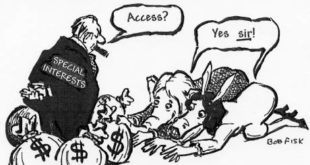
Public choice theory is a branch of economics that developed through the study of taxation and public spending. It emerged in the 1950s and gained widespread public attention in 1986, when James Buchanan was awarded the Nobel Prize in Economics. Buchanan founded the Center for the Study of …
More »When the state knocks on the door
In public choice theory (which became particularly popular after the Nobel Prize for one of its founders, James Buchanan), there is talk of the so-called "rational ignorance". It is a situation in which the expenditure of resources (time, attention, effort, etc.) required for a person to become informed on a given issue exceeds the potential benefit of learning ...
More »The political mechanism, democracy and efficiency
On October 5th, many will head to the polls. The purpose of voting – at least for most of them – will undoubtedly be to improve their well-being, help resolve social conflicts, and redirect resources to the most important public areas for them. But let's see if the political …
More »Export in French
If you're in a hurry to get from point A to point B, you're in Paris, and you have a smartphone at hand, you can use a mobile app to request a car to come to your service. But, for the sake of a fairer world, you'll have to wait at least 15 minutes before you can drive off. The French government …
More »
EKIP– Expert Club for Economics and Politics A Different Opinion