 EKIP– Expert Club for Economics and Politics A Different Opinion
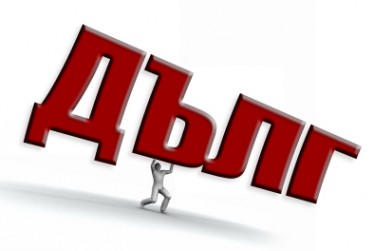
The actions and statements of the first hundred days of the government have made it clear that the cabinet intends to spend more than the previous one. However, the question of where the financing of the bloated public spending will come from has not been answered unequivocally.
Shortly after the Oresharski government updated the budget and raised the ceiling on permissible government debt, information emerged that in the near future it will most likely be necessary to take out a new loan of 3.5-4 billion leva. And this is only from covering current expenses and payments (i.e. refinancing) of debt already accumulated by previous governments, without considering a possible restart of Belene.
Even if the grandiose nuclear project were to pass taxpayers by, there would still be more than enough reasons for additional government spending:
- The reduction in the retirement age will lead to an even greater deficit in the National Social Security Fund, which must be filled from other taxes.
- Refusing even partial privatization of BDZ, the post office, and VMZ will only continue the status quo, in which millions are periodically poured into hopelessly bankrupt zombies of mature socialism in order to pay off their most pressing debts.
- The increase in the minimum wage and minimum wage will lead to higher unemployment and a "gray" economy and, accordingly, less tax revenues and more transfer payments.
The list could go on and on, as the government spouts daily promises of higher pensions, higher maternity benefits, lower electricity bills (which turned out to be higher), "stimulating" certain sectors, "fighting" youth unemployment, and so on and so forth.
In its attempt to position itself as “social,” Oresharski’s government has effectively committed itself to spending more than its predecessor, even though Borisov’s budget discipline was nothing more than a lie repeated often enough to be accepted as a stylized fact. In a previous article by EKIP, we showed that during the previous government, public spending did not decrease, but on the contrary - every year the state had more money than the previous one. The Socialists promise us to spend even more, and we have no reason not to believe them, but the question remains where the additional funds will come from.
There will clearly be no privatization of state assets, and an increase in direct taxes seems unlikely. The idea of returning progressive taxation disappeared from the public sphere after the MRF declared itself against it, and perhaps some rare glimmer of common sense (albeit bureaucratic) led the BSP to think that the increase would have a counterproductive effect on the budget, in the form of fewer revenues. Moreover, with the record disapproval of the cabinet, such a step would give new impetus to the protests. Indirect taxes such as excise taxes on cigarettes will most likely be raised gradually, under the slogan "since there is a lot of smuggling avoiding the high excise tax, let's increase the excise tax". Everyone can draw their own conclusions about the effect of this.
Another favorite tactic of the BSP from the recent past for directly financing state spending - printing money, fortunately does not pose a danger (at least for the time being) due to the currency board. Today, state borrowing seems to be the only realistic source of additional funds to finance the bloated government spending. In the midst of the debates on the budget update, opponents quite rightly pointed out the thesis that this debt will be spent at the discretion of politicians, and will have to be paid back by taxpayers, who for the most part do not approve of the government at all. Without getting into the endless discussion of which state spending is "necessary" and the overall mythology of achieving effective administration, several facts should be noted.
1) National debt is immoral
The obvious difference between private and public debt is no secret to anyone. When a lender with low time preferences and a borrower with high time preferences agree on a loan, both parties voluntarily exchange their property - current purchasing power for future payment. That is, if the debtor for some reason does not return his debt to the lender, he has in fact not fulfilled his contractual obligations, has misappropriated someone else's property and therefore this act can be compared to theft. When issuing public debt, on the other hand, bureaucrats privatize the benefit of distributing money to privileged group interests and "rings of companies", and nationalize the obligation to return.
Moreover, the debt is usually repaid by another government, which bears the brunt of the increased taxes and/or reduced payments elsewhere, so we can imagine what incentives this creates. Furthermore, the state apparatus seems to be a particularly secure debtor - while the income of all other economic entities is dependent on voluntary transactions, the state uses its coercive monopoly to take as much as it deems necessary.
As a result, private borrowers are forced to pay higher interest rates on their debts because they must compete for scarce savings with an institution that derives its income in anti-market ways. Investors in government securities are fully aware that their profits come from the forcible confiscation of funds from the productive economy. Both parties to this transaction are effectively exchanging foreign property, and public sector creditors become complicit in organized tax robbery.
2) Government debt represents double taxation
The claim that the long-term government debt will be repaid by future workers (currently children or even unborn) is true, but incomplete. Oresharsky and company do not have a time machine with which to travel 10-30 years into the future and tax the income of the time and spend it now. Spending more money by the government always means withdrawing currently existing resources from the use that the private sector has foreseen for them. Even without a formal increase in taxes in the present, it turns out that the state (i.e., net tax recipients) consume more resources at the expense of net taxpayers. Repaying the loan from tax revenues represents a new transfer from the productive economy to those dependent on the budget. Thus, when the loan is repaid through tax revenues, resources are taken away from their most productive use for the second time, in order to provide them to circles close to power.
3) Government debt may be inflationary
Even if we exclude direct monetization of debt by the central bank, the system of fractional banking causes an increase in money in circulation by creating monetary substitutes out of thin air. By purchasing a government debt issue, banks trigger the Cantillon effect [1], with the first recipients of the new money benefiting from their increased purchasing power before prices have risen. Thus, the state strengthens the business cycle by participating in the credit expansion. If a non-bank institution or individual purchases government securities with real savings, then resources again come under state control, but at least additional inflation is avoided.
4) Government investment is actually consumption
A common pretext for additional government borrowing is “investment” in one of the monopolized sectors such as infrastructure, education, or in the relatively free industries where the government competes with private firms. Investment occurs when entrepreneurs purchase capital goods with funds for which they are personally responsible, not because of the subjective benefit they expect from them, but in order to process them into consumer products and services that they can sell to their customers. In contrast, the government “invests” confiscated funds pursuing its own goals such as creating/preserving useless or even harmful jobs (VMZ), monopolistic control over vital services (NEK), creating a proletariat (Kremikovtsi), or simply trying to compensate for the dictator complex of his rural origin (the microprocessor technology plant in Pravets). So no matter what the stated goals or physical results are, state investments should actually be viewed as consumption, and a particularly wasteful one at that, because their "investments" always entail losses and the need for subsidies.
Speaking of the totalitarian period, we should note that upon its collapse, the most humane regime bequeathed 10.6 billion dollars in foreign and 26.5 billion leva in domestic debt[2]. In addition to the widespread deficit of the most basic goods, a result of the inability of central planning to calculate rationally, these funds also financed other “humanitarian” activities such as repressive political police, concentration camps, shooting meat at those trying to escape from the workers’ and peasants’ paradise, and the occupation of Czechoslovakia. That is, even after the nominal end of totalitarianism and the renaming of the Bulgarian Communist Party to the Bulgarian Socialist Party, the ordinary Bulgarian citizen had the “privilege” of repaying the debts taken out in his name without his consent.
As we can see, the taxpayer is in an unenviable position. However, in a democracy, it does not improve much - each adult citizen has 1/6,868,455 (according to the latest data from the Central Election Commission) influence on the outcome of the elections. To what extent can the representatives of the people represent tens of thousands of people whom they have never seen, and at the same time, is a completely separate issue. On the other hand, however, the same individual, employed in the productive economy, with negligible influence on the activities of the government, is obliged to allocate from his income to cover expenses incurred without his consent and even against his will.
From what has been said so far, it should follow that the only rational and fair way out is a direct refusal to repay all state debts, including those of municipalities. Why should BSP supporters pay (assuming that they pay taxes) for the debt accumulated by their hated Borisov? Why should GERB voters finance the expenses of the new and old triple coalitions? Why should the debts of the no longer present in parliament UDF and NMSV continue to weigh on taxpayers? No one, except bureaucrats and politicians, signed the loans, so no one except them is morally obligated to return this money spent on behalf of the taxpayer. Moreover, a default would force the government to limit its expenses to the amount of its revenues and would curb, at least for a while, the appetites of investors in government securities (mainly banks) for tax loot. The fewer resources under state and corporate control, the more freedom and prosperity for the productive members of society.
Journal of Austrian Economics, Volume: 9 (Fall 2006), Issue:3, p. 45-60




The debt situation is well known.
Debt is a consequence of mismanagement (a way of governing the state that is not fit for money.)
If there were no mistake, the countries would not have current debts.
Ivan Mitev - economist
In Bulgaria there is no left and right, there are interests. Otherwise socialism and capitalism cannot work together - there is no such animal! !!!!