EKIP– Expert Club for Economics and Politics A Different Opinion
The law is very rarely – almost never – a reflection of reality. On the contrary – the law is a reflection of the will of the legislator regarding what reality should be. This is precisely why most attempts to shape human behavior through legislation are doomed to failure – their goal is to make people act in a way that they would not act if they were expressing only their own will.
In this sense, imposing restrictions or bans on the provision of a certain type of service or product in no way eliminates the need or desire of people to receive them. Nothing changes in the supply and demand equation familiar to every economics student – bans do not magically eliminate demand, and markets are in place to create supply. For this reason, what government bans achieve is to generate huge black markets, in which, most often due to the additional risks involved, prices – and therefore profits – are significantly higher.
Classic examples of such black markets are the sale of drugs, weapons, and prostitution. While the negative effects of imposing direct bans are much more obvious, the state often implements softer regulations aimed at "taming" markets and protecting the interests of consumers.
It is a common practice to impose price limits on goods in an attempt to curb their excessive growth or “excessively” inflated prices by a monopolist or cartel of producers. This seemingly noble idea of government usually has destructive results.
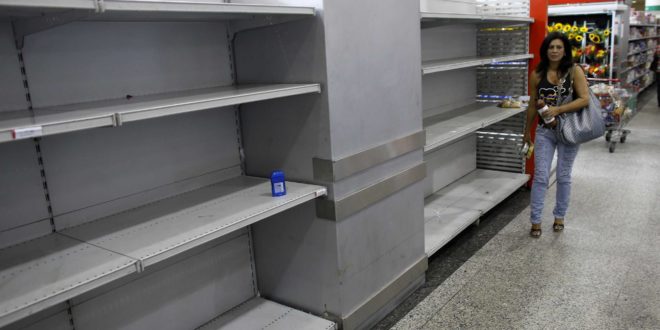
The basic economic explanation is that imposing price ceilings limits the ability of producers to freely set the price of their product, which in turn reduces their incentive to sell at all. Producers consequently put fewer goods on the market that do not meet demand, and in turn their production is much lower than it would have been in the absence of price controls. The end result is the gradual disappearance of price-controlled goods from stores.
This process is well illustrated by what has happened in the Venezuelan economy in recent years. The socialist government of President Maduro has tried to maintain control over the prices of a number of products, which has led to acute shortages of many essential goods. The country's central bank maintains a "shortage index"; even according to official statistics, 21% of goods were missing in Venezuela in 2013, and the illegal opposition to the regime paints an even uglier picture.
Thanks to the artificial shortage of goods created by price controls, there were curiosities in which toilet paper disappeared from stores entirely and the army had to take control of factories and force them to produce by force of arms. A similar scenario unfolded a month ago in the coffin market, with carpenters refusing to continue producing them at a loss.
The social effects of these measures are extremely severe. The capital, Caracas, and other major cities in the country have repeatedly become the scene of riots and looting of stores due to the chronic lack of goods. In turn, people massively stock up on goods when they appear in stores, as a result of which they are depleted much faster than they would be under normal supply, and a significant part of the food spoils. The regime’s latest plan to deal with the lack of goods is to introduce a complex biometric scheme that will prevent consumers from buying “too many” products, which will in practice return the country to a system similar to the coupon distribution applied in the early periods of communist systems. However, the only possible outcome of this attempt at even tighter control will be an ever-increasing shortage and the disappearance of more and more goods from the shop windows.
An interesting Bulgarian example from recent months in Bulgaria is the introduction of a cap on the annual percentage rate (APR) on loans, which, in practice, represents a restriction on the price of loans. The government expressed significant concern for users of quick loans and imposed a limit on their APR. The new cap limits them to 50.2% of the value of the loan. Apparently, the purpose of the measure is to protect borrowers from the “excessive greed” of companies that grant quick loans.
In practice, however, the only thing the government achieves in this way is to push out of the legal market a service that is structured in a certain way due to its unique features. Loans granted by banks for a long period of time and with large amounts always have numerous conditions, guarantees and requirements for applicants. The reason for this is that lending activity by its very nature is primarily a risk assessment, and banks want to minimize the number of “bad loans” that do not bring returns and represent a net loss of funds.
However, so-called "quick loans" are a very different product from "traditional" bank loans. The amounts are usually much smaller, they are granted in extremely short terms, and lenders receive much smaller guarantees that their investment will bring profit. This makes the risk in granting them much greater, which requires a significantly higher interest rate - otherwise the probability of the credit institution going bankrupt due to a large number of non-performing loans becomes too great.
However, limiting the APR does not allow this response to high risk to be carried out. Consequently, the number of companies that would undertake this high-risk activity decreases significantly, since the combination of high risk and low profit in most cases guarantees the failure of almost any business venture. It is not unexpected that the introduced regulations will lead to bankruptcies of existing companies, which in turn will have a number of negative social effects such as increasing unemployment and closing existing jobs.
For this reason, by imposing a maximum APR, which in many cases is below the industry standard, the government succeeds not in protecting consumers of quick loans, but only in shrinking a market segment, eliminating products from it that consumers have previously used and blocking their legal supply. The more significant problem, however, lies in the fact that the government is unable to eliminate the demand for this type of financial product - consumers will continue to need quick money, but its legal provision is now becoming significantly more difficult.
The introduction of an annual percentage rate of charge in this sense will lead to the rise of black credit markets. High-risk loans, which were previously granted legally, will once again become the territory of loan sharks or "gray" companies. Another possibility is that companies that grant quick loans will take measures to reduce the risk, which happens with methods familiar to us from the early history of the Bulgarian transition and the time of the "borchetas".
In this case, it is mostly about the state's misunderstanding of the nature of credit services. They are no different from any other commodity, and concluding a credit agreement is a voluntary act between the company that grants it and the person who takes it. In this sense, the desire of the government to protect the clients of quick loans from themselves is, to put it mildly, illogical.
Ultimately, when a government decides to intervene and regulate any market mechanism, the result is always the same - both parties involved in the exchange lose more than they would in the absence of regulations, and often fall under the blows of the law without needing to.