EKIP– Expert Club for Economics and Politics A Different Opinion
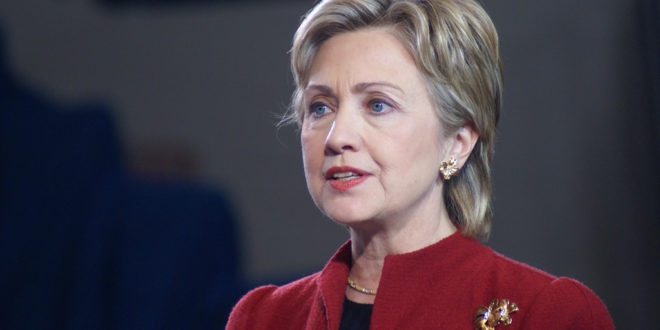
 След коментара, който публикувахме за първите елементи от икономическата политика на републиканския кандидат Доналд Тръмп. Продължаваме с поглед върху данчъната полиитка на Хилъри Клинтън
The presidential campaign in the United States is, to put it mildly, interesting, and as the election approaches, it becomes increasingly complicated. The final outcome will have a significant impact on both the global economy and global geopolitics. Therefore, it is necessary to analyze what theses are being developed by Donald Trump and Hillary Clinton, which is currently somehow eluding the domestic media. Now that both main contenders have presented their economic programs, a more constructive debate on this important topic for the global economy will be able to begin. The strongest impression of the economic programs of both contenders was Hillary Clinton's tax policy.
Left and right in the USA
Before we dive into the topic, I need to make an important clarification. The Democratic Party in the States is their socialist party (left-wing party), and the Republicans are on the opposite spectrum. This is why I am always amazed when a friend of mine with supposedly right-wing political beliefs praises Hillary Clinton while at the same time criticizing the BSP for their social policy. From an ideological and, above all, economic point of view, the two parties are identical. Generally speaking, left-wing parties fight for the imposition of social justice by redistributing financial resources from the richer to the poorer through the state. In order to finance various social programs, it imposes higher taxes on the middle and capitalist class (the so-called 1%).
At the opposite pole is the Republican Party (and right-wing political parties in general), which, at least on paper, fights for fewer taxes and regulations, and a reduction in the welfare state. Their thesis is based on the fact that each individual (or business) should have the freedom to choose how to spend the money they earn, rather than the state taking away an increasing portion of their income in order to redistribute it.
Hillary and taxes
"I'm telling you right now... we're going to rewrite the rules more fairly for the middle class and raise their taxes. "
Hillary Clinton 8/1/2016, Omaha
The economic program, and more specifically the tax policy, that Hillary hopes to implement fits perfectly into the philosophy of socialism: increasing the tax burden on businesses and individuals. According to various analyses, the additional redistribution ranges from $500 billion to $1 trillion over the next 10 years, which includes:
- Fairness Tax – This measure is quite general and contains a wide range of additional taxes that aim to eliminate the “inequality” in the current tax law. The net effect of this law amounts to over $400 billion. Some of the new taxes include:
- Increase in the so-called “ Death tax” (tax on the estate of deceased persons);
- Increase in taxes on capital gains;
- Increase in taxes on trading in capital markets;
- Increase in “Exit tax” (corporate tax on corporate profits generated outside the United States).
- An increase in personal income taxes, amounting to $150-350 billion;
- A rise in corporate tax, amounting to over $150 - $275 billion;
- Any additional taxes, such as “Soda tax” (tax on carbonated drinks), etc.;
- A significant increase in the minimum wage, which increases entrepreneurs' labor costs and reduces their profit margin if they keep the number of workers unchanged.
The dominant and recurring theme in the Democratic Party’s proposed policies is the clear goal of imposing a higher tax burden on the middle class and the capitalist class (the top 1%). As a socialist party, their plan is completely normal and logical – redistributing wealth from the richest to the poorest. According to their economic program, this will significantly improve the US economy. Increasing economic growth, creating more jobs, increasing incomes, and reducing taxes for the poor.
Historically and empirically, however, such policies never lead to anything good for the economy. The most striking example of this is what happened in the United States during the administration of Jimmy Carter. During his time, the marginal tax rate reached 70%. The direct effect of Carter's economic policies was rising unemployment and low economic growth.
These results are completely logical in the context of the fact that when the state takes such a high percentage of the income of the middle class, they have no reason to save, invest or consume more expensive goods and services. This invariably leads to a decline in consumption. Absolutely the same factors apply to business. High taxes and minimum wage reduce the profits of entrepreneurs, which in turn leads to a decrease in investment and ultimately leads to higher unemployment. The reason for this is the desire of entrepreneurs to maintain the required rate of return by reducing production costs - fewer, but more expensive workers, less investment in capital and so on.
Upon taking office, Reagan began a policy of gradual tax cuts, with the marginal tax rate dropping to 28% by the end of his term (1988). The effect of this was significant, as it put the United States on a path to long-term economic growth, while at the same time achieving higher employment and wages, more investment, and growing capital markets. In reality, we have before us a pretty good historical template of what should and should not be done.
Democrats against economic growth
Taxing the middle and capitalist classes with higher taxes is also wrong on a conceptual level. David Ricardo, one of the most famous classical economists, developed the thesis in the early 19th century that the foundation and carrier of economic growth are capitalists (capital owners/entrepreneurs). He concluded that of all social groups, only they can most effectively combine productive resources - labor and land - to create value.
It is for this reason, according to him, that the business should be created the most favorable working environment. To protect private property, to impose the rule of law, to have low taxes and relaxed regulations. According to Ricardo, this would lead to higher investment activity, which in turn would lead to sustainable economic growth and increased well-being of all economic agents. However, the tax policy of the Democratic Party does exactly the opposite.
Hillary Clinton's plans are based entirely on imposing new taxes and increasing existing ones. This will, in the short term, lead to an increase in tax revenues in the budget, with which to finance the numerous social programs of the Democratic Party. In the long term, however, this policy will lead to a decrease in tax revenues, an increase in unemployment and a decrease in the level of wages of all social groups. This is a completely logical and expected result that can be predicted when looking at the "Laffer curve". According to an analysis by The Tax Foundation from the end of 2015, Hillary Clinton's economic plan will lead to a contraction in long-term economic growth of 1%, a decrease in capital investment of 2.8% and a decrease in income by 0.8%.