EKIP– Expert Club for Economics and Politics A Different Opinion
For many people, mostly with more left-wing ideological views, the past year was bad and even scandalous because of Donald Trump and Brexit. However, neither Trump has begun his rule, nor Brexit is a fact, that is, there is no need for hasty conclusions and mass hysteria. Quite the opposite – the focus should be on solving current problems. One of them is the interesting conflict between people who are “on the same side of the barricade”, but nevertheless Brexit managed to oppose them.
A group of UK citizens who voted to remain in the EU, the so-called "UK expats" (emigrants living in other EU countries), are taking a fierce supporter of European integration, the President of the European Commission (EC), Jean-Claude Juncker, to court! Sounds like a joke, right? But it's not.
The mainstream media in Europe has been easily ignoring this case, in which Jean-Claude Juncker was brought to trial by supporters of the European Union, which he openly defended. Perhaps this is not a “ politically correct” case or is simply being displaced by the Miller case, which is being heard in the High Court in London, but is not receiving the necessary interest from the European public.
One thing is certain - the storm of statements by politicians and comments by analysts about Brexit has left this problem, which is already being resolved before the Court of Justice of the EU in Luxembourg, in the background. We believe that this case should not fall into the public spotlight, because its essence hides answers to important questions such as:
- Will the Court in Luxembourg accept its decision or will it escape (again) from such a conundrum in an elegant legal way?
- What degree of control can citizens exercise over incorrect political statements by European politicians?
- Can Jean-Claude Juncker's behavior be justified and is there a need for it?
A ban on Brexit negotiations?
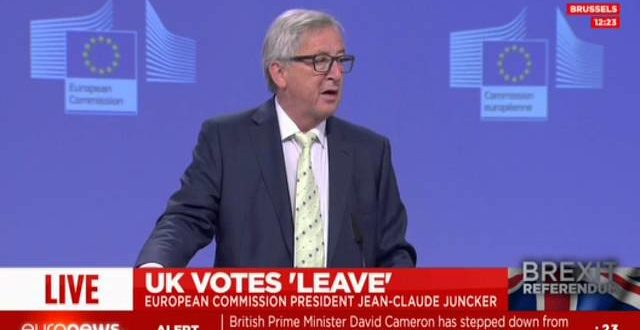
After the surprising, for Euro-technocrats, result of the referendum in the United Kingdom on June 23, a clear and common position of the European Commission was needed. This task was naturally taken up by its President, Jean-Claude Juncker. Five days after the initial shock, he gave an electronic instruction to his subordinates, as well as in the plenary session of the European Parliament, that by “ Presidential Order” any negotiations conducted by the Commission, formally or informally, with the United Kingdom government before it starts the withdrawal procedure under Article 50 TEU were prohibited. As Juncker himself said in his speech, “ this is not his style”. In fact, this should not be anyone’s style if you are leading the European Commission, because it would not only cause a media scandal but also legal cases, as is the case.
Who files the complaint ?
Fair deal for expats is a non-profit association registered in Lausanne, France, which aims to protect the rights of UK citizens who have emigrated to other EU countries. According to the UN, there are 1.2 million of them. The majority of them are in Spain (310,000), Ireland (255,000) and France (185,000). The association is also supported in its complaint by eight individuals.
What are the demands of the emigrants?
Fair deal for expats have two main demands. The first is the repeal of the instruction prohibiting any negotiations on Brexit before the activation of the clause in Article 50 TEU. Their second demand is to repeal Juncker's statement to the European Parliament, in which he gave the said instruction in the form of a " Presidential Order ".
Leaving aside the procedural peculiarities that may prevent the consideration of this case on its merits, let us assess whether the arguments of Fair deal for expats have the necessary weight.
The reasons given by the emigrants are five:
- There is no legal basis anywhere in the Treaties for the Commission to refuse to start Brexit discussions with the UK authorities. The emigrants believe that Jean-Claude Juncker's political beliefs are leading to this unfounded decision. Even the serious "accusation" of "abuse of power" is attributed to Juncker because "order of the chairman"In this case, he is misleading his subordinates and the other institutions of the Union, as well as the Member States.
- Here they are 100% right. Neither the Maastricht Treaty nor the Lisbon Treaty mentions such a ban. And the political mood in the post-Brexit era is decidedly negative towards the authorities of the Island, if we take into account Juncker's statements in the months since the referendum until today. His style is mainly aggressive, aiming to set the rest of the Europeans against the somewhat bold, but for some wrong, decision taken on June 23 by the British voters.
- Jean-Claude Juncker violates Article 18 TFEU with his instruction[1], which prohibits discrimination on the basis of nationality. Migrants argue that the ban on negotiations places them at a significant disadvantage, particularly with regard to the exercise of fundamental rights, including freedom of movement.
- From a political and moral point of view, the discriminatory attitude seems to be obvious. But whether it really affects the applicants or is much more general is another question. Perhaps, proceeding from the general norm of Art. 18 TFEU, UK expats did not consider it necessary to present more specific arguments. The Court would certainly have its strong word on this point.
- What is only implied in the second point is clearly stated in the third - the ban on preparatory negotiations violates the right to free movement, movement for the purpose of work, establishment and residence, which originates from Union citizenship guaranteed by Article 20 TFEU and the Charter of Fundamental Rights.
- From a legal perspective, there are exceptions that allow such rights of citizens to be restricted, but they are applicable in very rare cases, mainly related to a threat to the national security of a given Member State. It is another question how the CJEU [2] would approach these claims, because the contested measure is invalid and a precise assessment of its potential for action is needed.
- By their fourth plea, the applicants claim that the ban on discussions on Brexit violates the principle of sincere cooperation between the United Kingdom and the EU institutions.
- Loyal cooperation is a principle that obliges the institutions and the Member States to cooperate in the performance of obligations arising from the Treaties. This is the case with Brexit. It remains debatable, however, whether a similar obligation in this regard exists before the activation of Art. 50 TEU. However, taking into account the case law of the past years and the important role for European integration that this principle plays, the CJEU would hardly escape its teleological interpretation.
- The fifth plea in law alleges that the contested measures are unlawful because they were adopted in order to deter or dissuade, in whole or in part, citizens of other EU Member States from freely expressing their opinions (regarding EU membership), as protected by Article 11 of the Charter of Fundamental Rights.
- This argument is very clever and reinforces the trend in Union law to increasingly interfere with fundamental rights. Would a Latvian, Bulgarian or Slovenian think about leaving his country from the EU when listening to Juncker's imperative speech to the United Kingdom, respectively its citizens?! Starting from the position of a citizen of a country that is very far from being a top economy in the world, the deterrent effect of Juncker's actions is tangible. In this way, he tramples on the fundamental right for the functioning of a democratic system - the right to free expression.
An expected denouement or a "breakthrough in the system"?
The Court's main focus is expected to fall on the so-called locus standi or the procedural legitimacy of the applicants. In simple terms - whether Fair deal for expats have grounds to seek protection of certain of their rights before the CJEU.
The right to effective judicial protection in the EU system has been widely discussed and criticized by both domestic and foreign parties. It is precisely the component of standing that seriously discredits the argument that the European Union fully protects the rights of its citizens. Whether this will turn out to be the case this time around remains to be seen in 2017.
A review of the case on the merits will come as a pleasant surprise to most EU law practitioners and political analysts alike. This case has the potential to show us how the highest judicial body in the European Union views fundamental rights in the context of Brexit and the intense international political environment.
[1] TFEU – Treaty on the Functioning of the European Union. Also known as the Treaty of Lisbon or the Lisbon Treaty.
[2] CJEU - Court of Justice of the European Union