EKIP– Expert Club for Economics and Politics A Different Opinion

Author: Miroslav Mollov
With the amendments to the Cash Payments Restriction Act adopted at first reading, it was proposed that the regulated threshold for cash payment restrictions in the country be reduced from BGN 10,000 in stages to BGN 5,000 as of August 1, 2017, from BGN 5,000 to BGN 3,000 as of January 1, 2018, and from January 1, 2019 from BGN 3,000 to BGN 1,000.
Following the trend of reducing cash payments throughout the European Union, I am of the opinion that the drafters of the bill rushed with excessive repression and restriction of the rights of businesses and citizens, leading to yet another ill-conceived and overly bold legislative decision that will bring benefits to a small, limited number of entities and damage to a huge and unlimited number of them.
A regulation to the detriment of citizens' rights
Many opinions were expressed on the topic, both by the submitters and by deputies from the parliamentary groups who voted against the amendments to the law in this form, by public organizations, lawyers, economists and other interested parties. I fully share the expressed opinion that the rights and freedoms of citizens are the most damaged by the changes, and the fiscal authority, represented by the state, as well as banking institutions, are the most satisfied.
This article does not aim to focus on the changes in the Law that are definitely beneficial to banks. It aims to take a different look at the changes that will concern us more and more with each passing day. Until the beginning of this year, the Law on Restricting Cash Payments prohibited cash payments for an amount exceeding 15,000 BGN, including when the payment is divided into parts - if you have a claim against a counterparty in the amount of 15,000 BGN and it is divided into three or more payments - they must go through a bank transfer.
The lower threshold limits business flexibility
The relatively high threshold for cash payments, compared to other European countries, allowed businesses and citizens to have greater legal flexibility, as well as, of course, to determine, based on their legal relationships, the method of payments between themselves, without the intervention of the state. Despite the relatively high threshold for cash payments, many violations were identified, as the District Courts (author's note - the appeal of the Criminal Decrees, which punish violators, is under the procedure of the ZANN), have already built a solid practice in the application of the relatively new law, existing since 2011.
Until now, the widespread practice of the revenue administration, which is tasked with monitoring compliance with the law, is to monitor compliance with the Cash Payments Restriction Act during audits or incidental inspections at commercial establishments of commercial companies.
According to our current laws and by-laws and organizational and structural acts in the field, the revenue authorities, which have the right to conduct audits and draw up audit reports, have excessively enhanced powers, and they even have the right to challenge transactions that are legally justified, solely on the grounds of the lack of a business purpose of the transaction, for example. Despite their huge arsenal of provisions that any citizen can violate, willingly or unwillingly, with the presented bill, the representatives of the people want to give the revenue authority more reasons to increase the pressure on business, and now, unfortunately, increasingly on individuals.
Can we entrust such a huge number of "attackable transactions" to an authority that is incapable of handling its internal organization?
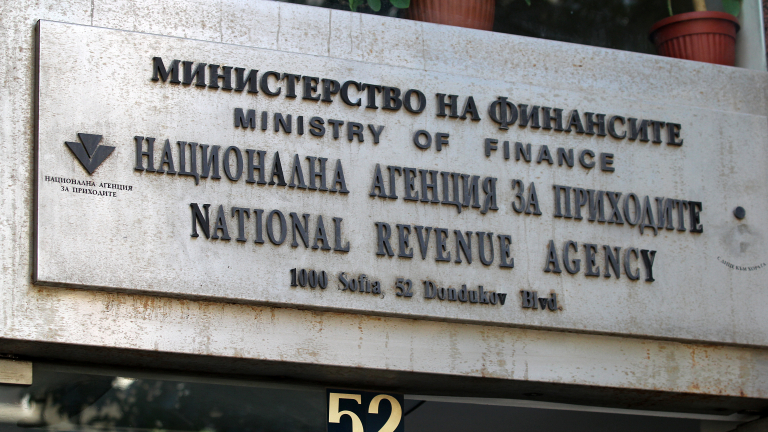
The NRA does not have the necessary capacity to cope with the new responsibilities
The National Revenue Agency, in its capacity as the executor of the state's fiscal policy, has proven itself to be an authority that is incapable of controlling the fiscal payments of legal entities and individuals on the territory of the country. The authority is mired in corruption and negligence, being the leader in "missed" obligations of legal entities and individuals due to expired statute of limitations (including the absolute one, which is 10 years). It is appropriate to ask the question - can this authority, which is incapable of dealing with its internal organization (in terms of capacity and personnel), be entrusted with such a huge number of "attackable transactions" as all payments over 1000 BGN. on the territory of the country by all individuals and legal entities? I dare to say that the answer is unequivocally negative.
The main question, which seems to have escaped the submitters of the bill, is who will fight the cash, i.e. where will the National Revenue Agency find the huge human resource (staff and capacity) of act drafters and legal consultants, given that with the current relatively high ceiling of cash payments (10,000 BGN), a huge number of acts of violators have been drawn up. Will not our already exhausted District Courts, which are entrusted with judicial control over penal decrees, be overloaded? Will not these radical changes lead to excessive repression of the freedoms of citizens and businesses, and this repression will be paid for through their taxes?
This article expresses the personal opinion of the author and should not be taken as legal advice.
Adv. Miroslav Mollov is a lawyer, a member of the Sofia Bar Association since 2015.
Image source: Economic.bg, News.bg