EKIP– Expert Club for Economics and Politics A Different Opinion
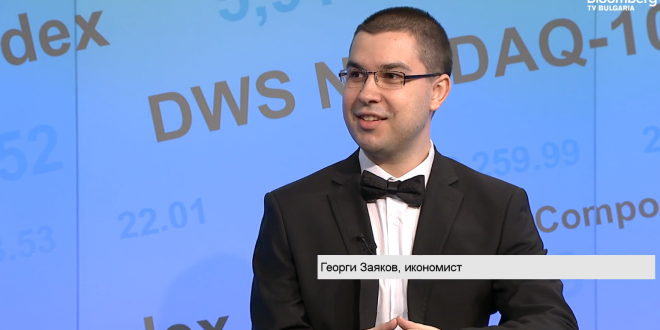
The German voter punished the two largest parties in the elections. A phenomenon like the so-called "Jamaica" coalition has never happened at the national level before. This was commented by economist Georgi Zayakov on the Investbook program on Bloomberg TV Bulgaria with host Dimitar Vuchev. "It will lead us to the fact that Germany will have a tax cut. The country is really going to the right."
What can be expected from the new coalition is that there will still be no new taxes, the source said. "Whatever the differences between these parties, they will reach a consensus."
Zayakov emphasized that in Germany, too, it happens that the programs with which parties are elected are not respected, but then the voters punish them severely and they do not enter parliament. According to the guest, since, for example, currently only 2% of the Internet in Germany is optical, and the roads are not in the best shape, investments in infrastructure are forthcoming, some of which will be financed through privatization - the sale of state shares in companies such as Deutsche Telekom, Deutsche Post and Deutsche Bahn. "What they can quarrel about is migration policy."
"Germany will remain the leader of Europe. Macron is not in a position to take over the leadership baton, but he is lucky that Germany wants to appear peaceful. All three parties want, for example, to be quite soft on Britain on Brexit. In terms of fiscal and monetary policy, all three parties think that the EU should continue to maintain discipline and that it is good for the ECB to move towards raising interest rates."
Germany, however, wants a radical change in terms of democracy - they want a transnational list, Zayakov added. "Although all member states are supporters of NATO, they all want a pan-European army - the only difference is how much money to allocate."
Original publication on Bloomberg TV Bulgaria