EKIP– Expert Club for Economics and Politics A Different Opinion
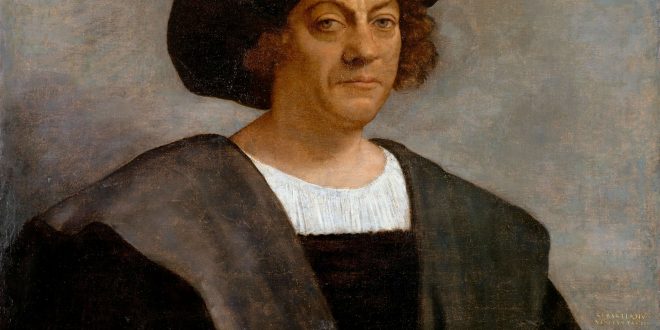
At 2 a.m. on October 12, 1492, 33 days after leaving the Canary Islands, the sailor Rodrigo de Triana sighted land to the west, which Christopher Columbus called the island of San Salvador ("Holy Savior"). A boat was lowered from the ships and Columbus, along with two other captains, a notary and a royal controller, went ashore, hoisted the Castilian flag, took possession and drew up the appropriate notarial deed.
Born in Genoa, Italy, but sailing under the Spanish flag, Columbus, a self-taught navigator, greatly exaggerated the circumference of the Earth. He believed that Europe was larger than it actually was, and that Japan was further from mainland China than it actually was. For these reasons, he decided that he could reach Asia by sailing west, and for the rest of his life, the navigator continued to claim that he had reached its shores.
What Columbus actually discovered was the Bahamas. On his subsequent voyages, he traveled even further south to Central and South America, never actually approaching what is now the United States. However, in the United States today, Columbus' discovery is celebrated every year on "Columbus Day." On October 12, 1866, Italian New Yorkers organized the first such celebration of the discovery of America.
Columbus' achievement remains a symbol of the human quest for discovery and the progress of Western civilization to this day. The discovery of America is a monumental and watershed moment in the history of not only Europe, but the entire world.
During his travels, Columbus was the first to establish the "trade winds" - the sea routes and latitudes in which the wind blows towards the Caribbean and those latitudes in which the wind blows back towards Europe. It is also assumed that Europe first became acquainted with rubber after one of his expeditions. Columbus's ships carried tobacco, tomatoes, potatoes, corn and other crops unknown to the Old Continent. The exchange was two-way - Columbus also enriched the agriculture of the open lands with new plants.
Although Columbus was not the first European to set foot in the New World, he was the first to stay. It was his voyages that were the primary reason for the subsequent permanent presence of Europeans in the Americas. News of the success of his first voyage spread like wildfire across the Old Continent, ushering in the era of European colonization.
From the distance of time, we can argue about the effect of the conquest of new territories on humanity, with all its consequences – the spread of Christianity, the rise of modernism, the disappearance of local cultures, etc., but the impetus in the development of not only Europe, but also America itself, to which Columbus' discovery led, is undeniable.