EKIP– Expert Club for Economics and Politics A Different Opinion
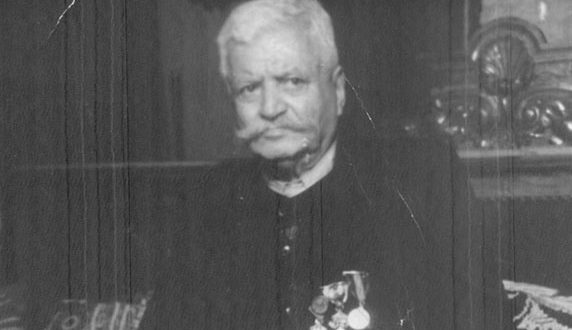
On November 3, 1943, Avram Chalovski died. He was known as one of the most significant Bulgarian industrialists and prominent donors at the beginning of the 20th century. Even by his contemporaries he was called the " Bulgarian Henry Ford ". He was born in 1854 in the then village of Galichnik on the territory of the Ottoman Empire, today part of the territory of Macedonia.
After the Liberation, he emigrated to Sofia and initially made a living by selling boza on the streets. When he collected enough money, he bought a boza and Turkish delight workshop. In 1898, together with another worker, he began producing tahini halva. This venture gradually grew into a factory - the first of its kind in Bulgaria, where he began producing sesame oil. Later - in 1921 - he opened his second factory in Burgas. The two enterprises - the one in Sofia and the one in Burgas - were called "Industrial House for the Production of Confectionery, Vegetable Oils, Tahini, Cocoa, Chocolate, Biscuits, Caramel, etc." A third branch of the company was opened in 1936 at Iskar Station. The newly opened branch was engaged in the production of vegetable oils, glucose and starch. Chalyovski also created a packaging workshop, and in the first factory in Sofia he also had his own printing house for labels and advertising forms.
The activities of the industrial house of Chalovski were noticed and received many awards. He received medals from Milan and London and awards from Athens, Thessaloniki and Plovdiv. In 1929, Chalovski started the private enterprise "Pobeda AD" in Burgas. His factory in Burgas has its own railway line, water source, and power plant with a diesel engine, a dairy farm, two refineries, a condensed milk production plant and a chapel. To date, in addition to Bulgaria, the company sells its products on the markets of Georgia, Poland, Romania, the Czech Republic, Slovakia, Greece, Hungary, Libya, Cyprus, Great Britain, Croatia, the Netherlands and the Middle East.
Avram Chalyovski was called the "star man" in his native village. He earned this title after leaving not only material assets to his heirs, but also philosophy, tradition and morality. In addition to being an entrepreneur, Chalyovski also became known for his extensive charitable activities. This included a large-scale donation to the Zograf Monastery and a chapel, which he donated to the church "Assumption of Saint Ivan of Rila" in the Rila Monastery. With his will, he also donated aid worth 550,000 leva to the Bigorski Monastery, the church "St. Petka" in his native village, "St. Dimitar" in Burgas and "St. Nikola Sofiyski" in Sofia. Chalyovski fed his workers in a free canteen, regularly gave a 13th salary and another half salary on Easter, free soap, oil, meat, and even granted large loans to the poor. In his will, he granted 10 million BGN, to establish a foundation “for eternity” to help “the poor, the sick, the orphans, mainly from working-class families”.
Chalyovski's last will is that the house of "Paisiy" - which 10 years after the founding of the enterprise also became the home of his family - be turned into a family museum - a monument-symbol from which his heirs can draw a lesson that with work and perseverance, honesty and nobility, great spiritual and material benefits can be achieved. " In fact, the autobiographical panel of the Bulgarian Henry Ford is an expression of his morality , according to which work is the most important virtue and the only correct path to the elevation of man.
" When you receive, you must give, but to whomever you need to! "
– the maxim in the life of Avram Chalyovski