 EKIP– Expert Club for Economics and Politics A Different Opinion
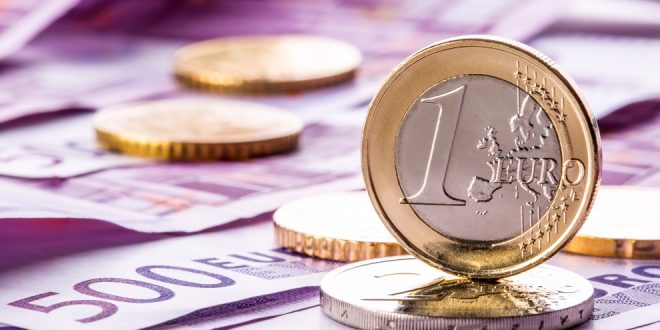
The more there is talk about the potential adoption of the euro in Bulgaria, the more often the argument is made that our country will be able to attract more investment in this way. This is the main line along which it is claimed that entering the Eurozone will enrich Bulgarian citizens – more investment means more jobs, more productivity and higher wages. It sounds very good, but the problem is that it will most likely not happen. Bulgaria has probably already extracted all possible positives from adopting the euro, for the simple reason that the lev is attached to it through the currency board. Now, if we adopt the euro as the official currency instead of the lev, we can only get negatives and risks.
Joining the Eurozone will not magically improve the investment environment in Bulgaria
To claim that the official adoption of the euro as a currency will be a significant factor in attracting more investment is not just wrong, but downright manipulative. This argument relies on the fact that many large institutional and international investors would prefer to work with the euro than with the lev. What is never answered, however, is the simple question "why?"
At first glance, this argument makes sense, given that the euro is one of the most widely used currencies in the world and enjoys a very high level of trust. It stands to reason that a country that uses a similar currency, managed by a prestigious and trusted institution like the European Central Bank (how much this prestige and trust is deserved is another question) would be more attractive for investment than one that uses its own, unpopular, little-used currency on a global scale, managed by some much smaller central bank that has neither the prestige nor the trust of the ECB.
But is this really the case? The data do not show such a pattern. If joining the Eurozone attracts more investment in itself, then is it logical to expect that the GDP growth of the member states will accelerate after joining the union? In fact, the opposite trend is observed. According to Eurostat data, the average level of GDP growth of the EU members outside the eurozone is higher than that of those inside it (only Ireland is an exception to this rule). And if we look at what happens to the GDP growth of the original member states of the Eurozone after they enter the monetary union, we see that it actually slows down.
The currency board provides the financial stability sought by investors
Related to this investment argument is the argument that joining the Eurozone will reduce currency risk. Currency risk is the risk of a currency falling in value (especially when it is sudden and unexpected) and the corresponding decline in the value of assets denominated in that currency. Investors are often concerned about this type of risk, especially when investing in smaller countries that have a history of erratic and irresponsible monetary policy and whose currency is not pegged to any of the major global currencies (such as the dollar and the euro).
The problem with this argument is that it does not correspond to reality – the existence of a currency board in Bulgaria makes it completely meaningless. Because we have a currency board, the lev is pegged to the euro at a fixed rate. This means that there is absolutely no currency risk, because our central bank (and accordingly the government) does not have the right to conduct an active monetary policy. With a currency board, we are obliged to constantly maintain the exchange rate of the lev to the euro stable at the level fixed by the board. Our central bank is obliged to simply imitate the monetary policy of the ECB to the extent that it maintains the fixed exchange rate of the lev to the euro. And this is a huge advantage of our current system compared to the monetary regime of the eurozone.
Currently, our government cannot use monetary policy tools to finance budget deficits and irresponsible spending. This is the biggest advantage of the current currency board system. Since it has existed, it has tightened a certain ring of fiscal responsibility around every Bulgarian government. This ring forces our politicians to be fiscally responsible within certain limits. On the one hand, as I said, because they cannot use monetary policy tools to finance irresponsible spending. On the other hand, they must be more careful in their economic and fiscal policy, because outside the eurozone there is no one to save us from a state bankruptcy. Germany will not come to our aid with colossal interest-free loans, similar to what happened to Greece. Because we do not share a single currency.
The Eurozone is encouraging dangerous and irresponsible fiscal policies
If we start sharing a single currency, however, we can say goodbye to the fiscal discipline of our politicians. Forever. Our politicians will now be able to take advantage of the tools of active monetary policy. In the eurozone, they will not be more constrained than they are now, but quite the opposite. They will be able to do what Greek and other politicians have been doing for nearly a decade – take advantage of the ECB’s low interest rates to finance dangerous and irresponsible government spending that redistributes money to certain businesses related to them.
If we enter the Eurozone, there are two possibilities – either Bulgaria will be from the group of fiscally disciplined countries like Germany and the Netherlands, or from the group of fiscally irresponsible ones like Greece, Italy and Portugal. The answer is obvious. Both in terms of mentality and in terms of the quality of public institutions and in terms of levels of corruption, they are much closer to their southern European neighbors than to their northern neighbors. And we all know how big the difference is between the development of these two groups of countries, even as part of the Eurozone.
One of the dirty secrets of the Eurozone is that it never actually achieves the much-sought-after higher degree of economic convergence between its member states. Quite the opposite. For example, since the Eurozone was created, the differences in economic development between Greece and Germany have only deepened. Mostly because Greece fell even further behind due to the crisis it got into with its irresponsible fiscal policy. A policy that was stimulated precisely by the monetary regime of the euro and the opportunity for Greek governments to benefit from cheap credit at the expense of German taxpayers. Ultimately, both Greek and German taxpayers suffered from this, but the long-term consequences for the former are, of course, far more severe.
At best, we will have to pay for the mistakes of other members.
But let's assume that our politicians will not be like the Greek ones. Let's abstract from reality for a moment and immerse ourselves in the blissful fantasy in which Bulgarian politicians are honest and responsible and would never abuse their power. Even if we assume that they would not undertake a policy that would threaten fiscal stability, this does not mean that our membership in the Eurozone will necessarily be all flowers and roses. In a situation where we are in the group of fiscally responsible member states of the monetary union, we will have to pay for the mistakes of the fiscally irresponsible. Just as German taxpayers had to pay for the mistakes of Greek politicians. And so again, entering the Eurozone carries far greater risks for the Bulgarian taxpayer than potential advantages.
As we can see, whatever path Bulgaria takes after entering the Eurozone, one thing is clear – the risks of the euro are clear and significant, and the possible positives are most likely non-existent. The currency board provides much higher levels of financial stability in the country than the euro could, because it imposes a straitjacket on domestic politicians by preventing them from conducting active monetary policy.
The European Central Bank has already failed once in its task of holding the national governments of the Eurozone member states accountable. It is this failure that led to crises in countries like Greece. Meanwhile, we have been excellent in fiscal performance, precisely thanks to the currency board. Let us not replace something that has been proven to work with something that has already been proven to fail.
This article was originally published in the newspaper "168 hours"





One comment
Pingback: Is Borisov lying about ERM-II or does he just not know what he is talking about?