EKIP– Expert Club for Economics and Politics A Different Opinion
One of the oldest dilemmas in economic policy is protectionism or free trade. In economic history, there are no countries that adhere entirely to one of the two principles. Although with too many conditions, free trade seems to prevail in modern practice. From the point of view of economic theory, this is easily explained, because the advantages of free trade are significantly greater.
In the artificial coma of the Covid-19 crisis, the ghosts of well-forgotten ideas are emerging and gaining popularity. One of them is to (allegedly temporarily) ban the import of foreign agricultural products in order to protect the local producer. The motives for the request are announced as patriotic and social. The theory is ignored because, according to politicians, reality is always different. However, are there historical and patriotic arguments for such proposals? This is exactly what we will check. To this end, we will turn to the birth of the modern concepts of free trade and protectionism, and then we will follow the Bulgarian experience.
The idea of free trade
At the dawn of economics, Adam Smith (1723-1790) wrote that the exchange of goods—trade—is not a loss for one party and a gain for the other. The benefits are mutual and reciprocal. He was not the first or only one to reach such a conclusion, but the idea of mutual benefit is of fundamental importance. Whether it is traded between countries, between regions, between compatriots, etc., when goods are voluntarily exchanged, everyone gains. Otherwise, one party to the exchange would not enter into relations with the other.
Something important in view of the topic of patriotism and free trade - Adam Smith is not an anti-patriot. He believes that, within his means, each individual tries to maintain local productive activity. According to Smith, by preferring local production to foreign production, people are guided by an "invisible hand" and contribute to the achievement of the public good, without this being part of their intentions. This is the only mention of perhaps the most famous phrase by Adam Smith - the one about the invisible hand - in his remarkable book The Wealth of Nations. This phrase takes on a life of its own and becomes a symbol of the market economy in general.
Several more of Adam Smith's insights, set forth in the same book, concern foreign trade and deserve attention. The introduction of legal prohibitions on exports and imports cannot prevent their actual implementation. In the presence of differences between prices on the domestic and foreign markets, all the severity of the law does not eliminate smuggling. Such prohibitions benefit one group of the population at the expense of another, which is certainly contrary to equality before the law and justice. And last but not least, Adam Smith notes that consumption is the only goal of all production. For this reason, the interests of the producer should be taken into account "only insofar as they serve the interests of the consumer." And in the case of restrictions on the import of agricultural or industrial products that compete with local ones, the interests of the local consumer are obviously sacrificed to the interests of the local producer. The latter receives a monopoly over the domestic market, which "almost always causes" an increase in prices.
The idea of protectionism
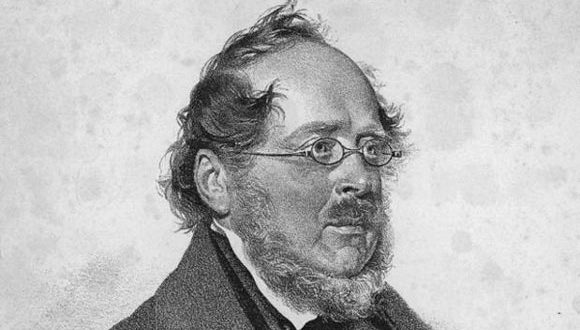
In 1841, the German economist Friedrich List (1789-1846) published his most influential book, The National System of Political Economy. It was written largely as a critique of the ideas of Adam Smith and other representatives of classical political economy. List spent part of his life in the United States and was impressed by what he saw there. He wrote from the position of a German patriot who painfully perceived the fragmentation and backwardness of the German states at the time. List was an enthusiastic supporter of industrialization and railway construction, which, in his opinion, were the path to economic modernization. From the economic practice of the United States and from the economic history of other countries, he also derived the idea of protectionism.
Friedrich List theoretically justified the need for industrial, not agrarian, protectionism, because industry was the new and dynamic sector that guaranteed economic growth. According to him, introducing high tariffs on agricultural imports was a completely wrong policy, because the best way to encourage agriculture was the development of industry. Agrarian protectionism had a negative effect on the development of industry, because it diverted capital from the dynamic and modernizing sector.
List notes that protectionism can be carried out by a complete ban on the import of certain industrial goods, by the introduction of high import duties, or by moderate duties. According to him, appropriate protective duties are those in which the imported goods are taxed with a duty of between 40 and 60% of the value. Subsequently, these duties should be gradually reduced. Thus, it becomes clear that List perceives industrial protectionism only as a temporary measure that ensures the initial development of local industry. It should be dropped when local industrial production is ready to compete with that of other developed countries. In addition, industrial protectionism is suitable for large countries with a consolidated territory, significant natural resources, and advanced agriculture.
Bulgaria's experience
After the Liberation, Bulgaria began its independent development in the conditions of free trade. The trade agreements that the Ottoman Empire had concluded before the creation of the Bulgarian Principality were valid for the country. According to them, imported goods, regardless of which country they came from, were taxed with an 8% duty. It cannot be defined as protectionist, but rather fiscal. It is assumed that with the revenues from it, the public authorities cover the costs necessary for the smooth implementation of commercial activity - maintenance of infrastructure, the judicial system and the like.
The first independent Bulgarian customs tariff came into force in 1883. It concerned Bulgarian trade with Turkey, Romania and Serbia. Imported goods from these countries were taxed with so-called specific duties, which means that a duty was determined for each good, independent of the value of the good. The purpose of such a practice was to avoid abuses with the different valuation of goods in different customs offices and by different officials. However, the assessment of the specific duties shows that the taxation was not much higher than the traditional eight percent import duty. Only for individual goods did the import duty in the Principality of Bulgaria reach 10-12%. In this way, Bulgaria rather timidly tried to protect some of its craft industries. These higher duties also had a fiscal nature. The Balkan partners of the principality were much more harsh in introducing protectionist measures against Bulgarian imports. This led to its sharp decrease in Romania, for example.
In 1897, Bulgaria concluded its first independent trade agreements with Austria-Hungary, France, Great Britain, Italy and Russia. These agreements included a special section concerning import duties for goods from these countries into the Bulgarian Principality. According to the understandings of the time, duties between 8 and 14% (inclusive) were considered fiscal, and higher duties were considered protectionist. A review of the customs tariffs shows that there are few goods for which duty-free import is allowed. These are, for example, samovars and church bells. The rest are taxed with a duty between 8 and 25%, and there are also individual goods for which specific taxation is envisaged. Thus, a rather moderate protectionism penetrates Bulgarian economic policy. The highest import duty of 25% is levied on the import of ropes and rope products, while protective duties are levied on sugar and sugar products, alcohol, coarse woolen fabrics, candles and ordinary soaps, leather and some leather products, etc.
Apparently, the rulers of the Bulgarian Principality followed the ideas of Friedrich List rather cautiously. They did not introduce prohibitions, but tried to encourage industrial and artisanal production. According to economists from the beginning of the 20th century, the protective duties introduced by the principality failed to support the development of local industry. There were exceptions, but they were not significant. In the end, it was not foreign imports that turned out to be the great obstacle to Bulgarian industrial production, but the inability of local industrialists to organize effective production, distrust, lack of calculation, and wastefulness. It is very likely that customs protection and other encouraging measures of the authorities rather strengthened these weaknesses.
"Patriotic" protectionism today
From what has been stated so far, it is clear that the protectionism of the bans on the import of agricultural products that is being proposed to us is completely untenable. Even the theorists of protectionism have defended industrial, not agrarian protectionism. The Bulgarian experience is also in the direction of moderate industrial protectionism. The ban on any import reduces the supply on the domestic market. The reduced supply of agricultural products benefits a small group of local producers at the expense of the entire society. There is no way this can have a positive impact on the socially disadvantaged in Bulgaria. From the point of view of the historical roots of Bulgarian patriotism, it is incomprehensible why a ban on the import of agricultural products from our very close brothers from North Macedonia is being proposed.
The author's preferences are definitely on the side of free trade, which is neither anti-patriotic nor anti-social. Prohibitions and protectionism have nothing to do with patriotism. They are state violence. And back in the mid-19th century, the French economist Frederic Bastiat wrote that "violence does not produce, but destroys."