EKIP– Expert Club for Economics and Politics A Different Opinion
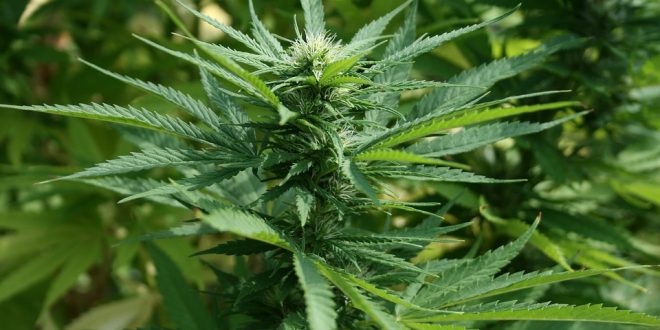
They say ideas are contagious. They start with a few, they spread by word of mouth, which promises them a furious growth until they circle the Earth. What if that idea is to live in a country where you can freely buy cannabis from your local drugstore?
Only a quarter of a century ago, Amsterdam was the only place with such a bold experiment. Just a few decades later, more than 10 countries, including the Czech Republic, Portugal, Germany, Uruguay, Costa Rica, India, Chile, etc., are already conducting various experiments with alternatives to the prohibition of the cannabis plant.
Wherever such an experiment is launched, concerned representatives of the public conscience paint a bleak picture of the future, entangled in tales of crime, moral decay and mental disorders. At the same time, humanity has detailed, time-tested data that (almost) none of these fears are happening. In places around the world with more liberal attitudes towards cannabis, teenage use is falling, cases of addiction to hard drugs are down, infectious diseases are decreasing, even road accidents after drinking alcohol are falling. But what are the economic dimensions of a bolder legalization?
How cannabis is transforming entire economies
Although it remains banned at the federal level, the herb is gaining credibility in at least half of the states in the US. In some places it is decriminalized, in others it is legal, and in still others it is only permissible for medical use. We will focus on examples with a legalized approach and mainly those that are comparable to Bulgaria in terms of population – Oregon (4 million) and Colorado (5.5 million). Currently, these two states are becoming a center of attraction for any entrepreneur with a million-dollar idea in the fastest growing industry in the world.
Imagine a boring farming profession like cannabis processing in the early 20th century waking up from a century-long coma and playing with the modern toys of the 21st century. Businesses like cannabis ice cream, fancy extraction machines, even detailed DNA tests that can recommend the most suitable strain, are creating about 18,000 jobs in Colorado and 12,000 in Oregon. Of those 18,000 in Colorado, 12,000 are employed in “ touching the grass,” and an additional 5,500 jobs have been created among professions like security guards, cashiers, accountants, managers, and real estate brokers (see this study).
Although the average price per gram of legal weed in Colorado is comparable to that of illegal weed in Bulgaria - $6-8, the state has seen a steady 3-year growth in sales, with the estimated value for 2017 being around $1.5 billion. This growth is happening despite the troubles that this business suffers from due to strict federal laws. Since cannabis is still illegal at the federal level, banks cannot open accounts for businesses engaged in such activity, which requires trade to be done only in cash. In a credit card society like the US, this is a problem.
A separate problem is found with storing large deposits of cash, as well as the monthly transportation of bags of money to the tax authorities. Yes, in America you are obliged to pay taxes, even for your illegal income. Businesses have even started looking for their own versions of cryptocurrencies (Potcoin, CannabisCoin, Dope) to handle payments. It is also important to specify that open use is not yet allowed in Colorado, and therefore there is no particularly developed entertainment business such as bars and clubs dedicated to the herb.
However, the state is experiencing growth in tourism, a growth in the consumption of goods and services. Colorado saw a 7% increase in tourism between 2014 and 2016, which in the last measured year equates to about 80 million visitors who spent about $20 billion (see here and here). In addition, 49% of tourists surveyed said that the legal status of weed influenced their decision to choose Colorado as a destination. Every dollar spent in the marijuana industry generates between $2.13 and $2.40 in economic activity. In order to remain competitive in the field of recreational services, the state of Nevada legalized the sale of cannabis from the beginning of July this year.
The effects of legalization on weed use
Of course, not all the effects are extremely positive. Although the gloomy predictions of mass intoxications have not come true, there has been an increase in the number of teenagers seeking emergency help after using weed. A study shows a fourfold increase compared to previous periods, but there is also a rational explanation for this - when possession is prosecuted by the law, children with problems are afraid to turn to institutions for help.
The data on teen use in general is reassuring. In Washington, Colorado, and Oregon, there was a 2-4% drop in the first few years of legalization. The reason for this lies mostly in the market's lightening. When you own a legal business with hundreds of customers every day, you wouldn't risk losing your license and profits because of the one gram you sell to a minor. If you're a street dealer, your goal is to get rid of what you have as soon as possible, because no matter who you sell it to, you're a criminal. The decline in use among minors is being reversed by an increase among adults - in the first two years of legalization in Colorado, users over the age of 26 increased by nearly 3%.
We know from Mark Thornton's book "The Economics of Prohibition" that when a substance is banned, the immediate effects are a sharp drop in quality and a sharp rise in price, followed by a smooth period in which the potency per unit of the substance increases at a steady rate. This is also what happens with weed. The content of the psychoactive ingredient (THC, delta-9-tetrahydrocannabinol - the psychoactive ingredient in the hemp plant) increased from 4% in 1995 to 12% in 2014 - a threefold increase while it was still banned.
We already know that legalization will continue the trend, at least in the short term. In the following years, you can find anything from 8 to 28% THC content in Colorado. In just a few years, the cannabis business has developed in such different directions that new and highly concentrated products for oral administration – the so-called edibles – have begun to appear. You can find them in all forms, from chocolate bars to lollipops and even pastes. This form of administration is responsible for between 20 and 40% of all sales and 80% of cases that end with medical intervention. That is why Colorado has imposed strict requirements for the labeling and dosage of edible products.
After legalization, there is no going back.
These, and many other factors, such as the increased number of people caught driving under the influence of marijuana, can be interpreted as both sides of the argument about whether it is morally right and good to have legal weed. None of this matters once it is legal. In places where the regime has been liberalized, there is no going back.
In these places, it will never happen again that a person will go to jail for possession. The reason is very simple and is summed up in one word – taxes. The revenue for the treasury from the sale of weed is so much that it has a more intoxicating effect on politicians than the weed itself. Again, in Colorado, tax revenues from the sale of weed are three times greater than those from alcohol, and are expected to be in the amount of $ 200 million for 2017.
These are just the direct profits from selling weed, without taking into account the increased costs for police, the judicial system and the maintenance of prisoners, which have applied the prohibition regime until recently. The choice of the authorities in Colorado is that the tax revenues from cannabis go directly to the renovation of the material base in state schools, in other states and countries these are spent on different items. The important thing is that once you integrate annual revenues of hundreds of millions into your budget, from here on it would be very difficult to give them up... and remain a popular politician.
Who knows? This may be the main motive for the Bulgarian political class to one day adopt the legalization model. Instead of feeding the most numerous and ineffective police in Europe, to arrest young people with a gram in their pockets, to feed and warm them in prisons, instead of filling the throats of organized crime, we can use these 100-200 million from taxes to plug the hole in the NHIF and for people to have funds for healthcare or to fix the roads so that we don't have to drive on them, or the pensions of the elderly, or the playgrounds and playgrounds don't matter. The important thing is that the world has taken the path of more freedom and legalization... and there is no turning back.