EKIP– Expert Club for Economics and Politics A Different Opinion
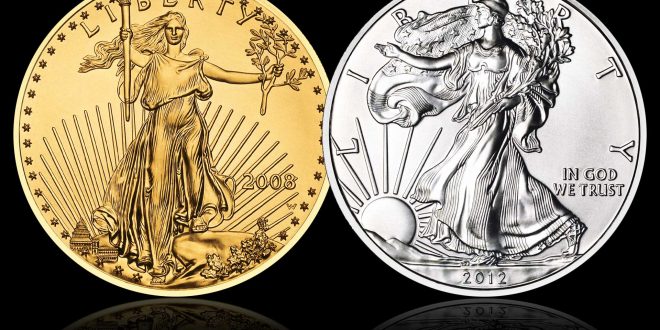
A few days ago, towards the end of last week, the gold-silver price ratio reached one of its highest levels in recent years. After that, in the last few days, the ratio between the two started to fall and the trend going forward seems to be firmly downward. In this context, those investors who bought silver when the ratio was at its peak and are now in a position to sell it when it drops significantly and buy gold with the money from the sale, are in a position to make serious profits. Why?
The gold-to-silver price ratio is one of the indicators that professional precious metals investors follow the most closely. It is an indicator that can at any moment signal to investors who want to invest in one of the two precious metals which is the more profitable purchase at the moment. The logic is very simple - when the gold-to-silver price ratio is very high, then silver is the better investment than gold in the short term. If the ratio is very low, then gold is. But what does this mean and how do we judge when this ratio is "very high" and "very low"?
A brief history of the gold to silver price ratio
It is in establishing these limits that many difficulties arise. Historical research on the subject shows that for most of human history the price ratio of gold to silver was about 15 to 1, varying at different periods of history from 12/1 (during the Roman Empire) to 16/1 (in the 19th century in the United States) and later to 17/1. Often the price ratio of the two metals was fixed at a certain level by government authorities, determined within these limits.
There is no such fixing today, but more importantly, to determine whether the gold/silver price ratio is too high or too low, we do not need to look back centuries. In fact, we are only interested in whether the current level of this ratio is above the average for the past 30-40 years. More specifically, the relevant period is since 1971 - the year in which the United States completely eliminated the gold standard on the dollar, subsequently ushering in the era of all-fiat currencies. Before this period, currencies around the world still had some collateral, be it purely formal, with gold and silver as monetary goods. It would be a huge mistake to compare the levels of the gold/silver price ratio at the time when they were officially recognized and widely circulated as money with today, when this is not the case.
More specifically, it is noticeable that after a prolonged period of increase, the gold/silver price ratio in the period between the mid-1980s and the early 1990s reached its lowest and highest levels respectively, to which it has periodically returned over the last two or three decades. Since then until today, the ratio has fluctuated between 50/1 and 80/1 and almost never violates these limits.
What does the price ratio between gold and silver tell us?
Simply put, the higher this ratio, the more overvalued gold is relative to silver, making silver a relatively better investment. Conversely, the lower this ratio, the more undervalued gold is relative to silver, making gold a relatively better investment. Many investors trade gold and silver based on the movements of their price ratio because it allows them to realize ever-higher returns and accumulate larger amounts of both metals over the long term without having to invest more money.
The gold/silver price ratio is essentially the price of one metal expressed in terms of the other. That is, when it rises, gold becomes more expensive relative to silver, and when it falls, silver becomes more expensive relative to gold. It is very important to understand what this means, so let's illustrate the logic with a practical example.
Imagine that you invested 10,000 BGN in gold when the gold/silver price ratio was 50/1. Let's say you hold this investment for a year, during which the price of gold rises much faster than the price of silver and the ratio after that year reaches 80/1. At that point, if you sell your gold and replace it with silver and within another year, for example, the price ratio drops to 60/1, this means that during that period the price of silver has outpaced that of gold.
Therefore, you have realized a higher return on your investment than if you had continued to hold gold. Now that the price of silver has risen relative to that of gold, if you sell your silver you will be able to buy more gold than you sold a year ago, even though you have not invested a penny more than you initially did.
The key thing to remember when investing according to the gold/silver price ratio is that the nominal values (in currency) of your investments are not important. Only the movement in the price ratio between the two metals is important.
Two methods of investing according to ratio movements
To minimize risk and invest successfully according to the dynamics of the price ratio of gold and silver, a specific investment strategy is needed. Here we will briefly focus on the two relatively simplest such strategies.
The easiest way to invest according to the dynamics of the ratio is by fixing minimum and maximum levels, which when crossed, the investor transfers his investments from silver to gold and vice versa. For example, as I noted above, over the past 30 years the price ratio has varied from about 50/1 to 80/1. If an investor uses these levels as approximate limits, when the ratio is close to 50/1 he would transfer his investments entirely into gold. When it reaches approximately 80/1 he would do the opposite and sell his gold to buy silver.
An alternative and relatively more accurate approach is to track the current price ratio movement against the average values for the last 2-3 decades. If the trends of the last 30-40 years continue in the future, then whatever short-term variations there may be, in the long term the ratio will quite logically return to the average levels for this period. The further the current ratio moves away from this average level up or down, the more overvalued gold is relative to silver or silver relative to gold.
According to calculations based on data taken from the London Bullion Market Association, the average level of the gold/silver price ratio since 1985 has been around 65. It is currently 78.5, which is one of the highest levels in the last few years, that is - silver is a relatively better investment at the moment. And accordingly, it is very likely that if you invest in silver now, later when the ratio falls (close to) the average value of 65, you will be in a very good position to realize profits by selling the silver and buying gold. This, of course, is true if the ratio falls to the historical average level of the last three decades. Which is likely, but not certain - history rhymes, but does not always repeat itself.
Ultimately...
Even if you are not interested in trading gold and silver based on the movement of their price ratio, this ratio can guide you to the relatively better investment at a given time. If you are a novice investor looking to buy precious metals and are wondering whether to choose gold or silver, it would be useful to pay attention to the current level of the price ratio between them. Therefore, it is useful for any precious metals investor to be aware of what this ratio is and to monitor how high it is at any given time. This is an additional tool that can help you optimize your savings.