EKIP– Expert Club for Economics and Politics A Different Opinion
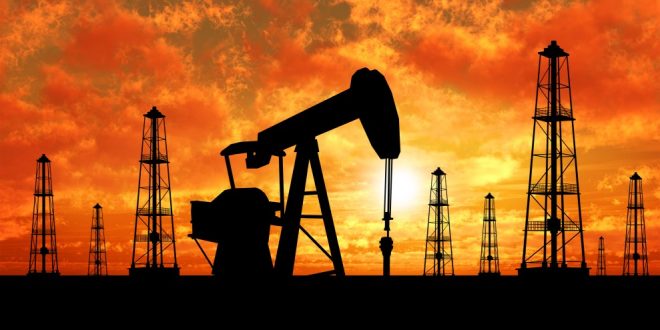
Happy New Year! Although the last few days have been hectic holidays, we at EKIP have not stopped following global economic events and what is happening in international markets. In my previous article, I shared with you three investment ideas that have serious potential to realize very high returns in 2018. In that article, I mentioned how uranium and uranium producing companies may turn out to be the best investment in the energy sector. Now, however , it is starting to look like another energy raw material is about to return as a strong investment – oil.
In the last few days around New Year’s, the price of oil reached its highest levels since mid-2015 and some of the highest since the great price collapse of late 2014 and early 2015. The price of oil crossed $60 per barrel, which has proven to be an upper limit for the price of this resource over the past three years. The highest level the price has reached since 2014 is $61.43 per barrel, and now it seems that the price is about to cross this limit. In this context, it seems likely (but not yet certain) that we are on the verge of a new bull market in oil, that is, a significant increase in its price in 2018. What are the factors that justify the realization of this probability?
Factors that could lead to a spike in oil prices
The main factors that could lead to a serious increase in oil prices in 2018 are the following:
- OPEC and Russian production cuts. This fall, OPEC and Russia agreed to continue cutting their oil production until at least the end of 2018. The OPEC and Russian cuts are the main factor that has stabilized the price of the commodity at around $50 per barrel and even led to a slight increase. This is the most fundamental factor that forms the basis for a potential serious increase in the price. However, the OPEC and Russian production cuts alone are not enough to lead to a bull market in oil, i.e. to a serious increase in the price. And this is where the role of the second factor comes into play.
- Higher economic growth at the global level. The past year 2017 was perhaps the best year for the global economy since before the start of the last crisis in 2008. All regions and almost all countries reported improved growth last year, which is something unseen in the last decade. Yes, since 2008 there have been certain years and periods in which serious growth was reported in certain countries or regions, but such a general and widespread improvement over the previous year has not been reported at the global level so far. These higher growth rates mean more investment and more consumption. Oil is the most basic raw material of the industrialized world in which we live, and therefore every jump in investment and consumption, directly or indirectly, leads to increased demand for oil. This pushes its price up, especially in combination with production cuts.
- Political instability in Iran. If you have been following the news over the past few days, you have probably heard about the serious protests that seem to be escalating by the hour. There is already direct talk of a political crisis and the potential fall of the current government. If this crisis continues and especially if it deepens, it will have a serious impact on the markets and specifically the price of oil. According to many market analysts, it is the protests in Iran that are the reason for the increase in price (by 0.43% so far) that is observed today. Iran, if you do not know, is the fifth largest oil producer in the world. Any instability there cannot but affect the price.
Oil price hike not certain, but very likely
Of course, it is not as if there are no factors that are pushing the price of oil in the opposite direction – downwards. Oil production in the US continues to grow and to some extent neutralizes the effect of the production cuts by OPEC and Russia. So far, the two have generally neutralized each other and this is what stabilized the price of the raw material over the past year. In 2018, however, the factors that are pushing the price up are more. In addition to the production cuts in OPEC and Russia, we have accelerated economic growth at a global level and political instability in Iran. This seems like an ideal recipe for a serious increase in the price of oil in the coming year. Will this be realized in practice, however? It is still too early to say. At this stage, serious (by at least another 10%) and prolonged (through at least half of 2018) further growth is not certain, but it seems very likely.
If the price of oil breaks $62 per barrel, it will set a new record for the last three years – this is perhaps the most important boundary and its crossing most likely means a bull market. But personally, I would wait a little longer after that. If the price crosses $62, but does not give any indications of further increase, this may be just a temporary peak, which will be followed by a very short correction in the coming weeks (as happened in 2015). However, if the price continues to rise, crosses $65 and accordingly begins to draw a clear upward trend – then we are already talking about an almost 100% sure bull market and we have a good investment opportunity.
American oil companies have the most serious potential in the current context
The best way to take advantage of a potential bull market in oil, in my opinion, would be through shares of SPDR S&P Oil & Gas Explore & Prod. (XOP is the abbreviation of the stock exchange). This is an American ETF (exchange-traded fund), specializing mainly in small and medium-sized enterprises engaged in oil exploration and production. Small and medium-sized enterprises and, accordingly, the funds that invest in them are riskier than large ones, but also bring greater profits when the conditions in the oil market are favorable... as is the case now.
Moreover, even ignoring the potential rise in oil prices, XOP is not a bad investment, because US oil companies are reaping serious positives from Donald Trump's presidency. Tax reform, especially the significant corporate tax cut, combined with the permission of certain parts of the Arctic National Wildlife Refuge to conduct oil exploration and potential production, will directly stimulate the profits of the oil sector in 2018. To get an idea of how much oil companies are gaining from Trump's reform, I quote Barclays analysts: "The 14% corporate tax cut will add $ 1 billion to the profits of US companies specializing in oil exploration and production."
And XOP shares have not yet started to rise, and even in 2017 their price fell by 9.64%. That means the coming days are an ideal time to invest in them.