EKIP– Expert Club for Economics and Politics A Different Opinion
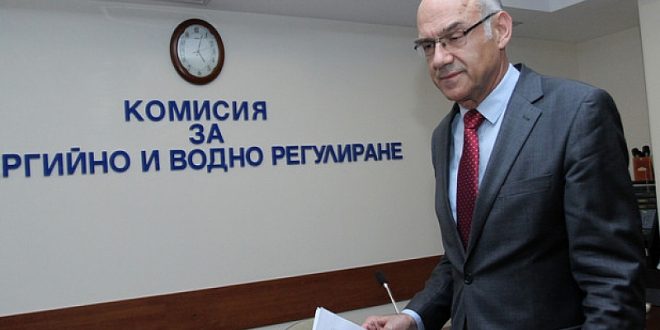
Author: Kaloyan Staykov
Regulatory authorities in Bulgaria seem doomed to remain dependent. This is the brief conclusion of the behavior of a number of politicians in recent months, and this week the Ombudsman joined them. The latest proposal is that citizens should have the opportunity to appeal in court the decisions of the Energy and Water Regulatory Commission (EWRC) on the maximum prices for the supply of heat and electricity, natural gas and water. The idea is more than absurd for at least two reasons – a misunderstanding of the role of the regulator in these sectors, not only in Bulgaria, but also in principle, and sleeping through its work, specifically in Bulgaria, until 2014.
Why is there a regulator?
Contrary to the widespread belief that the regulator’s job is to ensure guaranteed profits for private companies, its role is actually quite prosaic and stems from the now outdated understanding that energy and water services constitute a natural monopoly [1]. In the presence of a monopoly, adequate regulation is necessary to prevent it from abusing its market power. This leads to the so-called regulatory bargain, in which the state guarantees a certain return (with all the conventions of this concept) to the monopolist company, and in turn the latter undertakes to provide goods and services under certain conditions, such as universality, continuity, quality, etc. In short, the regulator exists to protect customers by guaranteeing them a quality service at an acceptable price.
Years later, views on the operation of these sectors changed and it was established that the production and trade of energy and water and sanitation services are not actually natural monopolies and competition can be introduced in them. However, such is not possible in transmission and distribution, which remain as natural monopolies and continue to be regulated. The model of vertically integrated monopoly companies, including production, transmission, distribution and supply, gradually changed, and the role of the regulator, naturally, shrank.
This process is proceeding much more slowly in Bulgaria than in other EU member states, as battles are still being fought over the liberalization of the wholesale market (electricity trading by producers) and the retail market (electricity supply to consumers), which are far from won. As a result of this legacy, households still receive heating, electricity and water services at regulated prices, which are set by the KEWR and, as we have already noted, their role is to provide consumers with services of a certain quality at an acceptable price.
What would the situation be like if there was no energy regulator?
If energy were a fully liberalized sector, there would be no need for a regulator, regulated prices, and hence no need for citizens to be able to appeal these prices. Instead of the current situation in which each household, depending on its geographical location, is automatically tied to the services of a provider of heating, electricity and water services, everyone would have a choice of which company to provide the relevant services and to conclude a contract with. In this hypothetical situation, the price of services would depend not on a regulator, but on demand (the number of customers, their profile, weather conditions, solvency, etc.) and supply (competition in production, transmission, distribution and trade). In other words, a situation that is close to that of the market for television, internet and mobile services. Each consumer chooses a service and a trader to deliver it to him; accepts the company's general terms and conditions for the quality of service, including planned and unplanned outages; he is obliged to pay a certain price, the methodology for calculating which cannot be challenged in court, etc. Or he chooses not to pay anyone and not to watch television.
Usually, this is where the supposed consumer advocates intervene, arguing that access to and supply of heat, electricity and water and sanitation services are not actually services, but a type of right and cannot be left to free competition – they must be regulated! In other words, in order to protect consumers from the evil forces of the market, the state introduces regulations in market relations, which brings us back to the historical role of the regulator in these sectors. It seems ironic, doesn't it - the state, through the Energy and Water Resources Regulatory Commission, regulates the market to protect consumers, but the ombudsman believes that citizens are "deprived of the right to protection when their rights and legitimate interests are violated or threatened, as stipulated in Art. 56 of the Constitution".
By the way, last year the Supreme Administrative Prosecutor's Office protested before the Supreme Administrative Court against the decision of the EWRC on the price of water and sewerage services, by which the regulator is accused of failing to fulfill its legal obligation and, note, of creating conditions for the implementation of the concession agreement between Sofia Municipality and "Sofiyska Voda" AD (!). As we wrote then, this is more than absurd, because usually the actions of the regulator are in the opposite direction - underestimating the regulated prices as a result of the low purchasing power of consumers. As a result, for example, the National Electricity Company accumulates about 2 billion leva in unpaid debts, according to a summary of a World Bank report.
In short, it can be said that citizens continue to receive regulated services at prices that are not only lower than market prices, but also do not cover the costs of production, transmission, distribution and delivery. However, the Ombudsman believes that they are not subject to sufficient protection. This may be a direct response to the changed and improved work of the regulator, which, naturally, should lead to a slight increase in prices for citizens. Of course, this process is taking place smoothly, since the price of utility services has a certain social tolerance. And since we have two ironic circumstances so far, won't we end up with a third one and, upon the first appeal in court against the regulator's decision, it turns out that the price for citizens should increase significantly faster than planned?
[1] A particular type of monopoly that can arise when there are extremely high fixed distribution costs, for example, when a large-scale infrastructure is needed to ensure the delivery of a good or service.
Image source: Frognews.bg