EKIP– Expert Club for Economics and Politics A Different Opinion
The joint participation of state and private capital in economic initiatives has long been a familiar practice. The reasons and conditions under which it is implemented are different. Historical experience in Bulgaria shows that the results of such "cooperation" are dubious. However, this is not all. In fact, cooperation degenerates into mutual deception between private shareholders and the state and attempts to benefit individuals.
The State, the Sea and the Steamship Company
The Principality of Bulgaria began its independent economic development in 1879 under unfavorable starting conditions. The price of wheat on world markets was steadily decreasing, and it was a major production and export product of the Bulgarian economy. The lack of fast and cheap access for Bulgarian goods to European markets was among the first obstacles to the country's economy identified by the then elite. At first glance, sea transport offered relatively good conditions for Bulgarian exports. However, the reality turned out to be different. The limited quantities of goods that Bulgaria exported and imported made it unprofitable for large shipping companies to maintain regular routes to Varna and Burgas, because their ships traveled almost empty. That is why foreign carriers received subsidies from the state.
Under these conditions, the state again became the initiator of the creation of a mixed – private-state – joint-stock company, in which Bulgarians could be attracted as investors. In 1893, the State Gazette published a Law on the Establishment of the Bulgarian Commercial Steamship Company (BTPD) for a period of 20 years. According to the company’s Articles of Association, it was envisaged that it would have a share capital of 2,000,000 leva, divided into 5,000 shares with a nominal value of 400 leva. One quarter of the shares belonged to the state, the rest were intended only for Bulgarian investors, and no private shareholder could own more than 100 shares. The state was obliged to pay an annual subsidy to the company, which increased over the years. The possibilities of private shareholders to group themselves so as to have superiority over the state in the management of BTPD were deliberately limited. The company's statute and subsequent amendments to it guarantee the decisive role of the state in its management.
After the shares of BTPD were put on sale, it failed to fully raise the planned capital of 2,000,000 leva. The total number of shares sold was 3,672, of which, according to the planned rules, 1,250 were state-owned. Private capital in the country is limited and even state participation does not serve as a sufficient guarantee for its attraction.
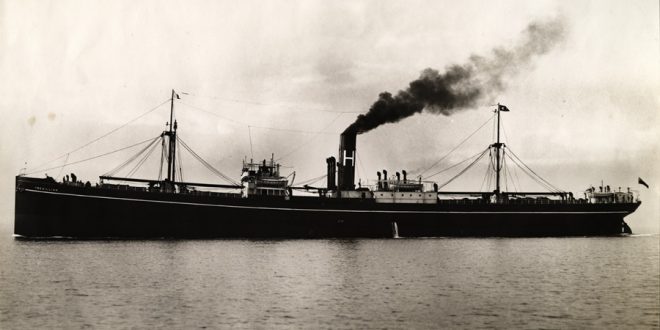
The summarized information shows that for the first 20 years of its existence, BTPD purchased 6 steamers and served four regular lines: coastal (along the Bulgarian Black Sea coast), Varna - Burgas - Constantinople, Varna - Piraeus and Varna - Alexandria. By 1912, its steamers served 11% of the turnover of Bulgarian ports. However, these data do not give an accurate picture of the place of BTPD in Bulgarian economic, political and social reality.
What is the place of BTPD in the Bulgarian socio-economic reality?
Among the greatest achievements of BTPD in the first 20 years since its establishment is the significant reduction in freight rates for the export of goods from Bulgarian ports. It is claimed that as a result of competition from BTPD, the other shipping companies operating on the Bulgarian Black Sea coast reduced their prices for exports from the country. The reduction in freight rates at the end of the 19th century is a fact, but the reason for it is not the existence of BTPD. At least two facts speak for this. First of all, the company is a monopolist in servicing the lines along the Bulgarian Black Sea coast and the freight rates for the transport of goods and passengers between Bulgarian ports remain extremely high. On the other hand, the prices for transporting goods from Bulgaria to Antwerp are falling, and this is a line that is not served by BTPD at all. The reduction in prices for sea transport is a common phenomenon in economic development at the end of the 19th and beginning of the 20th centuries and has almost nothing to do with the activities of BTPD.
The management of the Bulgarian Steamship Company quickly fell under the influence of party-political interests. The posts in the BTPD were distributed along political lines to influential local activists from the ruling party, as a reward for party loyalty. In practice, with every change of government, the management of the company also changed. The first titular directors of the BTPD were former, and sometimes even current, state officials without special knowledge of maritime affairs.
The movement of the company's steamers according to the previously announced schedule is extremely irregular, especially abroad. It happens that trips are canceled without informing the interested traders and agencies. Due to unfortunate regulations by government representatives in the management of BTPD, individual steamers leave the ports earlier than specified in the schedule. Thus, they travel empty, causing damage to the customers who relied on BTPD, and the company itself loses its reputation and suffers financial losses. Some of the purchased Bulgarian steamers turn out to be technically unsuitable to serve long-distance lines, and this also brings negative consequences to BTPD. For this reason, in 1909, two years after its opening, the service of the Varna - Alexandria line was closed. The company's accountability is subject to all kinds of criticism, the various statements and accounting documentation are kept irregularly.
And again corruption and abuse...
The temptations of easy money and not-so-honest quick profits are found from the lowest to the highest levels of the company. The main source of abuse and corruption is the fact that BTPD is a mixed private-public company with a crucial role for the state in management.
A classic source of abuse is the purchase of new steamships. In 1906, the steamship "Kiril" was purchased, whose technical and operational qualities were quite poor, but on the other hand, a scandalously high price was paid for it. The same applies to the steamship "Sofia" purchased in 1904. Attempts by private shareholders to inspect the purchases ended in failure. These purchases were made under the direct control of the state, which, in the person of the Minister of Finance, gave the necessary permits. Therefore, even if government representatives were not directly involved, the state is definitely responsible for creating an environment conducive to corruption.
A sure source of abuses are the repairs of the ships and the deliveries of coal for them. For example, the aforementioned steamer "Sofia" was purchased for about 88,000 leva, and over the next three years approximately the same amount was spent on repairs on it. When purchasing coal in Constantinople, the captains of the BTPD steamers took commissions from the suppliers, and the actual delivered coal was less than officially announced. According to the calculations of the shareholders, in the first years of the 20th century, the company lost about 156,000 leva per year from unprofitable purchases of coal. It often happens that officials in the company who were dismissed due to abuses return to work during the next politically motivated change of the Management Board. The company's agents commit various abuses when selling tickets, etc.
Financial and economic results
The financial results of the company's operations for the first 20 years, at least at first glance, are not bad. Its revenues amount to approx. 16.6 million leva and expenses to approx. 14.8 million leva. The minimal profit is due to the fact that over 6 million leva of state subsidy is included in the revenues, i.e. BTPD does not go bankrupt thanks to the money of Bulgarian taxpayers, and not because it is well managed. From this fact, one cannot conclude that the state actually benefits private shareholders. During the aforementioned 20-year period, no dividends were paid for six years, and apart from that, the market price of the shares fell to approx. 200-230 leva at a nominal value of 400 leva per share. That is why even before the outbreak of the Balkan War (1912) the private shareholders proposed that the company become fully state-owned. An opinion that is not shared by the ruling party, because they see the joint venture as a way to use private capital for party-political purposes.
The economic results of the BTPD's activities were minimal. In 1907, a Bulgarian economist sarcastically noted that the entire Bulgarian fleet "could easily fit in just one of the holds of an ocean-going steamer." The example of the BTPD shows that since the late 19th and early 20th centuries in post-liberation Bulgaria, the invisible hand of the market as a regulator of economic relations has been replaced by the hand of the state. This stimulates corruption at various levels and does not bring tangible positive results.