EKIP– Expert Club for Economics and Politics A Different Opinion
Guest author: Martin Nikolaev
From fines for patent leather bags to a political baton
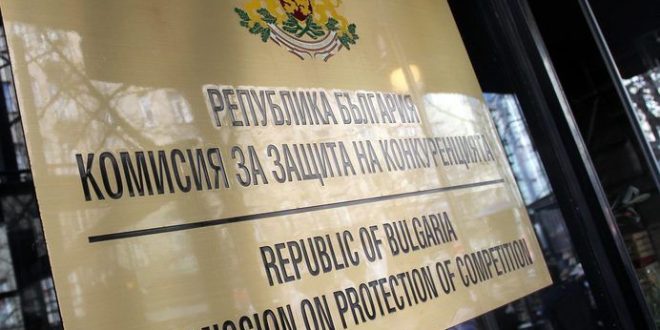
Until a month ago, the Competition Protection Commission was known as just one of many useless state institutions, mainly dealing with fining online stores and women's boutiques for uncompetitively pampering Bulgarian girls with a bonus leather bag with the purchased pair of patent leather boots. The situation changed on July 19, when the commission banned the Bulgarian Inerkom from acquiring the business of CEZ in our country, as well as the Czech billionaire Kellner from buying Nova Television.
All of this was expected, as Prime Minister Borisov has repeatedly shown a knack for letting “independent” institutions make difficult or unpopular decisions, to which his government is “forced” to comply without a vote. The cabinet’s problem in both cases was which institution should stop the deals, and for CEZ, special amendments were even adopted to the Energy Law, giving KEVR the authority to cut off Inerkom. Ultimately, it seems that the responsibility of saving the cabinet from public pressure against the sale of CEZ to Ginka, as well as the risks of an unknown foreign billionaire single-handedly taking over the largest television station in our country, has fallen on the shoulders of the CPC.
So far so good - the "independent" institutions in our country have repeatedly shown that their independence is as stable as a "standing hedge", as they say in Vratsa.
To everyone's regret, however, the texts of the CPC on these political decisions remove the commission from its previous sham role and turn it into a major obstacle and risk factor for all future large mergers and acquisitions in Bulgaria.
The motives of the CPC
The CPC's motives for prohibiting the acquisition of CEZ and Nova Televiziya have almost nothing to do with the Methodology for conducting research and determining the market position of enterprises in the relevant market (decision 393 of 2009) approved by the commission itself. In the case of Nova Televiziya, the commission makes an unclear qualitative assessment of Petr Kellner's power to consolidate Nova Televiziya's positions as a market leader and his hypothetical catharsis at a given moment to raise prices and spoil the comfort of consumers. There are no numbers, no data, no arguments. Even a first-year law student can push the decision in an impartial court.
In the case of CEZ, we have an attempt to segment the electricity market down to the small photovoltaic niche market (and then in 20-30 years, when it becomes free), so that vertical integration and concentration between Inercom and CEZ can be found there. Here, the established methodology is followed, but in the public decision the numbers are deleted, supposedly for the sake of trade secrets. However, according to old official data, it can be seen that even in the photovoltaic market, the total market share of CEZ and Inercom is about 3% of the capacities in the country – far below the limits of 15/25% and 40% in the official methodology of the Competition Commission. Of course, we must not forget the absurdity of considering the future free market for photovoltaic electricity as a separate market from the entire free market – then why is it called “free” at all and what is the difference between one type of electricity and the other?
Leaving aside for the moment the future of the CEZ and Nova deals, what will be the consequences of the motives behind them for future decisions of the Competition Commission?
- Removing the possibility for the CPC to liberalize its approach to transactions in the foreseeable future. Every percentage and value in the methodology will be completely strict and mandatory, even values approaching them.
- Large markets for goods and services will be considered segmented into small markets, with concentration even in a small market obliging the CPC to prohibit the entire transaction altogether.
- Doubts are raised as to whether investors with large resources and positions in a given market will be able to acquire other Bulgarian companies in the same sector at all.
The first guaranteed victims – Societe Generale and Piraeus
The consequences of the decisions on CEZ and Nova will manifest themselves much faster than expected, as before the end of 2018 the CPC will be forced to prohibit DSK from acquiring Societe Generale in Bulgaria.
Here it is important to start with the fact that the deal between the two banks is really on the verge, not to mention in direct violation of the Competition Protection Act (another question is how meaningful it is and whether it should even exist, in my opinion - rather not).
As analysts from other foreign banks have already pointed out, in the sufficiently large consumer credit market segment, after the acquisition, DSK will have a gigantic market share of 39%, which, according to the CPC methodology, is an unequivocally dominant position. In housing and mortgage loans, the market share will be 27%, far above the 15% threshold set for problematic lending. The HHI concentration deltas according to the CPC methodology will be 528 and 264 for both markets, respectively, also exceeding the permitted 250. That is, the future deal is indeed problematic, to put it mildly, under the current legislation.
In a normal situation, we could expect and would normally expect a much more liberal attitude from the CPC, with the commission turning a blind eye to the violated legislation or “covering up the situation” with some flimsy analysis of qualitative factors. Those involved in the deal conveniently would not appeal the CPC’s decision and it would happen. Or, in the worst case, the CPC would issue instructions after the acquisition for DSK to get rid of certain volumes of consumer and mortgage loans.
But after the decisions on CPC and Nova, the situation is completely different. Relying on the precedent set and under pressure from 4 appeals in the Supreme Administrative Court and a pending arbitration for over 1 billion euros in Washington, the CPC will almost certainly stop the entire deal or require DSK to acquire only a portion of Societe's assets.
Without knowing who will win the bid to acquire Piraeus Bank, the same scenario will likely play out there. Unofficially, Energo-pro, bTV, and at least two other large telecommunications companies are also scouting the market for potential buyers and will face the same problems.
Bulgaria's reputation – from bad to worse or worst
Having left its role of fining boutique and sex shop owners and gone wild on the terrain of multi-billion dollar deals, the CPC will inevitably become one of the factors shaping Bulgaria's reputation as an investment destination. In the foreseeable future, the commission will face two scenarios. The first is to allow and prohibit deals without regard to facts and methodologies, which will lead to its total compromise as a tool of political arbitrariness. For example, to allow the merger of DSK and Expressbank, but CEZ and Petr Kellner will expectably and justifiably bombard the European Commission and arbitration courts with multi-billion dollar claims against Bulgaria because of the double standard. The second scenario is to continue draconian measures at every corner, blowing up a number of high-profile acquisitions. You can imagine the disgrace when the CPC bans the DSK-Expressbank deal, considering the international reputation of their parents, OTP and Societe Generale.
That is, we will have to choose between our country's reputation going for worse or for the worst.
The solution
If the CPC is sensible enough and decides not to go through the millet, knocking down significant future deals, then consultation with the executive branch and a change in the commission's leadership next year seems like the only possible solution. This way, we will both wait for the outcome of the CEZ and Nova Television cases, and there will be a civilized justification for changing the commission's behavior - it's just that the new leadership may profess more liberal beliefs (we will still be a laughing stock, but at least we won't be a circus). Of course, this will also require a certain delay in bank consolidation and brakes on other major deals being prepared for Bulgarian companies.
PS Of course, the ideal solution would be to simply dissolve the "Commission for the Protection of Competition", which was an unintentional Freudian mistake made by a member of parliament from the Reform Bloc during the last term.
Image source: paragraph22.bg