 EKIP– Expert Club for Economics and Politics A Different Opinion
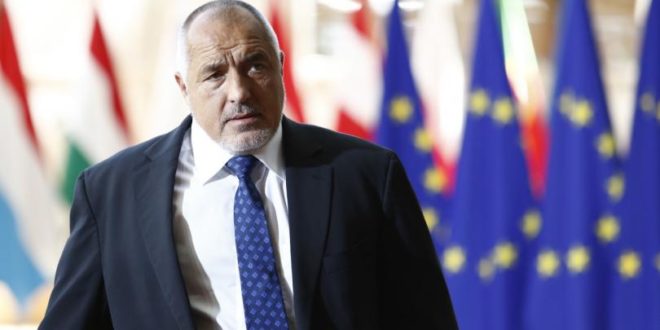
In the debates that erupted this week over the dangerous amendment to the BNB Law, the authorities were forced to launch a desperate defense of the current political course towards the fastest possible membership in the eurozone. One of these desperate defenses was the claim made by Prime Minister Boyko Borisov that joining the eurozone would guarantee the stability of the banking system. According to Borisov, the banking union and the single banking supervision of the European Central Bank, which we automatically join upon adopting the euro, will ensure that "Corporation Bank will not repeat itself."
Purposeful manipulation or simple ignorance?
We can draw two conclusions from such statements. First, the arguments of the authorities in support of adopting the euro are extremely weak. Second, the Prime Minister is clearly neither aware of the history of the eurozone nor of the nature of the banking union. In essence, first of all, the banking union and the eurozone are not linked. Yes, every member of the eurozone is obliged to be a member of the banking union, but it is also open to EU member states that have not adopted the euro. If someone claims that we cannot be in the banking union without adopting the euro, then he is either lying or does not know what he is talking about.
The European Commission's website states in plain text: "The banking union includes countries in the eurozone. Countries outside the eurozone can also join." If Prime Minister Borisov believes that the banking union is so key to ensuring banking stability in Bulgaria, why didn't he apply for participation back in 2015 after the bankruptcy of Corpbank?
It is entirely possible that Borisov has no idea how the institutions of the eurozone and the European Union function, especially when it comes specifically to banking supervision. Hardly anyone would be surprised by this. But it is extremely dangerous to publicly propagate misconceptions born of this ignorance, because it can mislead the public opinion of Bulgarian citizens. Politicians have a responsibility to inform their voters, not to mislead and manipulate them.
Is the ECB's banking union a panacea?
But this is not even the deepest fallacy in the Prime Minister’s statements about the EU banking union. A far more dangerous fallacy is his claim that joining it and being supervised by the ECB would prevent a repeat of a failure like the one that happened with Corporate Commercial Bank 5 years ago. The history of ECB regulatory oversight and in particular the banking union and the single supervisory mechanism does not show any success in preventing bank failures, even specifically due to criminal activities and political corruption, as seems to have been the case with CorpBank.
We can go back as far as the years of severe economic crisis in the Eurozone, between 2011 and 2014, when a number of banks in countries such as Portugal, Italy, Ireland and of course, Greece went bankrupt or were brought to the brink of bankruptcy due to irresponsible and excessive risk management of their finances. In many of these cases of failed banks, financial and accounting fraud was also involved.
For example, in 2015, the former governor of the now-bankrupt Banco Espirito Santo in Portugal was charged with fraud, money laundering, forgery, corruption and similar crimes that worsened the bank's finances and led to its bankruptcy. Later in 2016, he was fined by the Portuguese central bank for "disastrous management" of the former BES. Why did the European Central Bank fail to reveal in time that this was happening?
Let's be lenient and accept that the ECB's options in cases like the one cited above were limited because they happened before the creation of the banking union and the single supervisory mechanism in 2014. However, after its creation, things are different...right?
More than one or two "Corporations" have happened under the ECB's nose
In fact, it turns out not. Here we have an example of a bank located on the other side of the continent – ABLV, the third largest bank in Latvia until February 2018, when it entered into voluntary liquidation. Why did it enter into liquidation? Because it found itself on the verge of bankruptcy after it was revealed that it had participated in money laundering for criminal purposes. The news of the crime, which was revealed not by European institutions, but by American ones, led to a restriction of the bank’s access to the US financial market and a mass withdrawal of deposits, as a result of which ABLV’s financial condition became critical.
Days later, a press release was published on the official ECB banking supervision website, announcing that the bank was on the verge of bankruptcy, but that it was not recommended to bail it out, so the ECB would not take any action on the matter. Note, however, that the scandal with the bank’s criminal activities was uncovered not by the ECB’s supposedly very strict banking supervision, but by the US services. Latvia adopted the euro in 2014. The Banking Union and the Single Supervisory Mechanism came into effect later that year. That is, the ECB had at least 3 years in which to establish that there was something wrong with the bank’s operations. But it failed to do so – the scandal was uncovered by the US.
But wait, there's more. We can't talk about bank failures and scandals without mentioning the definitive "excellent performer" in this regard in recent years - Italy. For example, at the end of last year, the Italian government approved a rescue package worth 900 million euros for the Popolare di Bari bank, which has been unable to clean up its balance sheet of toxic assets and recover from the crisis for 5 years. Meanwhile, the local prosecutor's office has launched a corruption investigation against the bank's former chairman, who is leaving in July.
Enough of relying on salvation from outside
We can talk a lot more about the failures of the ECB's banking supervision within the eurozone. Entire books could be written on the subject. The claim that this supervision can be a guarantee against a repeat of a case like Corpbank is absolutely groundless. As in any other respect, it is foolish to rely on some kind of "salvation" from outside. The EU would fight corruption in our country, and the ECB would guarantee banking stability. These are all groundless fantasies.
If, despite its failures, we so badly want to join the ECB's supervision, we can always do so even outside the eurozone. But if this is the main argument of the ruling party in support of adopting the euro, then it turns out that there are really no arguments.





They'll bang their wooden heads against the wall later, but it'll be too late.