EKIP– Expert Club for Economics and Politics A Different Opinion
The mass psychosis about social distancing threatens to transform from a temporary measure into a completely acceptable and permanent approach to life. The idea of limiting and state control over contacts is not new. It is completely opposite to the conclusions reached by the most prominent representatives of economic science. Therefore, it is worth recalling some of them and seeing how they work.
David Ricardo's Law of Association
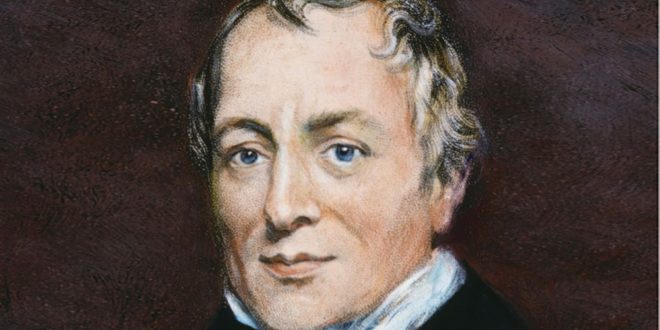
In 1817, the book of the English economist David Ricardo (1772-1823) "On the Principles of Political Economy and Taxation" was published. It sets out one of the most complex, interesting and valuable concepts in the history of economic thought. It is known as the theory of comparative advantage. Ricardo proves that if in one country any production is cheaper compared to another, then it will be mutually beneficial for both countries if they resort to a division of labor, in which they concentrate on the production of goods in which they have a relative advantage and trade with each other.
Later, Ludwig von Mises noted that this theory applies not only to international trade, but also to domestic trade, and also to relationships between people. He wrote that the cooperation of “the more talented, the more capable, and the more diligent with the less talented, capable, or diligent leads to benefits for both.” To illustrate, we can imagine two people, one a dentist who is better than the other not only in this area but also in ironing shirts, for example. Despite the fact that the dentist is better at both activities, it would be better for everyone if the dentist concentrated his efforts where he had a relative advantage - in dentistry - and left the ironing of shirts to the other. Mises called the concept we have presented “Ricardo’s law of association.” The poor and the rich, the smart and the stupid, countries with huge natural resources and countries without them, etc., benefit from its application.
Ricardo and those dissatisfied with him
Ricardo's theory is not among the easily understood economic ideas, but it is gradually gaining popularity. Its expression is the policy of free trade, which allows individual countries to specialize in the industries in which they have comparative advantages and to trade with other countries with the fewest possible restrictions. England was the first to go down this path. There, in 1846-1849, the so-called Corn Laws were repealed, which had effectively banned the import of cheap wheat into the country. The wealthy landowners lost from the repeal, but the poorest gained, because the prices of bread decreased. In the following years, practically all customs duties were abolished in the country.
Somewhat surprisingly, a systematic resistance was formed against Ricardo's law of association. It was mainly due to the view that England insisted on free trade because it was only in its own interest, and not in the interest of everyone. The arguments were as follows: in the middle of the 19th century, England was the most developed industrial economy and, through free trade, flooded the markets of less developed countries with cheap industrial goods. Thus, it prevented the industrialization and comprehensive modernization of the more backward. In the first half of the 19th century, the German economist Friedrich List declared himself against cooperation based on social cohesion and comparative advantage. Germany was not yet united, and the German states were lagging behind compared to Great Britain. List attributed England's progress to the protectionist policy that had dominated England before 1846. He was followed by other German economists. According to them, social distancing, expressed in the exclusion of foreign goods from local markets and the protection of local industrial production, is a means of economic and social progress.
The ideas of protectionism, i.e. of varying degrees of social distancing, became popular in other backward economies. Examples include Bulgaria after the Liberation, Latin America after World War II, and the countries that emerged after the collapse of the colonial system. Among Ricardo's opponents was Adolf Hitler. In his book "Mein Kampf" he noted the fall of German joint-stock companies under the "control of international capital" as one of the negative trends in the development of the German economy. An interesting and important detail is that, according to Hitler, this led to an increase in inequality in Germany. Social isolation is also typical of the communist regimes of Stalin in the USSR and Mao Zedong in China.
Does the theory work?
It works. Of course, the “laws” of economics are not like the laws of physics, but Ricardo’s theory explains many of the positive events in economic history. Ignoring it, on the other hand, is the cause of economic failures.
Indeed, in the 19th century, Great Britain became the leading industrial economy. It exported manufactured goods and imported mainly food products and agricultural raw materials. However, this did not mean that the countries that imported their goods there were doomed to poverty. The proximity of the British Isles to Denmark allowed Danish producers to discover their comparative advantages in trade with the United Kingdom and to take advantage of them. In the late 19th and early 20th centuries, Danish small-scale livestock farming modernized rapidly, and market-oriented cooperatives were organized that produced high-quality products. In the early 20th century, Denmark exported 63% of the output of this industry: mainly butter, ham, eggs and other similar products. Almost all of the butter was exported to the British market. Thus, consumers and producers in both countries benefited. The industrialization and overall modernization of Denmark was not hindered by the fact that a large part of its economy was influenced by the comparative advantages in the livestock sector.
Danish-British economic cooperation is also remarkable from a Bulgarian perspective. In the late 19th and early 20th centuries, the Bulgarian economy was dominated by the agrarian sector, which was weakly tied to the market. The poverty of a large part of Bulgarians is a sad fact. Some of the far-sighted Bulgarian economists of the period saw the Danish example as a suitable path for economic development. Unfortunately, instead of cooperation, Bulgarian society adopted the principles of collective social distancing. Bulgarian governments applied the principles of protectionism and promotion of local industry, which seemed to bring more harm than good. In 1928, during the discussion in parliament of another law on the promotion of industry, St. Stefanov from the Democratic Party stated that today nearly 800 industrial enterprises were being promoted in the country, 3/4 of which were a luxury for our country. He added, "We have very large enterprises that have ruined the people who created them." Apparently, solo players rarely succeed.
The disregard for Ricardian principles is not at all a Bulgarian patent. It is also visible in the economic policy of leading countries. A classic negative example is the decision of American President Herbert Hoover to increase import duties on foreign goods in the United States during the Great Depression in the 1930s. As a result, foreign partners also raised import duties on goods from the United States and the Great Depression deepened, and it has a considerable "merit" for the outbreak of World War II.
Different in wealth or equal in poverty?
Ricardo's law of association is the basis of many of the achievements of modern society. One of the most remarkable and most neglected facts in economic and social development over the past 30-40 years is the drastic reduction in the number of people living in absolute poverty - both in total number and as a relative share of the total population of the Earth. To a large extent, this is due to the facilitation and globalization of international trade, which allow a focus on comparative advantage, peaceful cooperation and mutual enrichment. Difficult and unresolved problems still exist, but Ricardo still seems to be right.
Dangerous politicians and thinkers of all ranks and calibers – from Hitler to the now popular French economist Thomas Piketty – stoke fears about different levels of enrichment and envy over growing income inequality. However, a long-term historical perspective shows that among the surest means of limiting wealth inequality are epidemics. This is certainly the result of the so-called Justinian plague in the 6th century in Byzantium, of the plague epidemic in Western Europe in 1347-1352. Detailed studies of inequality in individual areas of northern Italy and France from 1300 to 1800 show that plague epidemics are the only events that lead to a reduction in inequalities. Another major, global equalizer of income in the 20th century was the First and Second World Wars. Other means of eliminating inequalities turn out to be superficial and ineffective.
The dilemma: different in wealth (Ricardo) or equal in poverty (Piketty, Stalin, Hitler) remains relevant. Social distancing is a path to equality in poverty and is similar to a virus. It is visible in the pre-virus customs wars, in the queues of trucks at the borders of European countries, in the insistence on administrative measures to limit the consumption of foreign goods, and it is very likely that its future victims will exceed those of Covid-19. The hope is that public immunity is sufficient for everyone's relative advantages to continue to operate and for everyone to have a chance to become differently rich.