EKIP– Expert Club for Economics and Politics A Different Opinion
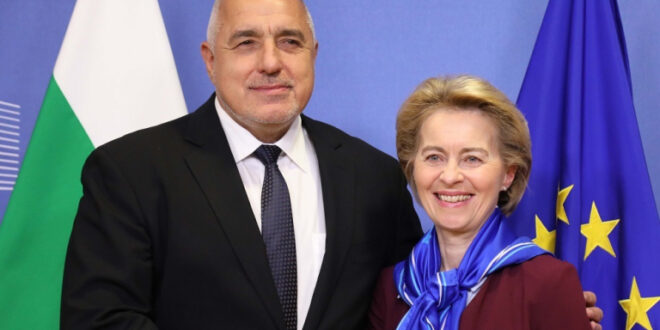
After hundreds of sips of coffee with "sugar", Prime Minister Borisov triumphantly returned to Sofia a few days ago and declared. The Prime Minister did not hesitate to boast that the negotiations on the European Recovery Fund and the next EU Budget ended with a definite success for Bulgaria and that he almost personally "brought" us 29 billion euros. The details, as usual, remained unclear (most likely for Borisov himself), so the burden once again falls on economists and financial journalists to clarify what exactly we can expect and under what conditions.
"Show me the money"
The funding to be provided under the European Recovery Fund amounts to a total of €750 billion, which will be borrowed from the financial markets by the European Commission. Around €390 billion of this will be allocated in the form of grants – money that no member state will be obliged to pay back. The remaining €360 billion will be allocated in the form of loans. This brings the overall allocation of grants to loans from the Recovery Fund to 52:48, compared to 66:33 in the EC’s initial proposal.
An important detail here is that the funding that will be provided to the different member states does not have to follow the same 52:48 ratio. That is, it is not fixed for each member state that will receive crisis aid. Some may receive a higher percentage than 52% in the form of grants, some less. The funding under the crisis fund was adopted in combination with the regular EU "budget" for the next 6 years, that is, the so-called "Multiannual Financial Framework", which includes regular funding under EU agricultural subsidies, structural funds, etc. Together with it, the total amount swells to 1.8 trillion euros (more details can be found here ).
Keep in mind that the amounts that various governments have been quoting in recent days when talking about how much their countries will receive from the EU represent a combination of funding from both the Recovery Fund and the regular programming period 2021-2027.
Other important details are the requirements attached to receiving this funding. First, the European Union member states agreed that 30% of the crisis funding would go to achieving goals related to the fight against climate change, according to the goals set in the Paris Climate Agreement, which was concluded in 2015. It was also stipulated that the funding provided would be linked to compliance with the principles of the rule of law in the member states, although after strong opposition from Hungary this requirement was significantly relaxed.
Are the acquisition requirements adequate?
A more substantial requirement is the provision of a plan for reforms and public investments to recover from the crisis and achieve a "sustainable, climate-neutral, digitalized and low-carbon economy". This is where the first problem with the answer to the question posed in the above subtitle appears. The EU's requirement for a "climate-neutral" and "low-carbon economy" itself is complete nonsense when it comes to recovering from a crisis.
First of all, the funding is either a crisis or it is for achieving the "climate" goals in question. It cannot be both for the simple reason that the technologies that need to be introduced to achieve the extremely ambitious goals set first in the Paris Agreement and then the Green Deal are not competitive. That is, they are not efficient enough to compete in terms of cost-to-energy production with traditional, higher-carbon energy sources.
Moreover, the reform of national economies in the so-called "low-carbon" direction means in practice the destruction of a number of sectors. For example, a huge part of the mining industry, not to mention the energy industry, especially in countries like Bulgaria where coal mining is very serious and its role as an energy source is still very significant. Yes, in theory these sectors will be replaced by new ("green") ones, but for now 1) this is just a theory, 2) it is not known whether the loss of jobs will be fully compensated.
Especially in a period of crisis, this means creating even greater chaos, especially on the labor market in the next few years. And especially if the "green" goals in question turn out to be unnecessary and unrealistic (as they currently seem to be) and/or local governments do not have the management capacity to adequately implement the necessary structural reforms, we risk an increase in structural (permanent) unemployment.
The bad thing is that the EU is demanding that 30% of all funding go to such "climate" goals. This will most likely be an absolute waste of funding, especially in countries like Bulgaria (more on that below). The requirement to respect the rule of law is otherwise a good idea, but in practice what was written into the final agreement is much softer than the initial idea, at least at first glance. Alas, I am not a lawyer to comment fully competently, but anyway, judging by how much Brussels cares about what is happening with the rule of law in Bulgaria over the past few years, this requirement is unlikely to turn out to be anything serious.
What kind of financing is Bulgaria able to absorb?
Of the total funding (Recovery Fund + Multiannual Financial Framework), Bulgaria will receive up to 29 billion euros in the period 2021-2027, which amounts to nearly 5 billion per year. This is indeed a lot of money. In nominal terms, this is one of the lowest amounts, but as a percentage of GDP it is one of the highest values for all EU member states. Which, in fact, is not a particular reason for joy, because it is indicative of the low level of economic development of Bulgaria compared to the rest of the union (weaker economies receive more funding as a % of GDP).
An important detail is that Bulgaria will not necessarily receive all of these 29 billion. A significant part of this money will come in the form of loans, which, if we decide, we may not draw. It has not yet been clarified whether the EU will count these loans as an addition to the indebtedness of the respective country, but in practice this is a natural effect of them. Accumulating state debts is never a good idea, especially if they are rather unnecessary, because they make state finances less flexible and less resilient to future crises, not to mention burdening taxpayers with the repayment of the corresponding loans.
Alas, we have serious reasons to strongly doubt that the government will show any common sense in the use of this funding. Let's just take as an example the words of Deputy Prime Minister Tomislav Donchev on the subject, who said that the government would provide "fast money, on the spot and without any objective or subjective assessment". The idea of this was to eliminate the risk of corruption. I do not know Tomislav Donchev, and it would be a display of bad manners to doubt his intellect, but such statements cannot provoke any other reaction than a slap on the forehead.
Can you hear what Tomislav Donchev is saying?
Corruption risk is not eliminated by not having criteria for granting state subsidies. Corruption risk is eliminated by not granting subsidies at all, but replacing them with alternative measures, such as tax cuts. Tax cuts are always a fairer and more neutral measure because they are much more proportional, according to the contribution of each business to the treasury.
If necessary, tax cuts can be more targeted towards specific sectors (as was the case with the VAT reduction for restaurants). This to some extent introduces some risk of corruption and abuse (because taxes are reduced preferentially, and not equally for everyone), but it remains much lower than with direct subsidies. It is no coincidence that from the very beginning of the crisis, the EKIP has been recommending tax cuts instead of state subsidies as a more adequate measure to support business and employment.
Furthermore, if you don't have criteria for granting funding, you open the door to massive abuse. Because if Mr. Donchev really meant what he said, that there would be "no judgment" when granting this money, any business could apply and simply lie that they need it. This seriously reduces the chances of the money reaching people and businesses who really need it.
If you are going to have state crisis assistance, you must also have a process for evaluating those who apply for this assistance, based on objective criteria. The problem is that, first, state bureaucracy usually does a very poor job of this task and is certainly worse at judging than the cold rationality of the market. And second, in a country with high levels of corruption like Bulgaria, there is a risk of supporting businesses close to the government to the detriment of everyone else and taxpayers, in the form of a deterioration in the state treasury, when it comes to money that the state has taken in the form of debt.
Does anyone think that Bulgaria can adequately absorb this money?
This is the most important question we need to ask ourselves in connection with the huge funding that the EU will allocate during the period 2021-2027. The answer to this question depends on whether this funding will be more of a "blessing" or more of a "curse" for Bulgaria. Alas, I think that based on our country's historical experience with European funding so far and especially in view of the current state of the political regime, the answer is obvious. These up to 29 billion euros will turn out to be a "blessing" only for those oligarchs who have completely taken over the country's governing apparatus and are using the ruling politicians as their pawns.
Anyone who has been following what has been happening in our country over the past year (and especially the last few weeks) should be aware of this. No, this is not a polemic, this is a completely objective reading of the situation we are in. Think about all the institutional and corruption crises we have been through since last spring. I will list the ones I remember most clearly. First there was the "Apartmentgate" scandal related to former Deputy Prime Minister Tsvetan Tsvetanov and the suspicions of corruption related to him and his property acquisitions. Then there was a huge data leak from the National Revenue Agency, which jeopardized the personal information of millions of Bulgarians. Meanwhile, the Bulgarian Development Bank was granting significant loans to large businessmen with a very dubious reputation and connections to well-known political figures (such as Ahmed Dogan).
In the fall, an extremely severe water crisis broke out, leaving the whole of Pernik almost without water, people there lived on a water regime for months, and the water supply in a number of other regions was also threatened due to the negligence of state institutions. In the midst of this scandal, for the first time in history, a serving minister was arrested and accused of criminal mismanagement. Then came the coronavirus pandemic, in the midst of which the institutions constantly sent contradictory signals, sometimes introducing certain measures, sometimes removing them a day or two later, then returning them after another day or two. It was clear that the institutions had no clear idea of how to deal with the situation, and in the meantime, millions of leva flowed to a number of businessmen with obvious ties to the authorities under the 60:40 scheme.
And finally, we cannot fail to mention the most recent scandals related to Ahmed Dogan's "summer palaces" in Rosenets, the security that for some unknown reason the NSO provided to him and Delyan Peevski, as well as the increasingly aggressive and provocative actions of the prosecutor's office against the presidency, which seem like an attempt to put the president in submission. All this led to mass protests and a political crisis. Alas, the upcoming elections do not seem to bring hope for improving the situation. The only realistic alternative to the current government is a cabinet formed with the BSP at the head, a party that is currently torn apart by severe internal conflicts, not to mention the dependencies it has demonstrated in the past towards the same oligarchic circles on which the current GERB and United Patriots government depends.
So, the forecast for the absorption of the 29 billion euros in question looks bleak. European money, since Bulgaria's accession to the EU, has served almost exclusively to fuel corruption, negligence and oligarchic interests. This will not change, judging by the EU's indifference to the political crisis in our country. The only thing that will be added to the "absorption" are some absurd conditions related to the phantasmagoric struggle of European politicians with "climate change". We have previously analyzed the chronic economic problems that European funds are fueling in Bulgaria (and not only us, by the way). Alas, no one is listening. The truth is that both Sofia and Brussels like this scheme. We lie to them that we are absorbing it qualitatively, and they lie to us that they don't care whether we are absorbing it qualitatively. The truth is that European politicians use this money to keep our governments "obedient" on the stage of European politics, while our politicians use this money to line their own pockets. And so the Earth keeps spinning and nothing ever changes. And it won't change unless we change it.