EKIP– Expert Club for Economics and Politics A Different Opinion
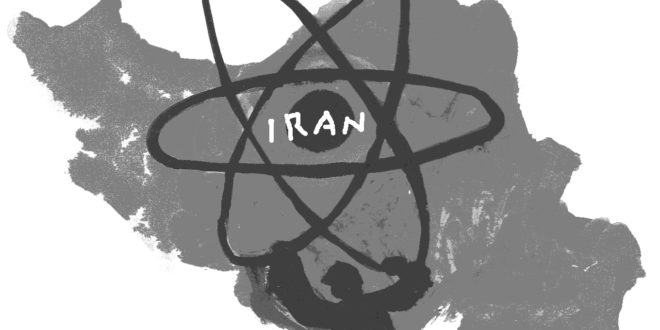
The agreement on Iran's nuclear program with the P5+1 countries, including the United States, Britain, France, Russia, China and Germany, is probably the most important geopolitical event of the past year. After nearly a decade of increasing pressure on the Islamic Republic, the negotiations based on the "big stick" principle have yielded results. With the Iranian economy pushed to the wall by the contraction of oil exports to 1.1 million barrels per day and official inflation galloping from levels above 40%, the ayatollahs' regime had no choice but to begin a process of thawing relations with the West.
It is a mistake, however, to assume that the deal is a done deal and that Iran will fulfill all the requirements of the Geneva agreement. There is much that can go wrong in the six-month horizon for fulfilling the requirements. It is also premature to jump to conclusions that Iran is ready to give up enriching uranium beyond 5%, which is needed to create a nuclear weapon. Has the West made clear demands that if the terms of the agreement are met, sanctions will be lifted completely, and the overthrow of the ayatollahs' regime will not be sought?
Not so pink
From Iran's perspective, the deal is actually not very profitable. The country is obliged to stop enriching uranium above 5% in the next 6 months, to convert half of the uranium enriched to 20% into nuclear fuel for the medical reactor in Tehran; to dilute the remaining half to below 5%; not to install new centrifuges at the Natanz plant and to remove 75% of the existing ones in the secret underground unit in Fordow. This practically means that Iran will not have the opportunity to produce nuclear weapons for the next 25 years. The entire process will be closely monitored by the International Atomic Energy Agency (IAEA), with the first visit of inspectors expected in early December, which will also include a visit to the heavy water reactor in Arak.
Iran is not getting much in return. The US has announced that it will lift sanctions on petrochemical exports, trade in precious metals and unfreeze nearly $4.2 billion in oil payments in foreign banks. The effect of these measures is likely to breathe a sigh of relief to the Iranian economy, easing inflationary pressures and reducing the cost of importing equipment and cars, but a drastic change in the country's economic profile is not expected. Oil exports will remain limited to about 1 million barrels a day to five Asian countries, including China, Japan, South Korea and India. This is 1.6 million fewer than before the sanctions, which at today's price of Brent crude oil means annual losses of $64.8 billion, which is more than 10% of the country's GDP.
It is no coincidence that the price of Brent crude oil has not collapsed on the financial markets. Oil futures traders are skeptical about the deal with Iran, because first of all it is not known whether Iran will comply with such strict conditions without receiving a complete lifting of sanctions against oil exports. In addition, it is not clear whether the agreement will be able to pass the US Congress, where congressmen are careful not to show pro-Iranian sentiments given the influence of the Israeli lobby. If the deal is not approved, we are back to square one.
Meanwhile, Iran is optimistic about its energy future. Immediately after the successful talks, Iran’s oil minister, Bijan Zanganeh, began talks with European oil giants Total and ENI to resume exploration and development of the country’s oil and gas reserves. Iran needs $50 billion to restore production in its mature fields, where it is rapidly declining. The Islamic Republic also hopes to significantly increase its gas exports, as it sits on the world’s largest reserves. But that will require hundreds of billions and Western technology to be invested in the giant South Pars field in the Persian Gulf.
This cannot happen while the country is in the shadow of international sanctions, and unless the government starts offering more enticing oil contracts. Zanganeh is discussing the introduction of concession agreements with international oil companies to offer attractive investment incentives, but it is unclear whether these will be approved by conservative religious leaders, who view any foreign investment with great distrust.
It is too early to hope for such revolutionary steps, and therefore it is frivolous to talk in the media about Iran as a potential major gas exporter, even to Bulgaria. Currently, the country barely satisfies its gas needs (largely due to the country's low energy efficiency), and exports are limited to about 8-10 billion m3 per year to Turkey via an outdated pipeline under constant risk of attacks by the Kurdish PKK.
Way forward
For Iran to return to the international community and become an attractive investment destination again, the US strategic thinking towards the region must change completely. Iran is the natural hegemon in the Gulf because of the size of its economy, army and population, but its influence is a threat to the West's main allies in the Middle East, including Saudi Arabia and Israel. By complying with their demands, the US is undermining the balance of power in the region, which until the Iraq war, was naturally maintained by mutual distrust between Saddam Hussein and the Iranian and Saudi leaders.
A weakened Iraq has helped Iran to increase its influence in the country, supporting the Shiite regime of Prime Minister Maliki. The result has been an attempt to rebalance Saudi Arabia in Syria, and from there the intensification of the civil war. The diplomatic breakthrough is a good start to restoring stability in the region, but it must be accompanied by a geopolitical deal in which Iran is allowed to assume its natural energy and political role in the region. In return, the Islamic Republic should actively engage in reconciliation in Syria and Iraq, where clear boundaries of influence can be established between the warring Shiite and Sunni sects.