EKIP– Expert Club for Economics and Politics A Different Opinion
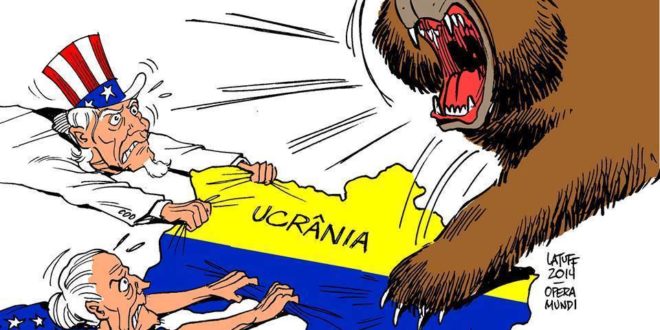
 For the past ten days, all eyes have been on Ukraine. While the media has been covering various political issues at length – the claims to power of the president who fled the country, the various moves of the opposition that has taken power, and the very real possibility of Crimea seceding from Kiev and (eventually) returning to Russia’s orbit – the economic problems that Ukraine is facing now and will face after the political crisis is over have received relatively little attention.
The downgrade of the country's credit rating by Standard and Poor's to CCC - one step above bankruptcy - is extremely indicative of the state of the Ukrainian economy. The rating agency clearly indicates that the situation is bad. But how bad exactly? Currently, Ukraine's external debt is about $73 billion, and about a quarter of this amount is due in the next 18 months. Until recently, the leaders in Kiev were counting on a certain part (about $15 billion) of this debt to be bought by Russia, but the current political situation and the tension on the border make such a scenario unlikely. At the same time, the Ukrainian hryvnia continues to depreciate, with the currency's value falling by about 12% since the beginning of 2014. Even without taking into account the current political chaos, estimates for the growth of the Ukrainian economy in the coming years are not particularly encouraging.
In other words, even if the crisis is overcome in the coming months and Ukraine elects a stable government that receives the support of the majority of its citizens, the country’s future from an economic and financial perspective is not at all rosy. The most likely scenario currently being discussed is the creation of a “rescue package” of funds provided mainly by the EU, similar to those that Greece has received in recent years. As for a loan from the IMF, this is unlikely, mainly due to the fund’s previous experience with Ukraine – only since 2008 has the country’s financing been suspended due to the slow implementation of economic reforms by the then Ukrainian government. For this reason, the new rulers – if they want to use such assistance – will have the burden of convincing the fund of their will to carry out real reforms, but also the political cost of carrying them out, which will most likely cost them the support of a large part of their now enthusiastic supporters from the Maidan. However, borrowing is a remarkably bad idea, for the simple reason that it will only treat the symptoms, not the real disease. Postponing the repayment of these sums or transferring the obligations to others (which is what such a package would actually represent) will in no way help the bankrupt Ukrainian economy. Especially considering that the price of this postponement will be additional interference in the country's internal affairs by the EU and/or the IMF. The cost of any such bailout will ultimately fall on the shoulders of Ukrainian taxpayers and will further slow down the country's economic development.
In that case – where to? First of all, the waving of nationalist flags is not welcome by anyone except the politicians who use them to gain popularity. In recent weeks, it has become obvious that Ukraine is facing enormous – and most likely insurmountable – ethnic and cultural differences, among which, after the removal of the artificial element of statehood that held them together, disputes and separatist talk almost immediately erupted. For this reason, the country will not return to a “normal” regime until these passions are calmed down, which can happen in two ways – either with violence from the central government in Kiev, or with the separation of the Russian-speaking regions. Both options are unacceptable – even if we leave aside the methods by which the “separatists” would be pacified, this sets off a time bomb that will inevitably explode during the next major political crisis. On the other hand, however, a division of the country would lead to similarly bad results, mainly due to the mixed nature of the population in all areas (although in some eastern regions the Russian ethnic factor dominates) and the concentration of industrial production and mining in the eastern parts of the country. In this sense, at this stage the situation is a stalemate and each of the scenarios hides numerous long-term problems.
From there, in order to overcome the current crisis, the most important thing is to eliminate the tools that the state could use to influence the economy. This is especially necessary given that the coming months will be months of struggle over which of the opposition forces will occupy the power vacuum left after President Yanukovych fled the country. This struggle will be waged using traditional democratic means – a race for votes through increasingly generous promises and the distribution of social benefits. The first victims of such struggles are always budgetary conservatism and tax policy. This is precisely why the proposal to introduce some form of currency board in Ukraine today is appropriate – in this way, the opportunity for politicians to speculate with the hryvnia in order to gain influence will be taken away. Separately, the fact that since the beginning of the political crisis, large parts of the country have been effectively self-governing is quite encouraging – for example, at the beginning of last week, the Lviv region severed all financial relations with the central government in Kiev. In this sense, the current moment is extremely suitable for a reboot of Ukrainian statehood, especially when it comes to taxes and redistribution of funds – if the regions are able to cope without the help of the central government, there is no apparent reason for this situation to change. And while a scenario in which Ukraine breaks up into many small self-governing communities is unlikely, the withdrawal of the state from its redistributive functions is not only possible, but would also significantly help economic recovery.
Currently, the biggest fear is that of declaring bankruptcy. However, it is worth asking whether a bankruptcy would be as destructive as most analysts make it out to be. The big losers from such a development would certainly be the Ukrainian government’s creditors, as well as the government itself. In the short term, the country would most likely suffer from a decline in foreign investor interest. However, it would allow the country to shake off its already accumulated debts and start fresh, and to restructure its governance without regard to external interference.
Gas pressure from Russia
One of the main economic problems facing the new Ukrainian government is to keep gas prices from rising. Late last year, Gazprom cut the price of natural gas from $392 per 1,000 cubic meters to $268.5 as part of a bailout package that included a $15 billion bailout loan. The gas discount is expected to save Ukraine up to $7 billion a year. One of the clauses in the agreement stipulates that the gas price cut will be reviewed every three months. After the Yanukovych government was ousted, Russian Prime Minister Dmitry Medvedev announced that the price change could be scrapped. Ukraine’s gas company, Naftogaz, owes Gazprom $2.7 billion for supplies in 2013, which Russia could demand to exert political pressure on the new government.
The government of Yulia Tymoshenko found itself in such a position in 2009, when Gazprom stopped gas supplies to Ukraine due to unpaid debt. The subsequent agreement between the two companies undermined trust in the government, and Yanukovych later used it as a pretext to send Tymoshenko behind bars. While Ukraine remains 2/3 dependent on Russian supplies, it is difficult to negotiate with the Russian side without making heavy political compromises. In 2012, Ukraine produced 18.6 billion m 3, with a consumption of 49.6 billion. Although the country managed to reach an agreement for partial reverse supplies from Slovakia (about 2 billion m 3 ), they cannot currently ensure a permanent shift of Gazprom's monopoly. Such a development can only happen if Ukraine begins to actively develop its unconventional deposits. Shell began exploration for the development of unconventional gas near Kharkov at the end of last year, Chevron plans to start drilling later this year. There is reason for moderate optimism. Ukraine reduced its imports of Russian gas by 15% in 2013 to 28 billion cubic meters, but we cannot talk about a permanent solution yet.
"South Stream" - the elephant in the room
One of the key points that many analysts miss is that behind the Ukrainian crisis stands Gazprom's attempt to pressure Ukraine to sell its gas transmission network and thus not depend on its western neighbor for transit to Europe. Naftogaz refuses such a deal, as this would mean a de facto loss of the country's economic sovereignty, but more importantly, a loss of the influence of the gas oligarchs in the political life of Ukraine. As a means of pressure, Gazprom uses the construction of the South Stream, which aims to bypass Ukraine as the main route for Russian gas supplies to the EU. The idea is for Gazprom to redirect the current transit (about 84 billion m 3 ) to the North and South Streams. This will deprive Ukraine of its main weapon in negotiations with Gazprom, namely the transit of gas to the EU. On the other hand, the government will have no choice but to take into account the high prices of Russian supplies, which exceeded those for Germany by at least 30% under the old prices. While Ukraine could previously afford to simply not pay its debt to Gazprom, if it has no influence on transit, it can be easily manipulated by Moscow.
It is no coincidence that Gazprom has intensified its energy diplomacy in Europe over the past 6 months, rushing to start the construction of South Stream before the member states and project participants meet the requirements of the European Commission's Third Liberalization Package. With the failed launch of the giant gas pipeline, Gazprom is back to its starting position, once again dependent on Ukraine. In the event of Russia's military intervention in the Crimean Peninsula and the intensification of ethnic opposition in other eastern regions (Kharkov, Donetsk and Lugansk), gas supplies to the EU from Russia could be threatened again. It would not be surprising if Russia uses this as a pretext to convince Europe that bypassing Ukraine is imperative and will be in the interests of the main Russian gas importers, Germany and Italy.
The fate of Ukraine through the crystal ball
The invasion of the Crimean peninsula by Russian troops is unlikely to lead to the region’s secession and its integration into the Russian Federation. The more likely scenario is the creation of a semi-independent republic modeled after South Ossetia and Abkhazia, which would be subordinate to and completely dependent on Moscow. Military action, however, could result if the new Ukrainian government decides to oppose the Russian military. Such an initiative would be catastrophic, both from a humanitarian and strategic point of view, as the war in Georgia showed in 2008. In economic terms, a war to preserve Ukraine’s territorial integrity could mean a collapse of the currency, a sharp withdrawal of debt investors, and the cessation of gas supplies to Ukraine. Another possible scenario is the cessation of economic ties between Kiev and the industrial centers in the eastern part of the country, on which Ukraine’s budget is heavily dependent. Given that $13 billion in state debt is expected to mature. by the end of the year, such a development would be catastrophic.
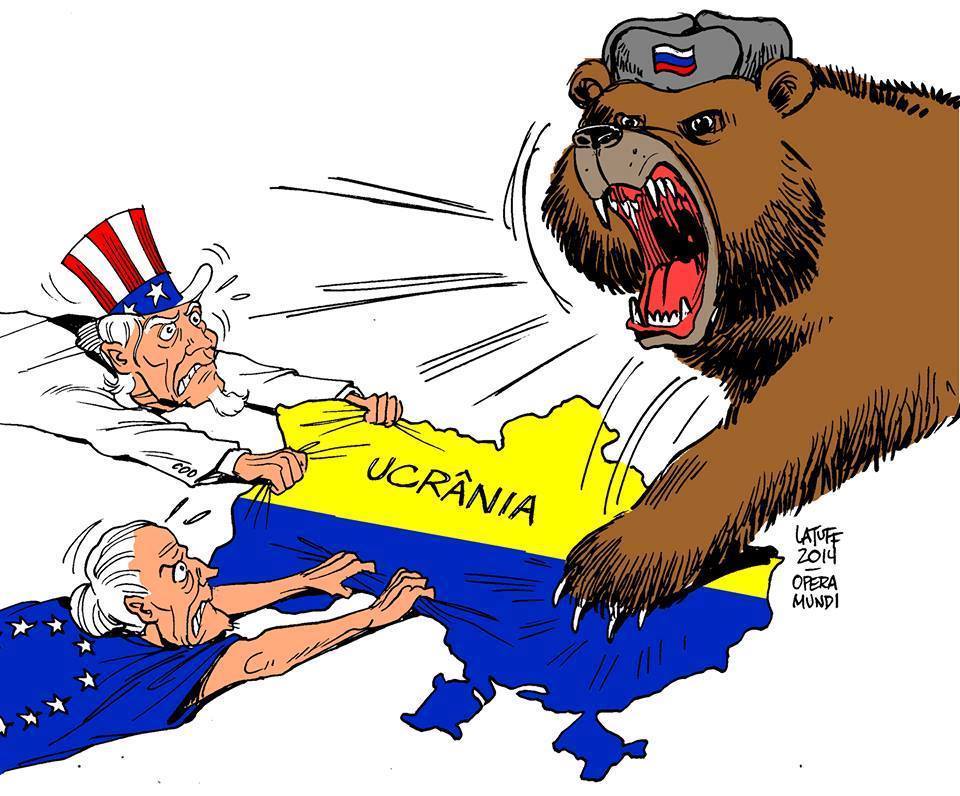
In this critical situation, the West does not hold many trump cards. The United States cannot afford military intervention in Ukraine. Any intimidation by deploying naval forces in the Black Sea will be revealed as a bluff on the part of the Russian side. The United States also needs Russia's support in other diplomatic crises, including negotiations with Iran and resolving the conflict in Syria. Despite its status as a global hegemon, the Barack Obama administration understands that Russia's spheres of influence remain a difficult fortress to overcome.
The European Union, on the other hand, is proving once again that it cannot act as a single player with a common voice on security issues. The intensification of Germany’s foreign policy over the past 12 months may be considered a positive development, but it is woefully insufficient to form an effective bloc against possible Russian intervention in Ukraine. The Crimean crisis needs a diplomatic solution at the highest level, which would include Moscow. It was precisely Russia’s isolation in the agreement to remove Yanukovych that was part of the reason for Putin’s lightning-fast actions in Crimea. Russia realizes that what is at stake is not only its international prestige, but also its capacity to exert influence in its backyard. In the absence of decisive and united intervention by Western powers, the Ukrainian crisis will threaten to resemble a new Munich.