 EKIP– Expert Club for Economics and Politics A Different Opinion
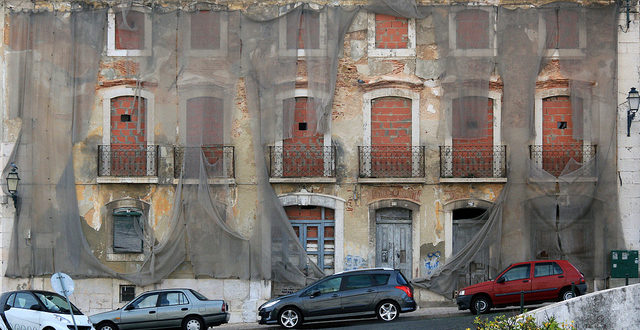
A quick stroll down the main streets of Portugal's two largest cities, Lisbon and Porto, is enough to reveal a serious problem with the Iberian country's real estate market. Half a dozen empty buildings dot the landscape of Lisbon's equivalent of the Champs-Elysees, Avenida da Liberdade - next to the shiny storefronts of Gucci and Cartier, towering stone piles with boarded-up windows and layers of graffiti. In Porto's main square, there are even alternating abandoned and still-functioning buildings.
The sad situation has a long and difficult history, including more than 10 different regulatory regimes from the beginning of the 20th century to the present day. Regimes created with the idea of "helping" tenants, but in reality lead to the deprivation of property rights from the real owners of the properties. They manage to achieve this result by imposing price ceilings on the amount of rent and blocking the possibility of new tenants to replace the old ones at better prices.
The most serious restriction of free bargaining in the sector was enacted after World War I and included complete price controls on rents, as well as almost impossible conditions for tenants to be evicted from their homes (contracts could be terminated by the landlord only in extreme circumstances). In other words, the state set a price ceiling that was updated (increased) at a certain period of time, seriously departing from real market prices. In the years following the establishment of this regime, there were alternating slight liberalizations/updates of rents (1918-1926, 1966-1974) and complete price freezes (1948-1966) [1].
Although legal changes from 1981 removed (to a large extent) price controls (ceilings) for new contracts. And additional amendments from 1991 allowed landlords to set a final term for the validity of leases. For a large part of the historic buildings in the central parts of large cities, the effect of liberalization cannot yet be visibly noticed, because the tenant/landlord relationship continues according to the old rules.
The logical consequence of all of the above is a situation where:
- the rents paid are seriously below the real market rates ( Bloomberg reports rents below 50 euros per month )
- property owners do not earn enough to maintain the buildings
- landlords cannot dispose of their property – i.e. attract new tenants (at close to market prices) – because the old ones can only be removed after their death
- buildings become more of a liability that is not worth taking care of
Of course, what is happening in Portugal is no exception. Miller, Benjamin and North (2009) [2] describe the classic textbook case of New York and Santa Monica, where we observe the same behavior of market participants, as well as effects on real estate. Yet, according to an OECD study, Portugal is the third out of 30 countries in the ranking of the most restrictive policies regarding price controls on rents in 2009 [3]. That is, there is a reason why we see so many damages from this type of interventionist policy precisely in the land of porto and fado.
The beginning of the serious shift towards liberalization dates back to 2011, when part of the mandatory requirements for receiving a large loan from the EU and the IMF in the amount of 78 billion euros was the removal of price controls on rents. Unfortunately, it will be a long time before the positive effects become visible, because the renovation and commissioning of all this neglected property will require a lot of money and resources. However, the market has already started to activate for the most attractive properties, where new shops and other businesses are moving in.
The important lesson here is crystal clear. When the state interferes with the functioning of free, voluntary relationships of any group of people (even with seemingly good intentions, such as helping poorer tenants), it inevitably leads to serious negative effects. The seizure of private property, the distortion of the property market, the depopulation of city centers, the loss of historical heritage, and the destruction of beautiful buildings are just some of the examples in this case.
[1] Costa, P.A.R. (2011), The Effects of Rent Control in Lisbon, NOVA School of Business & Economics
[2] Miller, Benjamin, North. (2009). “Bankrupt Landlords, from Sea to Shining Sea.” In The Economics of Public Issues, 16th edition, Addison Wesley.
[3] www.oecd.org/eco/growth/47431120.xls






Quite an illustrative example, thanks Stoyane 🙂 Those who want price controls on large supermarkets should think about it...
(Stoyan)
I'm glad you like it. I was very impressed by how the most expensive places in Lisbon and Porto look. Hopefully someone can learn a lesson.