 EKIP– Expert Club for Economics and Politics A Different Opinion
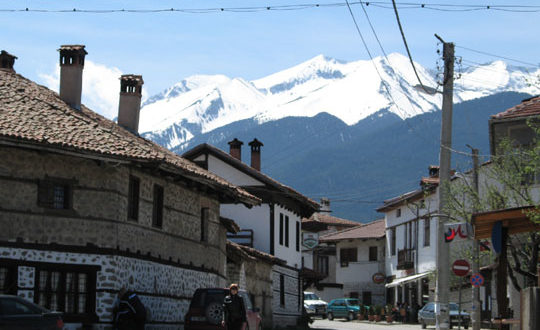
 What has been said here is a response to numerous comments regarding my criticism of the DSB's view on how the government should act regarding the Yulen concession.
My criticism
It was mainly about the procedure and its reasons. About them, I shared the following.
"DSB have given birth to a reformist vision for the Bansko ski area: breaking the contract with Yulen AD and nationalizing the facilities and slopes."
Seriously, historically there have been two successful strategies for such actions:
a. You win elections and pass emergency legislation;
b. You seize power by force, nationalize it, and appoint friends to manage the nationalized thing.
Another theme is that both approaches have historically certainly led to monumental economic disasters.
DSB wants the nationalization to be carried out by someone else – for example, the coalition partners, at someone else's expense and with someone else being responsible for the consequences.
A few words about the bill, it should include: payment for what has already been built, coverage of lost profits (half of the term has expired), compensation for regulatory damages (the contract was signed after all laws were adopted, i.e. the one for protected areas, and one party – the grantor – accepted all annual reports and payments under it), return of the amounts paid under the contract (possibly netted with some subsidies, if any) plus litigation costs and an estimate of the resources needed to manage the same area until the end of the concession period and beyond.
A few words about the reasons
DSB knows that there is a "monopoly" and there is an "oligarchy"; according to the legal definitions of monopoly and related legal cases, there is none; there is no definition for "oligarchy", but it is clear that it sounds both unpleasant and convincing to the broad masses of the people.
Two words about imagination: the imagination of the DSB does not go further than class struggle and nationalization.”
The comments
They have been expressed by many, unfortunately I cannot and do not see the point in mentioning all 40-50 people who have taken a stand.
But it seems plausible to me to group the opinions expressed as follows:
- The concession agreement with "Yulen" has been violated, therefore it must be terminated, without compensation;
- "Yulen" is a monopolist, which is evident from "Vitosha Ski";
- The oligarchy in Bulgaria exists, it has been ruling since before the concession agreement, and the nationalization of Bansko is part of the elimination of this historical injustice.
The first of these comments requires the most attention, so I will devote the most space to it.
As is typical of Bulgarian communication on the Internet, quite a few comments are ad hominem: to put it mildly, I was a lobbyist. I will not respond to them, but I will say something personal anyway.
My answers
Regarding the laws
The concession agreement for the Bansko ski area came into force at the end of 2001. It entered into the legal world of the country through three laws - the one on concessions (the Law on Concessions, adopted in October 1995, but the provisions that are relevant to our case were amended and supplemented in 1997), the law on environmental protection (the Environmental Protection Act, authored and introduced by my modesty, adopted in October 1991 and in force until 2002) and the law on protected areas (the Protected Areas Act, adopted in November 1998, the provisions that directly affect the contract are from the second half of 2000).
Most often, opinions against the operation and expansion of the Bansko ski area cite Art. 21. item 1. This provision prohibits any construction in national parks, "except for tourist shelters and huts, water intakes for drinking purposes, treatment facilities, buildings and facilities for the needs of park management and visitor service, underground communications, repair of existing buildings, roads, sports and other facilities."
The "Evil" Ministry
The leading ministry is the Ministry of Environment. Today, those who disagree with the development, past or present, of the Bansko ski area accuse the environment ministers from the governments of Ivan Kostov and Simeon Saxe-Coburg-Gotha of having initiated an unclear and generous concession agreement for Yulen AD.
In fact, the treaty complies with all standards and legislation. It is being discussed by governments that have adopted the PA, updated its treaty-related content, and created the Pirin National Park itself (on September 15, 1999).
In other words, it seems to me too inappropriate to retroactively attribute a "criminal", evil plan to the relevant ministers and the concessionaire today. I say this with all the seriousness of my critical attitude towards the governments of Bulgaria. But this is exactly what the Bulgarian branch of WWF, "For Nature to Remain in Bulgaria" and other opponents of the treaty, including the DSB, suggest to the parties to the treaty and all governments.
Because I am curious, I was disappointed that the contract with Yulen was not published before or immediately after it was concluded. But ultimately, the publicity of these contracts and the National Concession Register were introduced with a change in the Civil Code in 2004.
To understand the proposed procedure for terminating the contract, it is important to know some details of it.
 Protection of the "state interest"
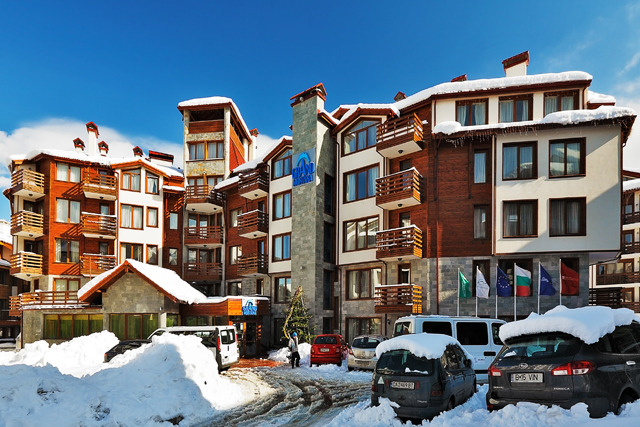
Perhaps the most important detail is the concession fee. Its annual amount “cannot be lower than the amount determined on the basis of 10 percent of the technical capacity (not the actual customers – note K.S.) of the installed ski facilities”. As well as that it “cannot be lower than 1 percent of the total revenue from the concessionaire’s activities carried out on the territory of the ski area” (i.e. the entire activity of “Yulen”).
Thirdly, it is important that the concessionaire undertakes to make "investments of no less than BGN 37,305,480 for the concession period for the construction of new ski trails and facilities together with the necessary networks and facilities of the technical infrastructure, as well as for public service and technological buildings for the implementation of the subject of the concession".
These clauses provide the following protection to the interest of the grantor (the government, the “state”):
- Regardless of whether the facilities are loaded to full capacity, i.e. whether the ski area is economically successful or not, whether mountain and ski lovers have recognized it as a destination, the government receives a solid income;
- The same applies to the other guarantee – the percentage of Yulen's total turnover from all services;
- If the capacity of the facilities and the business of the concessionaire expand, the concessor (the central government and the budget of the Bansko municipality) receive higher concession income compared to the scenario when the capacity remains unchanged;
- Despite the uncertainty of the success of the investment, there is an obligation on the concessionaire to build "new ski trails and facilities together with the necessary networks and facilities of the technical infrastructure, as well as public service and technological buildings for the implementation of the subject of the concession";
- As far as I can tell, the 30-year concession term is well defined and implies a significant interest of the concessionaire in maintaining the services, facilities and environment in good condition so that the investment can be repaid with profit.
Two illusory possibilities for breaking the contract
The claim that the contract with "Yulen" can be canceled without harm to the taxpayer's interest (central and local budgets) is based on two assumptions:
a. That it has not been consumed by the grantor, i.e. it has not been fulfilled as an obligation for concession payments and investments, and
b. That he has caused other damage to the state as the owner of Pirin National Park (and it is such under Art. 8, para. 1 of the PPA), for example damage to the environment.
The two assumptions were relatively clearly formulated by WWF in an article published on their website at the end of July 2011, entitled “What is the problem with the Bansko ski area in Pirin National Park?” The article has no author and no normal references. Since then, the data presented in it have not been updated.
The conclusion is interesting: "if the concession contract does not meet the conditions of the Concessions Act (Art. 65), then it is null and void and the Ministry of Environment and Water must request that the court declare it as such in accordance with the Obligations and Contracts Act." It has been repeated by the DSB and some of my commentators.
By the way, I don't know why WWF is referring to Article 65 - it determines what the content of the concession contract should be, the provision has been changed several times since 2008, i.e. seven years after the conclusion of the contract with "Yulen", but the contract includes all the requisites of the currently valid Law on Concessions.
But let me address the above-mentioned assumptions "a" and "b" in order.
On the first ground, the contract cannot be declared null and void. Because:
- The reward part is executed perfectly;
- The grantor, i.e. the NRA, can verify all reporting documents on the investments, total revenues and technical capacity of the concessionaire;
- WWF believes that the remuneration is small ("no more than 200 thousand leva per year"), but the government has never raised an issue on this occasion;
- At least there is no information about this on the "Implementation" subpage of the National Concession Register;
- That is, for fourteen years the government has been satisfied with the implementation of the contract and has been consuming the revenues from it on behalf of the taxpayers, which include both the expansion of services and the construction of new facilities;
- In 2011, the government gave "Yulen" 2 million leva for holding a World Cup ski tour; needless to say, I was and am completely against this gesture, but it did not meet with the slightest disapproval from taxpayers and is evidence that the government values what the concessionaire has achieved - such as the reputation of the resort and the country.
Even in this current situation, terminating the contract with "Yulen" is either impossible or very expensive (for taxpayers).
But let's also look at the details of the second hypothesis of "declaring the contract null and void."
There are several arguments for harming the interest, in particular the environment, and they can also be viewed on the WWF website and "For Nature to Remain in Bulgaria" (where there are also facsimiles of documents from the satellite assessment of the concession territory, a response from the Ministry of Environment and Water to the organization's inquiry under the APIA regarding the construction of facilities by "Yulen" and a notification from the District Prosecutor's Office regarding the verification of the legality of the facilities. If the visitor counters on these pages are correct, the readers of these materials are not very well-read. But their content is well conveyed by E-vestnik, Kapital and Mediapool.
In short, it is about the following:
- a territory has been "overtaken" by the concessionaire, which is proven by the satellite assessment from 2009 and a finding from a statement by Minister Nona Karadjova;
- There are no construction permits for one lift "Zhelezen Most - Plateau" and one lift - the "children's" lift of "Chalin Vlog";
- Some facilities, for example the water tank for artificial snow at Banderishka Polyana, have a larger capacity than previously declared.
Even if there were a legal or other dispute over these findings, from the perspective of the prospect of annulment of the contract, the situation is neither deplorable (i.e. containing sufficient arguments for violations) nor clear. Here are the circumstances:
- As mentioned, under the contract the concessionaire is obliged to invest in "new ski trails and facilities together with the necessary networks and facilities of the technical infrastructure, as well as public service and technological buildings for the implementation of the subject of the concession", which he does;
- The satellite assessment has not been confirmed by another source, the findings of "exceeding" are disputed (which is also reported by the newspaper Capital, but which is not taken into account by opponents of the development of the Bansko ski area) and Minister Karadjova's statement is not supported by a document from the Ministry of Environment and Water (at least such a document is not available on the Ministry of Environment and Water's website);
- The lift in question, it seems, does not really have a permit and an EIA, but the slope it serves is available;
- The towpath – also, but it was declared as a temporary facility and after last year it is installed and dismantled every season;
- The Ministry of Environment and Water has issued a total of 25 documents regarding the Yulen concession or general reports mentioning its concession; eight of them can be considered technical reports and announcements, and more than half of the remaining ones are opinions that there is no need for an EIA;
- And half of these opinions are about facilities designed to protect the environment;
- From one of these opinions (No. 31/2010), it can be understood, for example, that 13 junipers and 49 trees will be cut down, which represents 0.0092% damage to the protected area provided to the concessionaire, but which damage will be fully restored by prescription;
- The photographic material published on the mentioned pages as "evidence" of the environmental damage by the concessionaire is from the period of the construction process of various facilities (2001-2004) and is infinitely misleading; currently all temporary violations of the territory have been completely removed;
- In July 2012, the Ministry of Environment and Water published a "Report on Pirin National Park as a World Heritage Site, considered at the 36th session of UNESCO in St. Petersburg, Russia (June 24 - July 6, 2012)"; it states that "the larger capacity of the facilities has not increased the number of skiers, but has only increased the safety of visitors and improved the quality of the service;
- Another similar conclusion is "that although not foreseen in the TUP, the recent replacements of facilities related to increasing capacity were carried out with the necessary care and did not have an adverse impact on the Outstanding Universal Value of the site."
The opponents of the Bansko and Yulen ski areas, who believe in breaking the contract, do not talk about these things and do not share the relevant documents and facts. But one way or another, it seems completely unlikely that anyone would find sufficient grounds to terminate the contract.
The social cost of nationalization
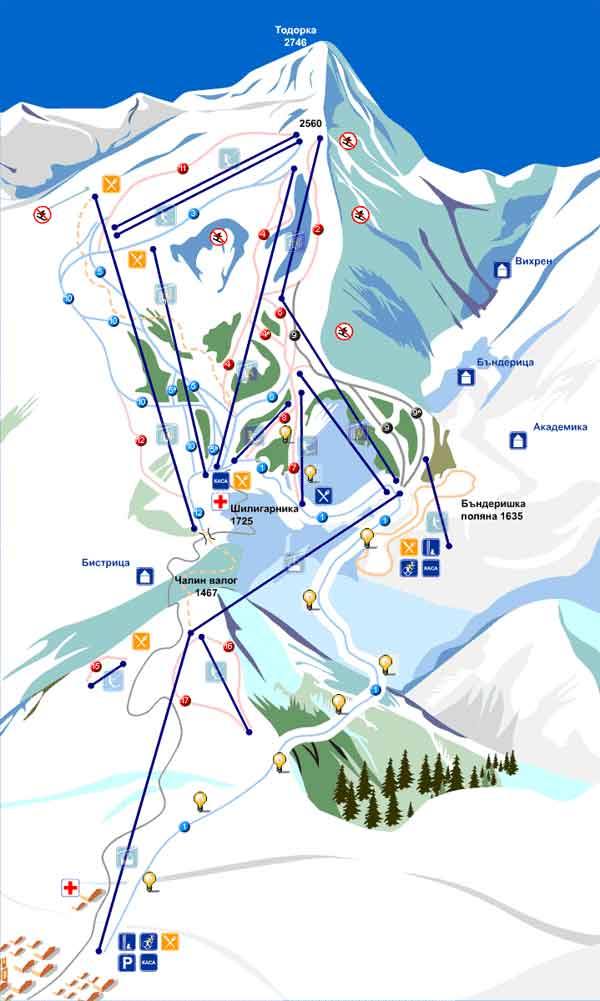
The two facilities and slopes mentioned above – “Iron Bridge” and the children’s one at “Chalin Vlog” are the most popular among beginners and not-so-good skiers visiting the Bansko ski area. More importantly, Bansko as a resort enjoys popularity: people are willing to pay to come to Bansko.
Even if we assume that the estimates of the number of foreign visitors to Bansko and the region by businessmen are three times higher, their income in winter alone (according to data on the income of one tourist) is between 77 and 81 million leva per year. (This is not Yulen's income.) This number does not include Bulgarian visitors and those from neighboring countries for weekends and short stays.
The budget execution reports of the municipality of Bansko and neighboring municipalities have increased between 5 and 14 times in the last ten years. In winter, the ski area employs about 6,000 families, as far as I can orient myself in the statistics. Bansko actually imports labor, including from Greece.
Of the few sources in the press that realistically describe the socio-economic benefits of the functioning of the Bansko ski area in its current form, I would recommend the article by Georgi Filipov in the newspaper "Dnevnik" from February 17, 2015.
However, if desired, the public damages from a possible termination of the concession contract for the Bansko ski area can be assessed in detail.
And let me repeat again what should be considered a direct loss from the nationalization of the resort:
- payment for what has already been built,
- covering lost profits (half of the agreed investment),
- compensation for regulatory damages,
- return of the amounts paid under the contract (minus subsidies),
- litigation costs,
- the estimated initial investments required to manage the area until the end of the concession period and beyond,
- losses of potential income from limiting the development of the area or reducing the resort's turnover,
- loss of jobs,
- losses for the state budget,
- losses for local budgets.
"Monopoly"
"Bansko", respectively "Yulen" do not have a monopoly neither in a national nor even less in an international context. Borovets and Pamporovo are competitors on a national scale. The reference to "Vitosha Ski" is pointless. The main reasons for the deplorable state of Vitosha are in the management of "Vitosha" park and in the prohibitively high prices of building permits for the replacement and modernization of the facilities. The fact that Vitosha is operating significantly below its potential is in favor of Borovets.
Bulgaria has the fewest skiers per 1,000 population of all EU countries that do have some winter resorts.
Bansko is only for now the best and most popular resort in the Balkans. Sooner or later, rather sooner, the Romanian resorts will develop and attract visitors from Northern Bulgaria, Serbia, Moldova, partly from Macedonia and Ukraine, and of course from Romania itself.
The economic imagination of the "Greens" and DSB (to the extent that this party's position is serious) only goes as far as nationalization and central planning.
One of the main arguments of WWF and others like them against Bansko is that the resort was developing incorrectly. Why? Because when the contract with Yulen was being discussed and signed, the "bed base" in Bansko was three times smaller in number.
The contract does not and cannot contain any clauses regarding the number of beds in Bansko. Construction in Bansko is a choice of local landowners and investors who have seen an opportunity for development and a better life.
This choice does not correspond to the WWF's views on how the Bansko ski area should be planned. So what? I don't think there would be any force that could prevent this choice.
"Oligarchy" and the rule of law
"Oligarchy" may be a convenient political scarecrow that appeals to a part of the audience. But 300 thousand people a year - in winter, and in summer, again according to underestimated estimates - go there because something attracts them.
What the "greens" and DSB do not understand is that any investor, if he does not have a monopoly and does not use violence to bring users to his service, has no other option but to offer it at some level that attracts visitors.
The other thing they don't understand is that once they expropriate the "bad ones", they will then start seizing development opportunities from the "good ones". Naturally, "good" and "bad" here are relative definitions - the expropriator decides who is what.
Both hope that the voluntarism of the expropriator will manifest itself in the right way this time, in the name of the “common good.” I don’t understand where this optimism comes from, since every political action so far has been assessed as being done to the detriment of this good.
I see no other way out of the situation than respecting property, contracts and rules, and refusing to seize property and development opportunities.
To the person
The Environmental Protection Act of 1991 was the first in the new Europe to introduce a modern EIA procedure. This was done by adapting Directive 85/337/EEC, which is still in force today. The annexes with the list of sites subject to EIA have not changed since then and item 12a of the second annex provides that this applies to “ski slopes, ski lifts, lifts and facilities therefor”.
As the author of the law, a skier and a mountaineer, I have always been curious about whether this application is being followed and how. Since the beginning of the investment process in Bansko, Borovets and Pamporovo, every summer I have found time to walk along the slopes in these three resorts. (I only missed Pamporovo in 2015.) The picture of the erosion of the slopes ten years ago was terrifying everywhere. I had the habit of photographing the ravines on the slopes, showing them to friends and newspapers. My only goal was to put pressure on the situation to be fixed. For several years now I have only been photographing landscapes.
In 1990-1991, the Shiligarnika (now Balkaniada) track was threatened with irreversible destruction. I dare to boast that with Prof. Dimitar Vodenicharov (then Minister of the Environment, an authority on the flora of Pirin and a teacher of many today's "green" activists) we managed to secure a budget for drainage and reclamation.
The 1991 law also introduced the most reliable procedure for access to environmental information. I believe that if someone was interested, they could have used it as a tool to access the contracts and management plans not only of Pirin and the Bansko ski area, but also of all other mountain resorts.
I am also proud to be the founder of the Access to Information Program. One of AIP's priorities since 1996 has been access to environmental information, and the organization supports all those who then used the procedures under the Environmental Protection Act, and later the APIA.




Dear Mr. Stanchev,
Attached, we are sending you a link to the current position of the Coalition for Nature to Remain in Bulgaria regarding our request to terminate the concession for the Bansko ski area, with attached maps and documents, in order to avoid manipulative interpretation of the facts.
I wonder how you would react if you rented out your apartment with a luxurious and exclusive interior and the tenant ripped out 60% of your interior without asking you and replaced it with plastic furniture? Would you "pet" it or throw it away before it ruined the rest of your apartment?
http://forthenature.org/news/3557
Why is Prime Minister Boyko Borisov giving Pirin to #WHO?
Respectfully,
Al. Dunchev
Mr. Dunchev, which object in the Bansko ski area was built outside the concession? If it is an overrun territory, then there must be something on the overrun. What is this something? You have never indicated which lift or slope is illegal and outside the concession. The statement "it is overrun" is nonsense.
Martin, look at the link. It says there.
I fully support you, Mr. Stanchev!
Greetings,
Damian Stoyanov,
nature lover,
Sofia